
Want to know how to stay together for the long haul? Three Nelson couples tell us it’s Love, Actually.
Words and photos by Tracy Neal
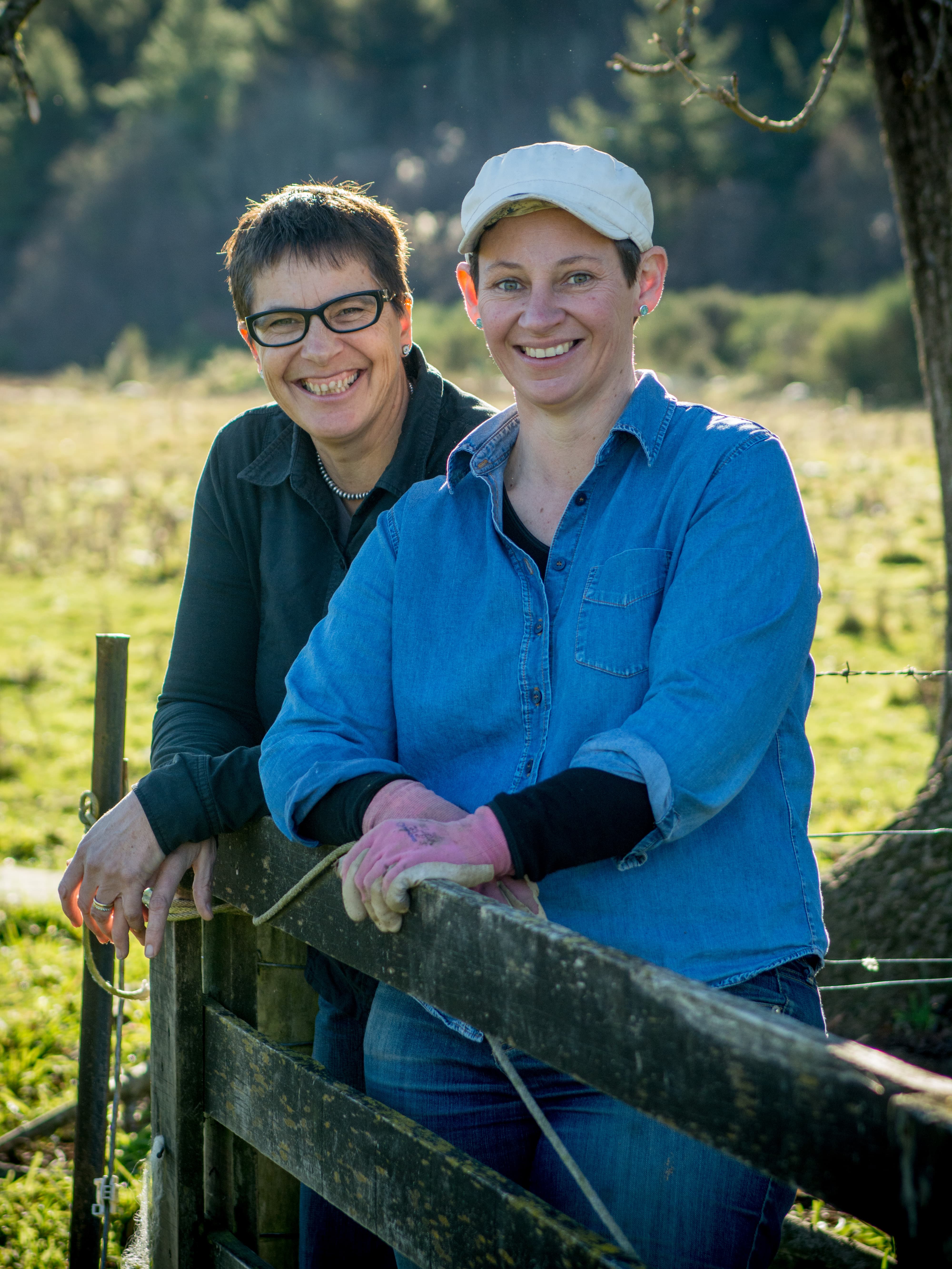
Dot Kettle and Georgia Richards
It was a terrible movie – so bad they could not remember what it was. It was at the post-mortem afterwards where Dot and Georgia met.
“We met 19 years ago in Wellington, at an annual gay and lesbian film festival.
“Most of the audience decamped to a gay bar to process the film we’d just seen, and it was there we were introduced by a mutual friend,” Dot says. The connection was instant.
“We are very similar,” Georgia says. “People ask who’s in charge in the relationship and I say, ‘well, Dot wears the pants, but I get anything I want’,” she says, as they both laugh.
Georgia, an IT consultant, had not long arrived back in New Zealand from London. Their second date was a trip to Dot’s beach house in her Ford Falcon station wagon, with a dog “the size of a small bear” in the back.
“When I met Dot, she didn’t tell me what she did, only that she was lawyer. It was two or three days afterwards that she told me she worked for the Prime Minister."
Back then it was Helen Clark to whom Dot was a senior adviser. Dot says she and Georgia realised quite quickly their core values were closely aligned.
“At that stage for me, having children was really important and it was something Georgia had always wanted as well.”
Georgia got pregnant within two years. Baxter and then Otto arrived, and with it, the complexities and challenges of balancing busy lives and careers. But the incomes, the nanny and the cleaner were no match for the distant dream of a more family-focused lifestyle.
“The first Christmas we were together we kayaked the Abel Tasman, and being the over-achievers we are, on the first day we kayaked from Marahau to Awaroa, but it wasn’t until we were looking at Totaranui Beach that I said, ‘I think we’ve gone too far’.”
They still had energy to crack open the bottle of champagne, bubble-wrapped inside the kayak.
It was 12 years ago, when attending a family wedding, that the couple decided to check out properties and settled almost instantly on the Dovedale farm from where their business Dove River Peonies has sprung.
Georgia says the foundation of their enduring relationship is the fun they have, the honesty they share and their belief in commitment. The couple formalised their relationship in a civil union in Wellington, and when the legislation changed permitting marriage, they were married here.
Georgia says they have an agreement that if anything in the relationship is not fun, they change it. That was tested in the years when Dot headed the Nelson-Tasman Chamber of Commerce. It was a busy time, which often meant Georgia was home alone in the evenings with three small children, while still working part time in IT.
“It wasn’t my life – it wasn’t what I wanted.”
Dot then promised to ask every day, how she might help.
“She’s never let me down on that promise. “Every single day she says to me: ‘right, how can I help’?”
They got through the challenges of 2020 on their shared principles, communication, planning, and being able to stick to that plan. Georgia says their life together is amazing.
“When we look at the family we’ve created and the lifestyle we’ve created, I have this extraordinary sense of gratitude.
“We just pinch ourselves every day to think we live in this beautiful place, we have this gorgeous family and every single day we’re happy."
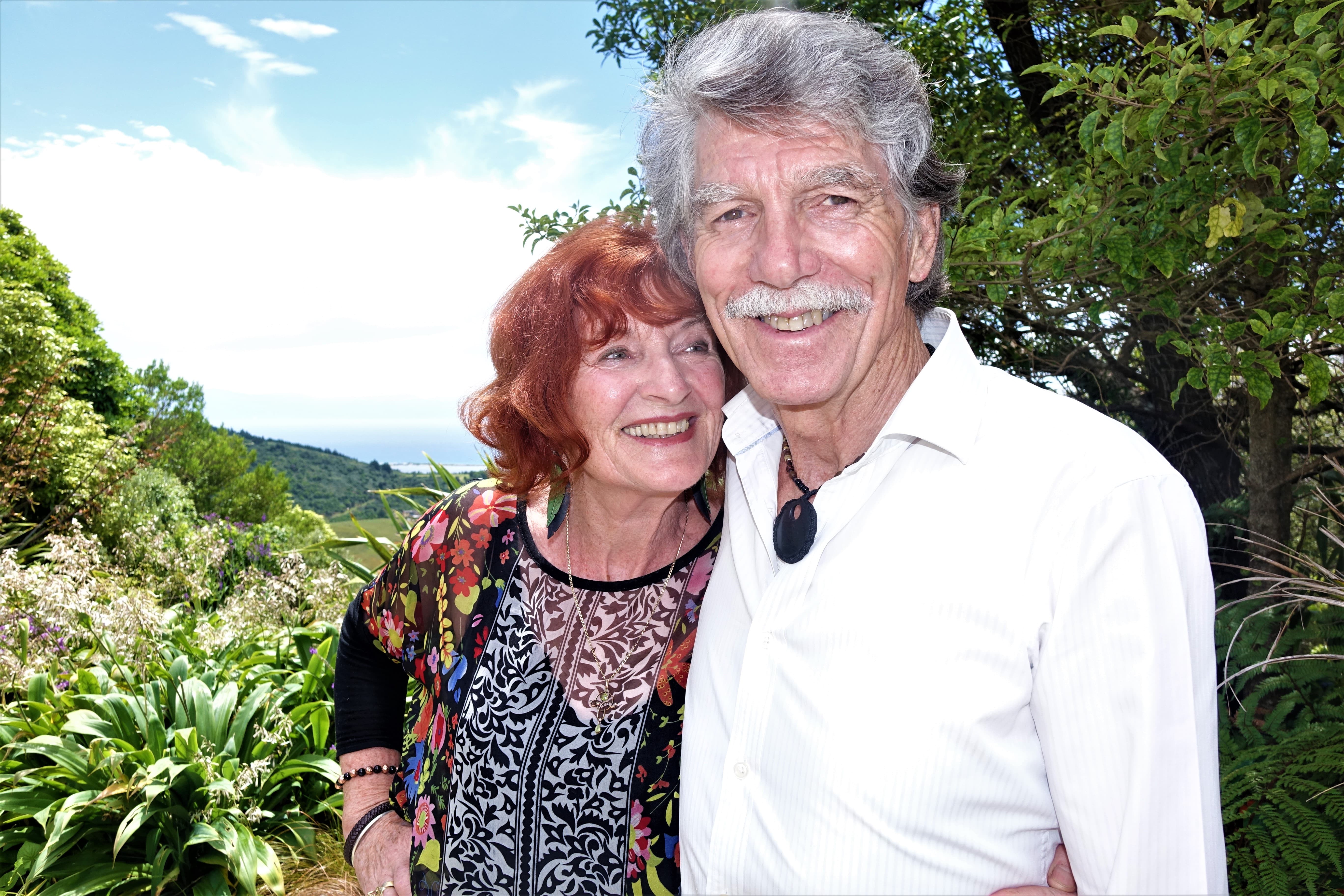
Miles and Margarita Jackson
It was a less-than-romantic introduction, but it worked.
“He strode over and said: ‘I’m about to look at my whitebait nets, would you like to come with me’?”
Margarita, at first put off by the black Stetson Miles was wearing, his bloodstained jean jacket (he had been carrying dead rabbits) and the holes in his jeans, was curious.
The Auckland University music student had been enticed along to a West Auckland beach house as a break from practice.
“I had met some very nice men but they all wanted to get married, so I decided music was to be my career.”
Margarita remembers being introduced to Miles by his sister. She says he was a “wild looking character”, whose name she promptly forgot, and moved on to talking with someone else. He strode over with the invitation to go whitebaiting.
“I went out with him and we fell into conversation. I had no idea he was a musician. We were watching this wild sea on the black sand, and I thought, ‘what a lovely man’!”
They decided to move on to another party, but guests at the Bethells Beach house would not let them leave until Miles played his guitar.
“He played Flamenco. I’d never heard that before and was bowled over.
“I had my violin with me, so we decided to play something. We knew Sounds of Silence (Simon and Garfunkel) so played and the connection was huge.”
Margarita says music is the fundamental structure of their relationship because it is deeper than conversation.
“It’s an abstract language and so strong.”
Miles says music has been their strongest bond, because of its honesty. Their meeting altered Margarita’s initial career trajectory of orchestral musician with the Auckland Philharmonia.
Miles played weekly at the Ascot Restaurant in Parnell and they began exploring how to work together. After a summer music school, which triggered a foray into a new repertoire, they gave one of the first house concerts in New Zealand.
“We were earning a living off music and we figured out if we didn’t hire halls, we could earn a respectable living. I mean…not entirely respectable as money has always been quite low.”
They were married in Auckland in 1974 in the garden of Miles’ parents. Margarita wore a dress she had made herself but could not get the lace right so stuck it on with glue.
“Miles’ sister gave me a lovely bunch of sweet peas. I’ll never forget that.”
The move away from Auckland was precipitated by a tangle with Argentinian politics. The couple had a residency at a hotel, playing five nights a week, but got sacked when they refused to play for visiting President Jorge Videla.
Videla then was a symbol of military rule and fierce repression in South America. Under his regime between 1976 and 1981 an estimated 30,000 political opponents were rounded up and killed in what became known as “the Dirty War”, human rights organisations say.
He visited New Zealand in the era of Robert Muldoon.
“He wanted to come to the restaurant and have dinner and listen to the music, and when he did we stopped playing.”
Margarita said the Amnesty protestors cheered when they left, but the next day when they arrived at work there was notice on their chairs to say they were to play that night, and then no more.
The Jacksons moved to Nelson in 1981, where they found a job playing at Chez Eelco on Sunday nights and began teaching at what was then the Nelson School of Music.
Since then, they have busked, taught, toured and performed house concerts at the hilltop home Escondida, as Trio Jackson with their daughter Fleur.
Margarita says their relationship has grown deeper and stronger over the years.
“Love is a word bandied around but you can love in so many different ways. Love is unconditional. It’s way beyond personal feeling. It’s universal. It’s many good things.”
Miles says expectations and ownership of each other are things they’ve never had. What they have always had is a shared sense of beauty.
“I think the essential ingredients have to be respect, shared interests, and a shared sense of ethics.
“Also, one of the secrets of our lasting relationship is Marg is incredibly tolerant,”
Miles says wryly. His advice to young people is to accept that mistakes will be made along the way.
“Initially we’re attracted physically, and relationships are not usually built on the best possible things, but that’s a process of learning and growing.
“A lot has to happen before you know you’re in love."
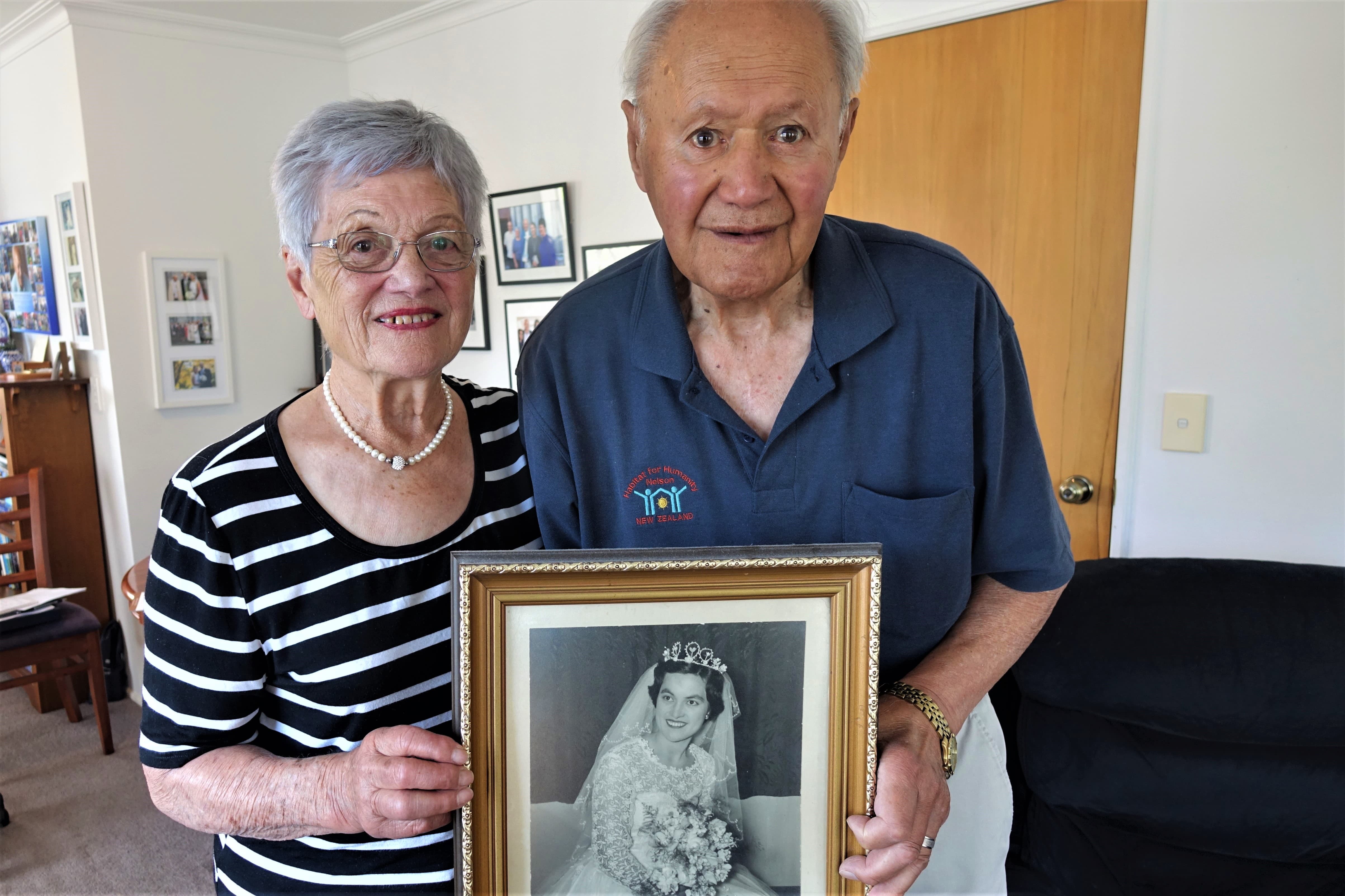
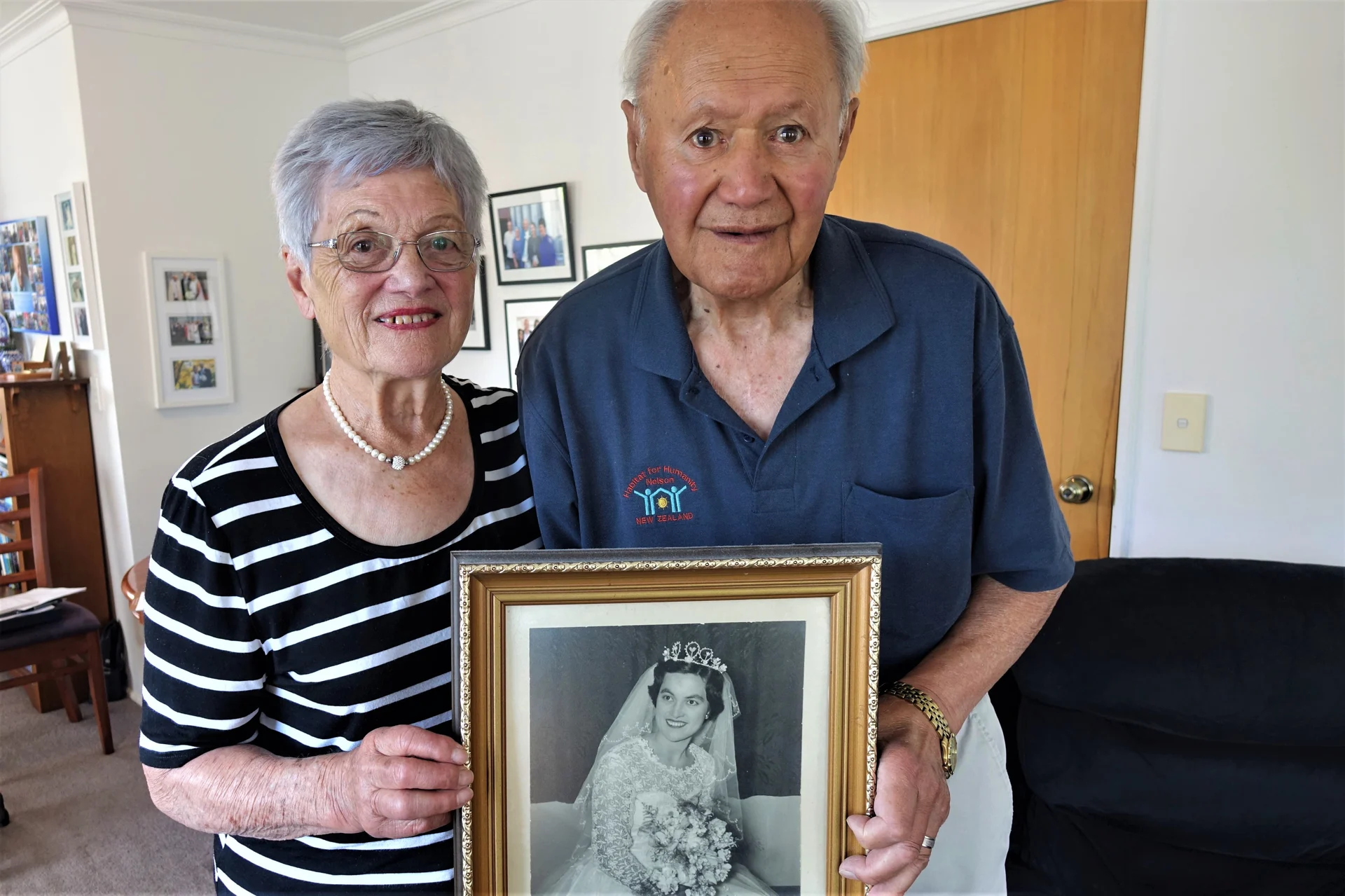
Archdeacon Andy Joseph and Rev. Ramari Joseph
The evening more than 60 years ago when Ramari walked into the dance hall in Takaka, Andy Joseph knew it was divine intervention. Although not yet a man of God, he learned then to believe in miracles.
It was the same girl he had noticed in the Auckland Weekly News a couple of years earlier. Ramari was a bridesmaid for her aunty, whose Rotorua wedding was featured in the newspaper.
“I saw this girl in the newspaper and I thought, ‘what a beautiful girl’, and then a few years later I went to the dance and I couldn’t believe it. ‘That’s the same girl!’ “It might sound crazy, but it happened.”
In 1949, Andy, who is Ngāti Maniapoto from the King Country, had moved south to Golden Bay where he worked as a labourer on the Cobb Dam. Andy was born in Te Kuiti more than 90 years ago and adopted out at age four. He was eager for a new life away from a fractured and troubled upbringing.
“I didn’t have a good schooling. I think I made standard one, but I was keen to learn whatever.”
In his early 20s, Andy found music and joined the Takaka dance band, the Melfi Trio, for which he played drums, double bass and sang.
“We played every Saturday night – Takaka was our world.”
Andy remembered the night Ramari walked into the hall – the girls were all seated around the edge of the hall and the chaps at the door, but he eventually plucked up the courage and asked her to dance.
Ramari says Andy wanted to get married right away, but marriage was not on her list of priorities – her heart was set on a working holiday in Australia, so off she went.
“I was in Australia for about eight months. Andy said he’d met someone and felt sorry for her, so I thought I’d better come back” she says, laughing.
Ramari, who is Ngati Tama and Te Atiawa, and Te Arawa on her mother’s side, says looking back now, she knows their marriage was planned in heaven. But still, it was not something she took up immediately upon her return.
Her sister, Judi Billens, who had established a hair salon in Golden Bay, suggested Ramari train to be a stylist in Wellington. The pair set, cut, permed and styled Nelson locks for many years.
Andy and Ramari were eventually married in the Anglican Church in Takaka, where Ramari had been confirmed as a child, and where Andy had his beginnings in the Ministry as a Sunday School teacher.
“God has always been part of my life, but I never thought I’d turn Andy into a minister,” Ramari says.
Andy says Ramari provided a turning point in his life. She introduced him to the Church, and to the meaning of family. “I went to church for the first time when I met Ramari. I hadn’t met a family like hers before."
He finds it hard to explain how it felt to hold the first of their four children, but in his soft and faltering tones, he tries: “What can I say, it was just surreal.”
Andy says love, pure and simple, has kept them together all these decades.
“I respect Ramari for everything she has given me. It’s Arohanui for who she is – not what she does, and I’ve had the pleasure of walking through doors I would never have been able to without Ramari.
“I know that when people see me, they see Ramari rather than me.”
