
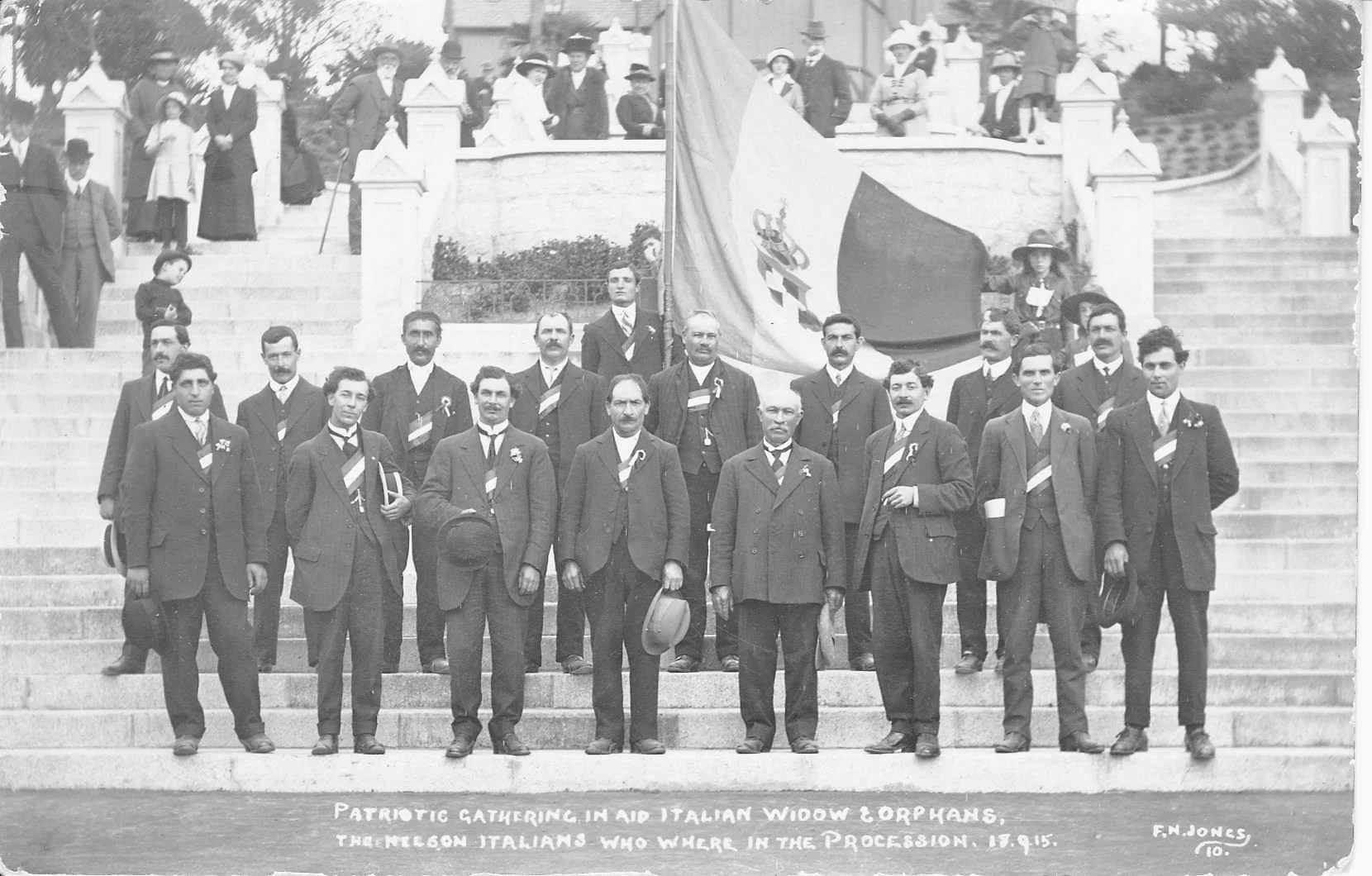
Italian residents in Nelson had just marched through the streets while crowds of citizens watched their demonstration with approval.
It was September 1915, and World War 1 was just entering its second year.
The Italian flag was held aloft, while the ‘sons of Italy’ wore tricoloured sashes, and the procession through town was led by the National Reserve Band and included senior cadets.
The reason for the march became clear when Mayor William Lock stepped forward to speak on behalf of the Italian marchers. He explained they’d come to raise money for the widows and orphans of Italian soldiers who had fallen in the war.
As these Italians had contributed to the city’s patriotic funds before Italy joined the Allies, it was felt they should receive help for their people in Italy. After all, Italy was fighting with Great Britain and her allies in the cause of humanity and freedom in the world.
Under the umbrella of the ‘Empire Defense Fund’, many committees were set up throughout the war to support different groups.
The Nelson Expeditionary Force Fund petitioned local farmers for horses and saddles for the troops, while cash was collected, converted into Money Orders, and sent to men fighting in Egypt to spend on extras.
The ‘Lady Liverpool Fund’ supplied balaclavas, gloves, and hats for men in the trenches and sent gifts at Christmas. At different times throughout the war, these two groups arranged to collect fruit from local growers, for soldiers in Trentham camp.
As well as Italian Red Cross fundraising, there was the Belgian Relief Fund and the local Red Cross Fund. Contributions to various funds, listing names and amounts donated, were acknowledged in local newspapers.
On 7 June 1915, the Empire Defense Fund established ‘The Wounded Soldiers & Dependents’ Fund.
Subscriptions were called for and many different fundraising events organised, such as Daffodil Days, concerts, and Queens’ carnivals to support the enlisted men and their families.
Citizens of Nelson from all walks of life did what they could to contribute to the war effort. In 1916, when Mr Hall of Stoke offered 50 cases of tomatoes for the Mayor’s appeal if pickers were provided, the Women’s National Reserve was approached to do the job.
The following year it was reported that members of the Lady Liverpool Committee were engaged in various gardens picking tomatoes for the soldiers, assisted by three women who had answered an advertisement for help.
However, there was a scarcity of pickers, so schoolboys were called upon to help. Throughout the Great War, there was much fund-raising to support the effort and its participants.
However, 30- odd years later, when the world was in conflict again, there were different alliances and allegiances, and these changes were reflected in our community. But that’s another story.
This column is brought to you by the Nelson Historical Society which meets from 7.30pm-9.00pm at St Stephens Church, Tahunanui Drive on the second Monday of each month. $2 at door More information on Nelson Historical Society’s Website and Facebook pages. Next Monday guest speaker Karensa Johnston, Tumu Whakarae of Wakatu Incorporation will talk about the Nelson Tenths claim and the organisation’s 500-year inter-generational vision.
