
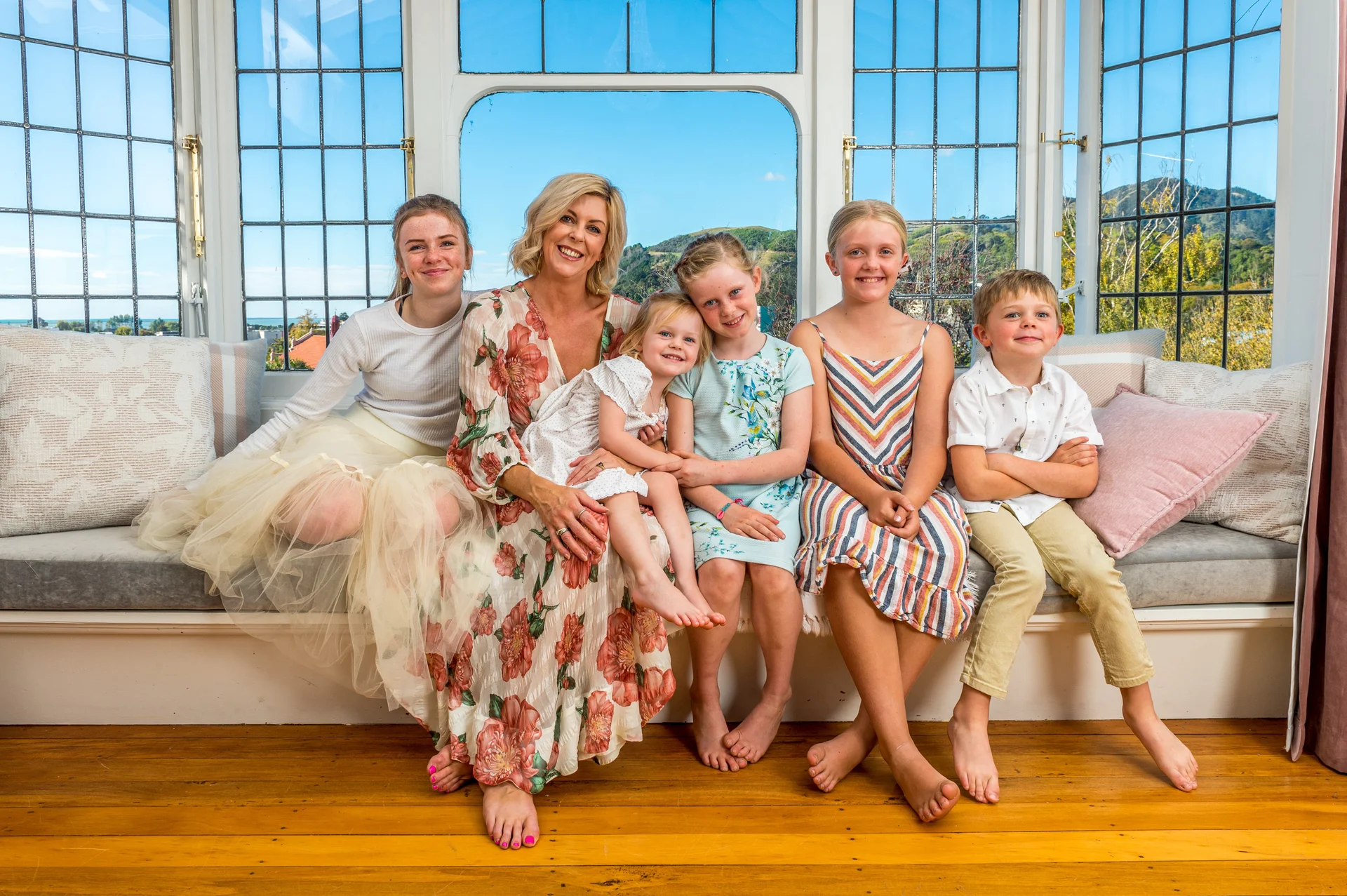
To mothers, grandmothers, aunties, and carers everywhere, whether it is a lifelong or fleeting role, or an elusive ambition, we salute you for all you do. Written by Tracy Neal.
CAROLINA HIPPOLYTE
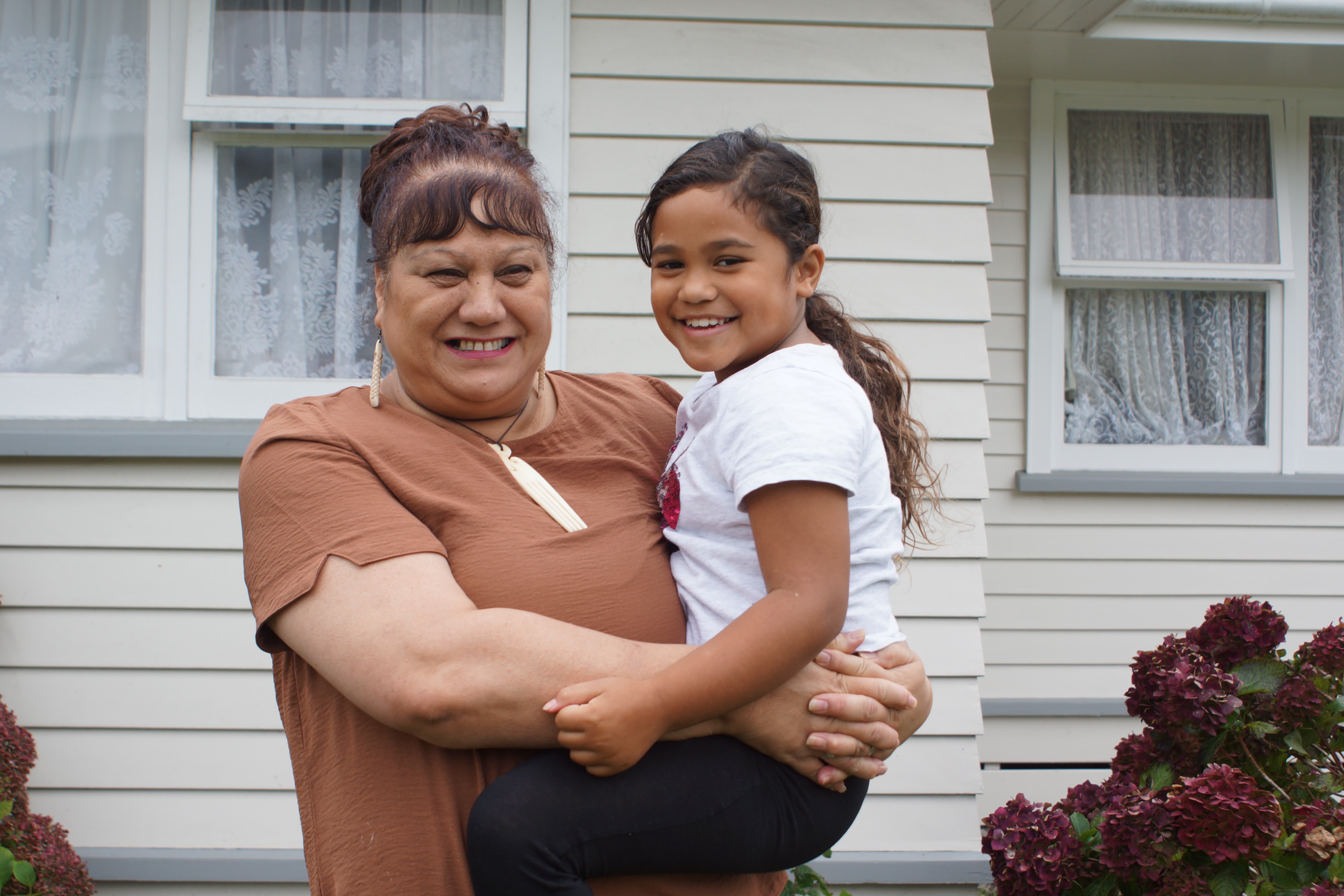
Carolina – or Carol as many will know her, is not only the kaitiaki of Whakatū Marae, but has assumed an equally important guardianship role of her siblings’ children.
She is Aunty, and sometimes Kui Kui to her many “mokos” – a role she cherishes.
“My siblings called me Kui Kui – to me that’s someone a lot older but I get teased about it, probably because I always have the children around me.
“In older times, if you were no longer able to bear children the woman’s role was a motherly, nursing role - she was just as important as the couples having children.
“I see my role as this and I’m quite happy with that.”
Six year-old Te Ao Taumarewa Broughton-Hippolyte holds a special place in Carolina’s heart – she was only six hours old when the bond was forged.
“She’s not only my niece but also my goddaughter. Her 14-year-old sister is also my goddaughter and I have two more in Wellington.
“I couldn’t have children, but I have four goddaughters and you can’t beat that.”
Carolina says they replace the children she could never have.
“I had endometriosis and that confirmed why I couldn’t conceive.
“I had major surgery and from then on; because of my age and because of finding out later in my life I wouldn’t have children… I’ve spent most of my life supporting my siblings in bringing up their children.”
Te Ao, who attends Kura Kaupapa Māori (the Māori-language immersion school in Richmond), stays with Carolina during the weekends and sometimes throughout the week, to avoid lengthy travel to and from Motueka.
Carolina, who is Ngāti Kuia, Ngāti Koata, Rangitāne, Ngāti Apa ki te Rā Tō, Ngati Toarangatira and Taranaki Tūturu on her mother’s side, is the manager of Whakatū Marae, having started there as its health manager.
For this story, she has also chosen to use the correct spelling of the family name, Hippolyte, which is Greek in origin.
In Greek mythology, Hippolyta, or Hippolyte was a daughter of Ares and Otrera, queen of the Amazons, and a sister of Antiope and Melanippe. She wore, as an emblem of her dignity, a girdle given to her by her father.
Carolina, who turns 60 this year, says she and her siblings have simply applied the “village” concept to how they raise the children, as a way of fostering and imparting important cultural knowledge that her generation failed to recognise.
“I went to Stoke School, Broadgreen and Nayland. We had very few Maori studies and I don’t remember having any lessons on Te Tiriti (Treaty of Waitangi).
She says the wider family has always valued children and has taken an interest in how they develop and how to support that.
“It’s all part of ensuring they get the best. We weren’t offered that as children because there were so many of us.”
Carolina says Mother’s Day is embraced by all women in the wider family.
“The girls will Facebook me and say, ‘Happy Mother’s Day, Aunty’. All the women celebrate it together. We do it for each other, so I’ve never felt left out.
“In some ways I’m lucky because when I’m tired, I just give the children back!”
She says all the women in the family do their bit to honour their culture, so it is passed on.
“We’re all quite fluent in our whakapapa, and we are comfortable in our skin.
“If I can pass on some of that knowledge to the children then I’m happy. I feel like, hey, I’ve achieved something, regardless of how small.”
KYMBERLY WIDLEY
Mother’s Day for Kymberly is a “delicious little slice of love”. The Nelson mother of five says while she looks forward to breakfast in bed, it is also a time to recognise the help she receives that allows her to be the best mother she can be.
“We have a really great extended network of people who help us; godparents, different people who pick them up from school and spend one-on-one time with them, and a nanny that helps two evenings a week.
“There’s no way we could do what we do without help, and we are so lucky to have these people who love our children as much as we do.”
That includes Kymberly’s mother Julie King-Turner referred to as “Super Nana”.
Kymberly and her husband Nick Widley own Mama Cod and Kismet in Nelson city. They share duties running the businesses and the household, which meant a move to a larger house when number five was on the way.
Charlotte, 13, and 10 year-old Caroline Allsop-Widley are the elder two from a previous marriage, followed by Vianne, 7, Jules 5 and three year-old Elodie Widley.
The 39 year-old says having a large family was never a long-term plan, it simply evolved.
“Nick and I both love babies. There is a desire to keep going, and it’s only social and financial pressures that tell us it’s not a good idea…Stop now!”
They are now managing a growing list of homework and outside-school activities, alongside the usual chores and challenges of daily parenting.
“Tummy bugs? It takes two weeks to go through everyone, but I’ve got it down to a fine art now. The laundry is a constant battle, but I have a miniature commercial laundry at home; two washers and two dryers and they’re always going.
“The worst part is putting it all away.”
And all that ironing?
“It never gets done. I don’t enjoy it.”
Kymberly says she would be lying if she went to bed every night not worried that she had dropped the ball somewhere, through lack of time for everything.
“If I have spare time, I find myself wondering, ‘what have I forgotten’?”
Kymberly says her children are also her teachers, who have a way of forcing her to slow down and just breathe.
“For me, being a mother is an opportunity to see life through a small person’s eyes again, and to capture the beauty that you miss as an adult on a day-to-day basis.
“We often find our little boy Jules staring out the window, just looking at the clouds, his thumb in his mouth, or he’ll come and get me to look at a sunset, or the stars and it’s just magical.
“In this day and age, we’re just so busy trying to play catch-up all the time. For me, those moments are absolutely priceless.”
Kymberly says Mother’s Day this year was especially poignant for the family. Nick has been waiting to head to the UK to visit his ailing mother, which is imminent, once a place in quarantine is established for his return to New Zealand.
ILIAS SANHAJI
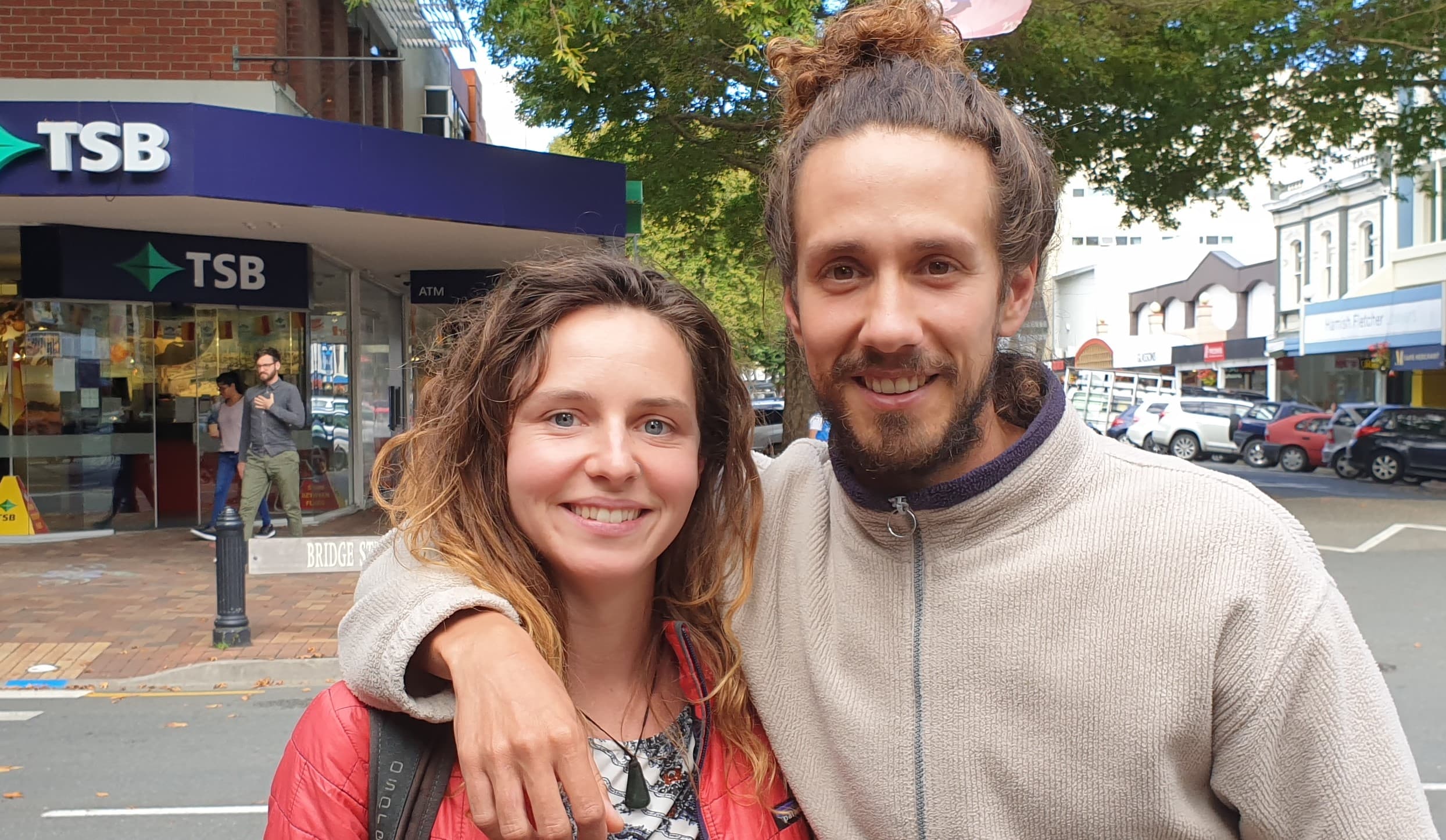
When Ilias left his home in Belgium almost two years ago, he did not ever imagine a global pandemic would keep him from returning home to his mother.
He arrived in Nelson last year from Australia, and a month later, New Zealand went into lockdown.
Ilias and his American fiancée, Taylor Kaspar, joined the thousands of young travellers stranded in New Zealand because of Covid-19.
For some, it has been a difficult choice, knowing that to return home to family would end their once-in-a-lifetime chance for a working holiday around the world.
The decision to remain on foreign shores has meant families have been apart for much longer than planned.
Ilias and Taylor are among around 12,500 foreigners here on visitor visas, which the Government recently agreed to extend by another couple of months when the visas expired at the end of March.
The pair met in Alice Springs and fulfilled their plans to come to New Zealand.
They have been working in Nelson as baristas, and more recently, picking grapes on a Marlborough vineyard.
They will soon marry, without their mothers present, on the Marlborough vineyard before heading to the United States.
Ilias says because much of Europe is now back in lockdown, he is not keen on returning there, even though he misses his mother a lot.
“I spent a lot of time with my mum, Anja, and we have a really nice relationship because my father was the hard-working man, so she planned all the adventures.
“I was in Australia for 11 months before coming to New Zealand, so it’s been a long time since I’ve seen her.
“Luckily, we can have a lot of video chats. It’s still not the real thing but it helps a lot.”
Ilias says despite it not being Mother’s Day in Belgium the same day it is here, he made a special effort to contact her.
“I feel always connected to my mother and I do my best to contact her as much as I can, but maybe for Mother’s Day, I will send her a happy Mother’s Day message,” he says of the woman who became an artist, after a career as a professional dancer and choreographer ended because of illness.
Ilias says he is not sure if mothers and sons share any special bond different to that of a father and son.
“I don’t have a typical idea of it, it’s different for everyone but mothers, their love is unconditional – the same with fathers.”
Ilias says their goal is to live in Greece, but those plans are on hold until Covid settles down, and until he gets to see his mother again.
