
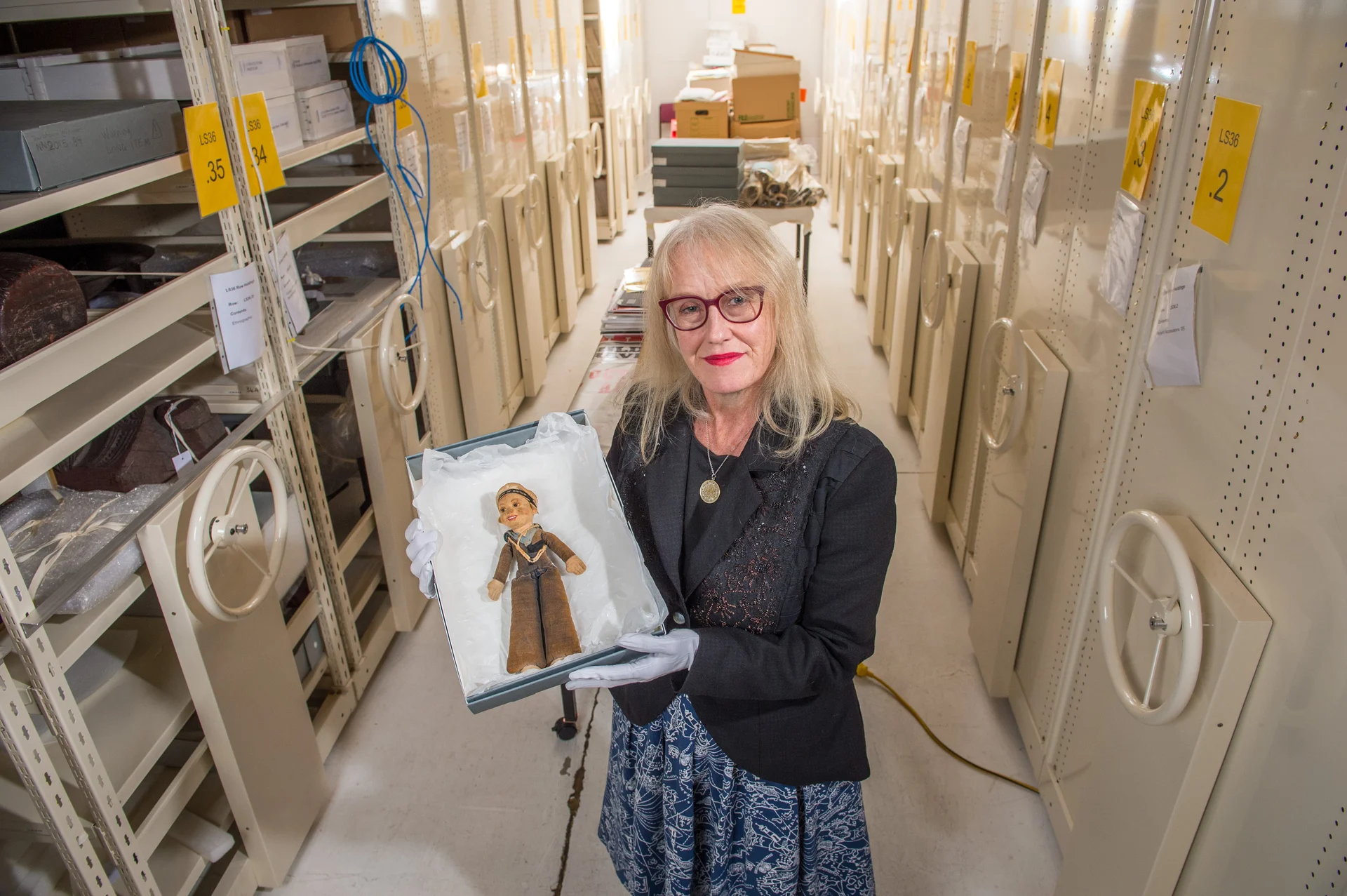
The Nelson Provincial Museum has no doubt wooed you with an exhibition or two, but a bit like Narnia, you need to step behind a much older door to find the real magic. Britt Coker explains.
Well, there’s good news and there’s bad news. The good news is that Nelson Tasman residents have a collection of early photographic images that are second to none.
The bad news is that they are housed in a 1970’s building in Stoke stored alongside sandbags that aren’t there because they’re part of the collection.
Less than 1% of the collection is on display at the provincial museum in Nelson’s upper Trafalgar Street. Most of it is housed at the storage facility in Isel Park which is ironically, a relic not worth saving.
Museum Chief Executive, Lucinda Blackley-Jimson explains.
“We are in a building that has earthquake issues, and it has been strengthened as much as it can be. There are issues of weather tightness, it’s flood prone, and there is asbestos in the roof (which is stable, but deters renovation). There are huge issues with this site, and that’s why it is so hugely important that local councils do support us to move into a new collection store.”
The museum’s had made some first steps with the successful purchase of a piece of land that backs on to the city’s museum. Now they wait for support to build, appreciating that there are many financial pressures on the local councils, but hoping a ‘sooner rather than later’ strategy is adopted.
The Nelson Provincial Museum began way back in 1841. Early UK settlers, not yet off the boats, were already planning an institute for the ‘new colony’. This forward planning has resulted in the oldest museum collection in the country with equally notable numbers.
Two hundred thousand objects across social and natural history, taonga Māori, fine and decorative arts, as well as 1.2 million photographs, and 150,000 original documents.
The Tyree Studio photographic collection takes pride of place on the mantel.
This highly lauded collection stretches from the 1860s to the 1940s and is significant enough to have been included in the prestigious UNESCO Memory of the World New Zealand documentary heritage register.
Much of the credit for the preservation of the early photos must go to a woman called Rose Frank.
Born in 1864, she was one of New Zealand’s first professional woman photographers. The Tyree Studio was started by Fred and William Tyree who photographed many Nelson Tasman residents from the 1860s onwards.
Rose joined the business in 1885 aged 21, became manager in 1895 and bought the studios in 1914.
She held onto all 150,000 glass plate records during that time, finally retiring at the age of 82 years old.
Another significant contributor to Nelson’s photographic records was Frederick Nelson Jones Jr (F.N Jones) who took more than 12,000 photos from 1904 to 1933.
His use of a three-legged ladder offered a clear vantage point at key events, though his camera made the ultimate sacrifice. Donated to the museum’s collection, the numerous dents on its rim attest to a few battles lost when gravity came into frame.
With 200,000 items in the collection, ‘something for everyone’ is a confident catch cry.
For Lucinda it’s the fashion.
“I’m really excited every time I come here and look at the textiles because we’ve got a beautiful collection of fashion, so that’s something I really gravitate towards, and I have those ‘wow moments’ when I come through.”
At the other end of the fashion spectrum are items synonymous with a regional story of sand and sunshine.
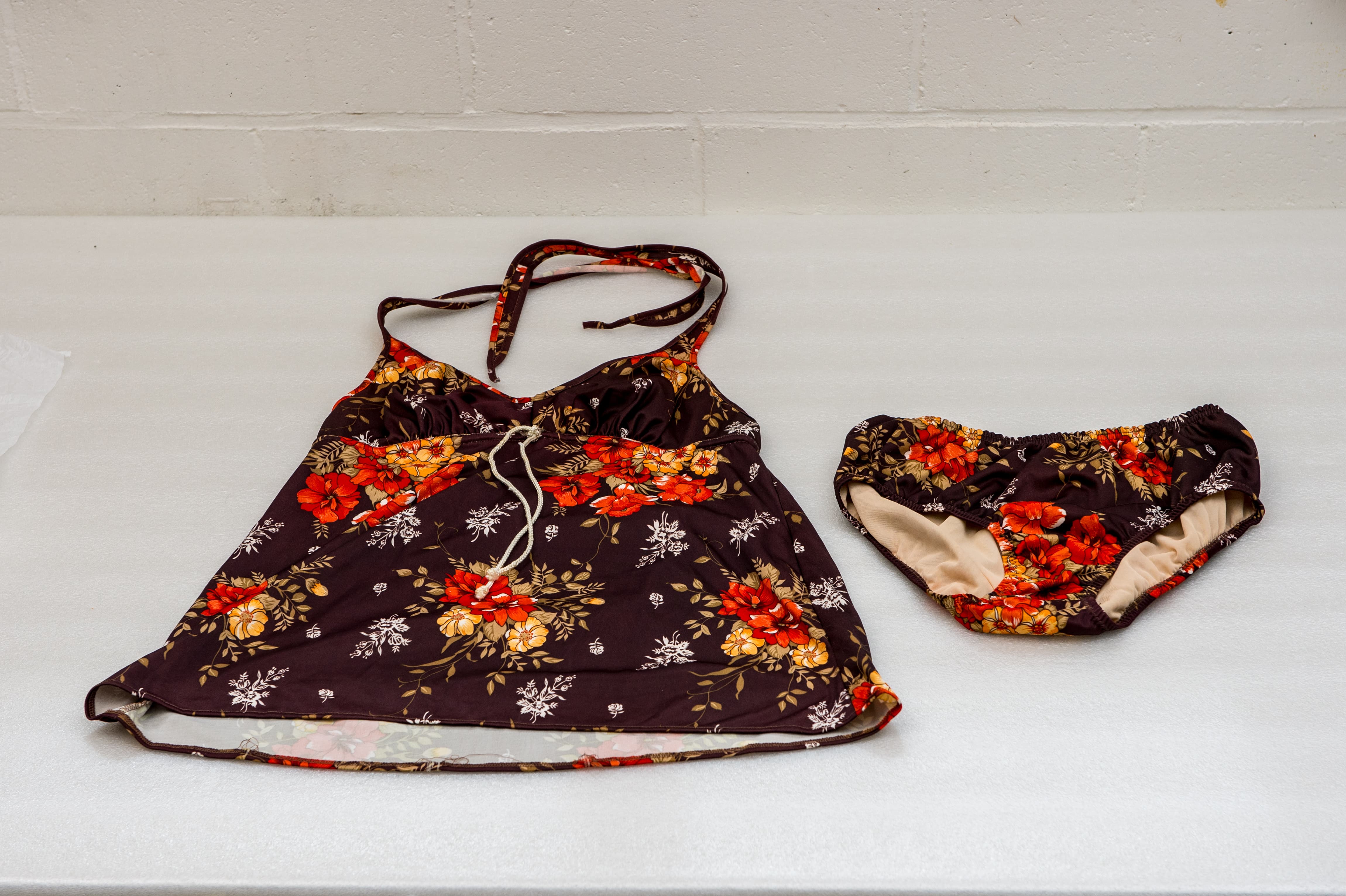
“It’s not all very old things and people are surprised that we have something from the 60s or 70s, and actually that’s history, that’s really important. The swimsuits particularly, because Nelson Tasman has such a beach culture. There are quite high fashion, quite risqué little pieces there.”
In an effort to declutter, you and I might biff things out. At the museum, it’s called rationalisation or deaccession.
Though Collections Leader, Shae Trewin acknowledges their preference is to make the right decision in the first place as it saves a lot of time. Something they are better at doing as systems and processes have improved.
“That’s part of healthy collections management but also, what is healthy is having a very good collections policy going forwards.”
So they appreciate the offer, but no more old sewing machines please. It can be a difficult choice as to what makes the collection in modern times, though there are clear stand-outs. such as the 2019 fire that devastated large tracts of Waimea.
Photos taken by people close to the action, including a few from Tasman Mayor, Tim King have been added to the photographic archives. And what would they like more of? Still photographs, still.
And that taxidermied South Island kokako that you have sitting in a box in the garage you were going to let your kids fight over after you’re gone. The museum will take it because the bird is extinct (possibly, ‘data deficient’ is the amended classification).
Shae says in the presence of climate change, these examples of nature are providing insight that sketches in an old book can never replicate.
“Scientists are paying more attention to these specimens to look at the size of birds or animals back then; the size of eggs. Seeing the changes that have happened, the acceleration of species becoming endangered or extinct.”
She suggests that not even a skilled artist creating the best hand painted illustrations with the closest colour match, nor the latest 3D machine can compare with the genuine article.
“That authenticity is still what makes a museum, a museum.”
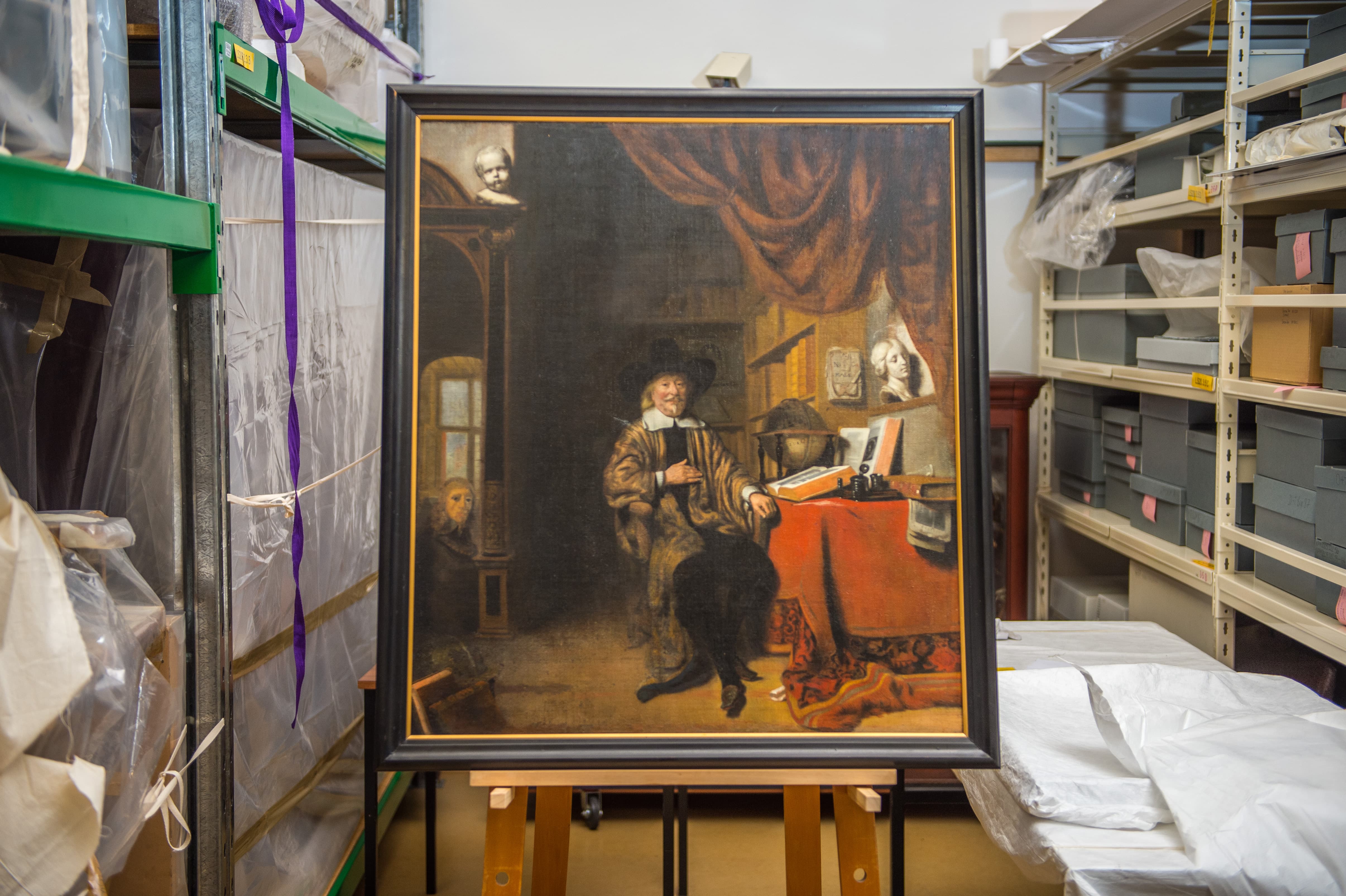
The curators would also welcome greater diversity in their contemporary collection, acknowledging the different ethnic groups and refugee communities that make up the region and whose stories are underrepresented in the archives.
When you’re dealing with treasures on a day-to-day basis, it’s inevitable you’re going to hear the occasional shudder inducing confession such as, “I was the one that threw out the Lindauer painting”.
In this person’s defence, the subject did have scary eyes. And the painting was a bit damaged. And yeah, they didn’t know it was a Lindauer.
It’s believed to be in one of the Karori Tip’s Treasurers Under Trash piles. But it was one of a pair, and the other was donated to the Nelson Provincial Museum where it is currently undergoing conservation work in advance of a public outing one day.
So, you win some, you lose some.
As modern materials are introduced, they bring new challenges for preservation.
Shae points to a couple of Proper Crisps compostable chip packets pinned to the staffroom wall inside a plastic sleeve.
Will they break down and how long will it take? They need to find this stuff out because who knows what treasures will be made with compostable materials in the future that will require preservation. It might even be a 21st century chip packet.
