
Esther Georgina Lock began her public life in the shadow of her husband, Nelson’s 13th Mayor, William Lock. However, Esther soon established her own place in the Nelson’s history.
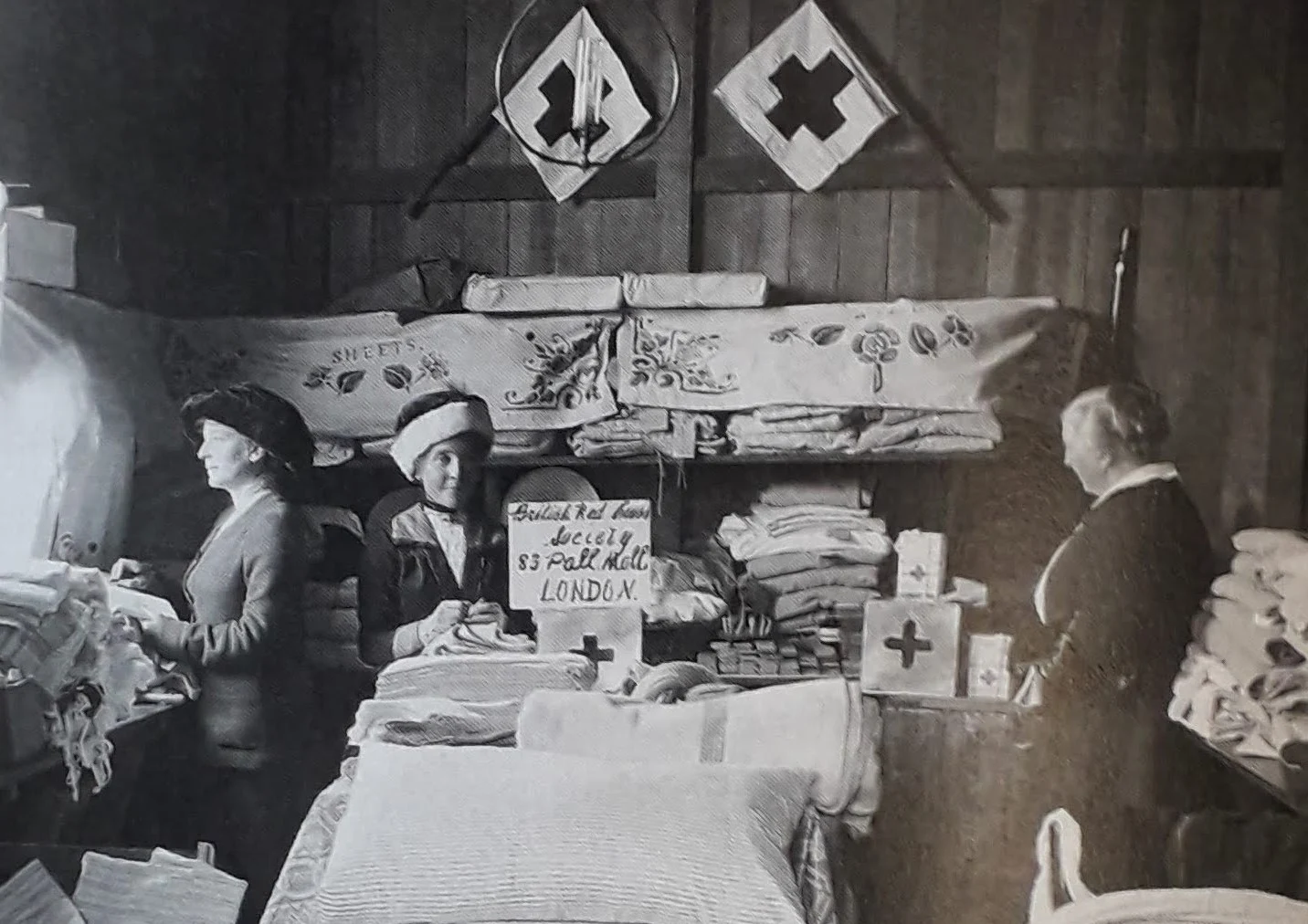
Esther Lock came to prominence at the beginning of the First World War, in her role of Mayoress. She established a committee of 43 local women who collected garments and money for the relief of those affected by the war in Great Britain.
This need became more localised when New Zealand troops were sent to the front, and Esther instigated and presided over other charitable organisations like the Belgian Relief Fund, the Lady Liverpool Fund and Red Cross.
She spent many hours organising donations and fund-raising events.
In June 1915, when William was defeated in his mayoralty bid, a deputation from the Lady Liverpool committee approached Esther and asked her to remain as their chairwoman. It was reported she agreed “in a cheerful and self-sacrificing manner”.
For her war work, Esther was awarded the Belgian government’s Queen Elisabeth Medal. She was one of 33 New Zealand women to receive the honour recognising women who raised thousands of pounds as well as sending tonnes of relief supplies for Belgian citizens throughout the war years.
In 1918, Esther received an MBE from the British government for her contribution to the war effort.
William was re-elected Mayor between 1921-1927, so Esther spent a total of eight years as Mayoress.
Around 1926 she was the first woman in the district to be appointed a Justice of the Peace.
Many organisations benefitted from Esther’s support.
A major one was the Plunket Society. She was part of a Plunket committee which began raising funds in February 1936 to build Plunket and restrooms in Trafalgar Square, now home to FlameDaisy Glass Design.
The new building opened in December 1936.
Amazingly, the committee had both raised the money and completed the building in just 11 months.
In 1937, when Esther stepped down as Plunket’s president after a five-year term, her connection with the society had spanned 24 years. It was noted that the new Plunket restrooms would become a fitting monument to her.
With the coming of World War Two, Esther was again involved in local relief work, notably on the Nelson Central Relief Committee’s milk sub-committee, which supplied milk to young children, and the Women’s National Reserve, which urged women to take up jobs left vacant by enlisted and conscripted men.
She was also involved with Nelson Health Camp Association and Crippled Children’s Society.
Esther Lock, JP, MBE, lived in Nelson until 1954, passing away in Wellington in 1955 aged 88, as one of Nelson’s lesser-known woman heroes.
The Nelson Historical Society meets 7.30pm-9pm St Stephens Church, Tahunanui Drive on the second Monday of month. $2 at door. On 12 July the talk will be about photographer FN Jones Jnr, with Darryl Gallagher, of the Nelson Provincial Museum. More information on Nelson Historical Society’s website and Facebook pages.
