
Nelson Tasman has shown some of the lowest support for the government’s clean car scheme, according to a new survey.
The scheme, which came into effect on July 1, offers a discount on the purchase price for people buying both new and used electric vehicles and charges a fee to those who buy high emission vehicles.
Horizon Research has released an independent survey on the scheme conducted after it was first announced in June. It shows 35 per cent of Kiwis are in support, with 40 per cent opposed.

Support is lowest among those who have a ute, an SUV or a van as their main vehicle; those whose main vehicle has diesel as a fuel; and those living in Northland, Waikato/Coromandel, Taranaki, Nelson/Tasman/Marlborough, West Coast and Otago.
Support for the scheme is strongest among 18–34-year-olds and is higher than average among those who don’t own a vehicle; current hatchback owners; current owners of EVs, hybrid and plug-in hybrid vehicles; and those living in Auckland and Canterbury.
However, overall, the policy creates a potential market of more than 406,000 adults (including around 30% of current EV or hybrid owners) who say it will make them more likely to buy lower emission new and used electric and hybrid vehicles.
Nearly 1,500 survey participants were asked: ‘Overall, do you support or oppose the policy to provide cash rebates for new and used low emission vehicles, and charge a fee for buying high emissions new and used vehicles?’
Results show 14.7 per cent ‘strongly support’; 19.7 per cent ‘support’; 20.2 per cent ‘neither support nor oppose’; 15.7 per cent ‘oppose’; 24.1 per cent ‘strongly oppose’; and 5.7 per cent were ‘not really sure’.
Horizon says support rises as incomes and as formal education levels rise. There is, however, no difference by gender nor is support affected by the age of vehicle people currently own.
In July clean car sales rose substantially compared with June this year.
Last month, 760 pure electric vehicles, 431 plug-in hybrid electric vehicles and 1,163 hybrids vehicles were sold across the country - the highest combined total on record. This compares to a total of just 521 in June.
Horizon says the future decisions of just over 10 per cent of adults, a nett 406,200 people, could change to cleaner vehicles as a result of the scheme - revealing a significant potential market shift. (The timeframe over which this shift could happen was not measured).
Horizon reports 12 per cent of adults say the scheme will make them more likely to buy a new or used electric car or hybrid vehicle, while 7 per cent say it will make them less likely to buy new with another 6 per cent saying they are less likely to buy second hand.
The potential market shift happens despite a majority of respondents saying it will make no difference to their vehicle buying behaviour, they can’t afford to change, or they won’t be changing.
Overall, 18 per cent say it will make no difference to the vehicle they will buy – a view particularly strong among current SUV, ute and van owners.
The survey also indicates that of all occupations, it’s farmers who are the most adamant the scheme will make no difference to their vehicle buying decisions.
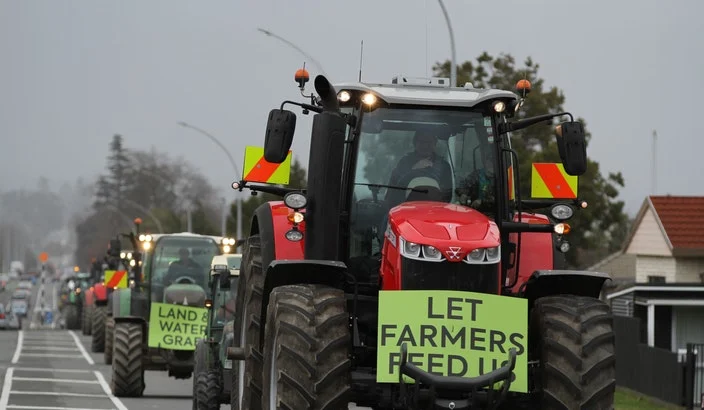
Farmers and ute owners took to the streets across the country last month for the 'Howl of a Protest', to voice their concerns over “unworkable regulations” including the new “ute tax”.
The expense of going green remains a hotly debated topic, with Horizon’s survey revealing cost is a potential driver for people’s opposition to the scheme.
Overall, even with the rebates, a nett 43 per cent say they still won’t be able to afford a new or used electric or hybrid vehicle. This drops as personal income rises.
Nearly a third of Kiwis won’t be rushing off to do anything, with 29 per cent overall saying they won’t be buying or selling any vehicles.
Horizon Research Principal, Graeme Colman, says the survey indicates vehicle sales companies can tap into a large potential market for an ever-growing number of lower-emission vehicles.
Horizon’s survey was conducted online between 15 and 25 June 2021. Its 1,452 respondents aged 18+, represent the New Zealand adult population at the most recent census. It is weighted by age, gender, personal income, employment status and highest education. At a 95% confidence level, the maximum margin of error overall is +/- 2.6%.
The survey was commissioned by Horizon as one of its regular public-interest projects.
