
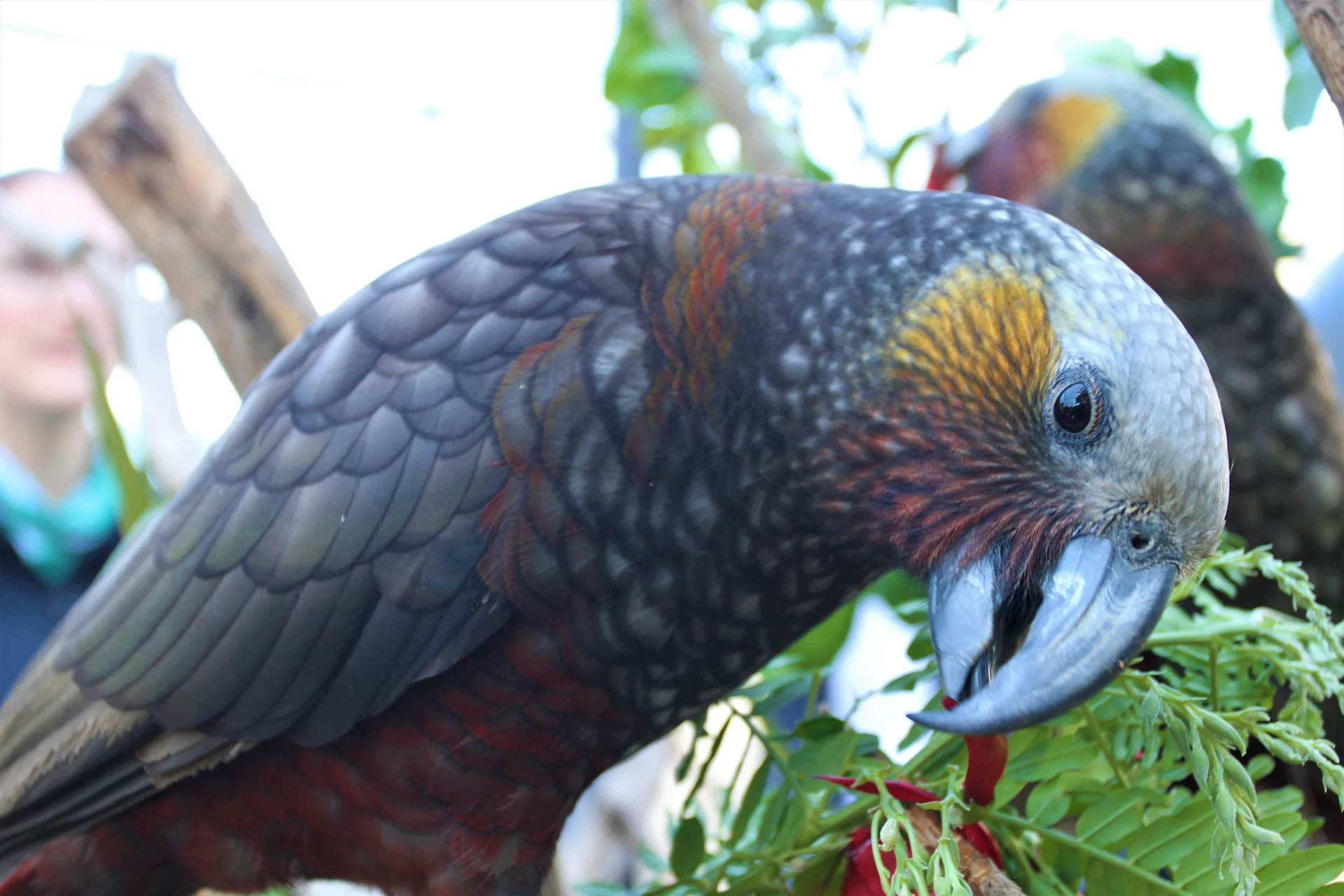
More kākā and kākāriki may soon fly free in the wild thanks to the Natureland’s “breed for release” programme.
The wildlife conservation trust was this month awarded just over $60,000 to assist with the programme as part of the Department of Conservation’s wildlife institutions relief fund.
After successfully applying to the fund last year, the trust went on to breed and release five yellow-crowned kākāriki and is hoping for even greater chick numbers this year with an extra breeding pair joining the park.
Natureland manager Ruth Seabright says this year the breed for release programme will oversee three breeding pairs of yellow-crowned kākāriki and two of South Island kākā.
While the kākā were under Natureland’s care last year, they were not yet mature enough to breed.
Ruth says keepers are beginning to see promising signs from both species that the pairs are preparing to reproduce.
“We’re really hopeful we’ll see some chicks this year, which is exciting."
Last year, five chicks were raised by Natureland and released to Puangiangi Island in Marlborough, in partnership with Project Janszoon.
This year, the trust has partnered with Pūkaha National Wildlife Centre in the Wairarapa, which will decide where any successfully raised chicks will be released.
Ruth says the funding from DOC helps pay for veterinary care, staff time, food, and overheads.
“There is a lot of care involved and it’s very labour-intensive work, but the animals are looked after with gold standard care, and we have a real focus on making sure they are in a state of positive welfare.”
She says daily enrichment is provided for all their animals, particularly the kākā, which are known to be highly intelligent birds.
Ruth says the programme centres around animals with population issues.
“We are trying to raise the population of these native species in the wild. We also have a range of exotics and species that we keep for advocacy purposes due to habitat destruction in their homeland. These animals simply couldn’t be returned to the wild because their habitats have been destroyed.”
She encourages people to consider their buying habits to be more sustainable to help protect the animals’ environments.
