Huge reform across our drinking, wastewater and stormwater systems – Three Waters, has been labelled a once in a generation chance for change by Nelson City Council’s chief executive. Sara Hollyman reports on the significant project.
Three Waters aims to address years of under investment in critical water infrastructure by pooling councils together to create stronger borrowing and buying power.
The proposal would see Nelson’s $616million water, stormwater and wastewater assets transferred to one of four new, large water service entities.
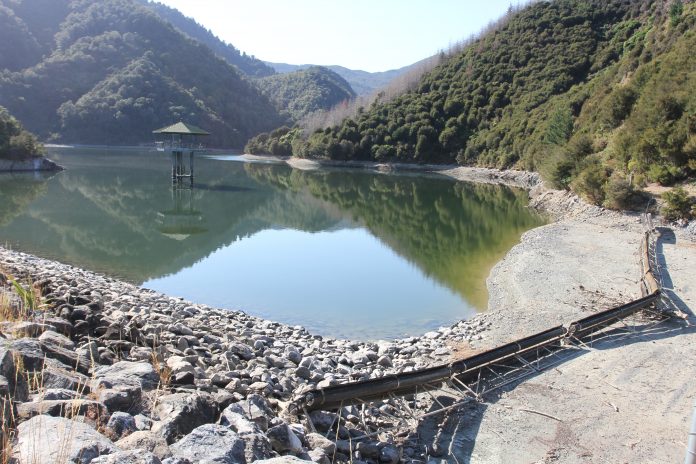
These assets include infrastructure such as the Maitai Dam, the Nelson Wastewater Treatment Plant and NCC’s 50 per cent share of the Nelson Regional Sewerage Business Unit.
Nelson would become part of ‘Entity C’, along with councils along the East Coast of the North Island up to Gisborne, Wellington, Wairarapa, Manawatu as well as Marlborough and Tasman.
Local councils will be jointly named as owners of the company with iwi sitting in a co-governance role. NCC ceo Pat Dougherty says this is a key point to make when regarding the proposal.
“People think we’re selling the assets and we’re not. The proposal is to transfer the assets along with the debt associated with it. Council owns these assets effectively on behalf of their community, the community is still going to be using those assets, benefiting from them and paying for them.”
Entity C would become responsible for delivering all of the city’s water, wastewater and stormwater infrastructure maintenance, renewals and new projects.
Mayor Rachel Reese says there are going to be major challenges for local government in meeting the costs and complexities of the changing sector.
“It’s also not a situation where it’s just some version of re-packaging today, there are some fundamental changes that are coming around the water services entity and climate change, so we’ve got to do things differently.”
It is a topic that has been brought up by local councils to central government for roughly a decade.
“This isn’t a new problem, it’s been there a long time and the can’s been kicked down the road essentially and we just can’t afford to do it any longer,” says Rachel.
She says there has been a lot of work done over the last three years to begin to build all the elements of what a different way of operating could look like.
“I was sceptical, both Pat and I sat on the steering group responsible for doing a lot of this work and it’s been pretty gruelling, but we’re both there because actually it really does matter.”
The four entities would have larger borrowing capacity to fund infrastructure investments, being able to borrow significantly more that local councils can on their own. Being much larger organisations also means they can deliver services far more efficiently than any individual Council.
“I look at what would happen if we don’t do it, if we do nothing as a sector, as a country we are going to be spending more and more of our resident’s money on a really inefficient system. As a ratepayer and a taxpayer I can’t support that choice. Not when I know there’s a better way to do it,” says Rachel.
Pat wants people to understand that the modelling is not based on business as usual.
“NZ standards are rising and will continue to do so. There’s a dedicated drinking water regulator being set up – Taumata Arowai – they’re going to enforce the existing standards for water supply.
“A lot of councils and members of the public are talking about the ‘new water supply standards’, they’re not new, they’ve been there for a long time, all that’s going to happen is that someone’s going to enforce them very, very hard.”
Penalties for negligently breaching water supply standards will range up to $300,000 for an individual and $1.5million for an organisation.
Discharge standards for wastewater and stormwater are starting to increase and will continue to do so. This will be another big driver of increased costs.
Pat says asking 67 local authorities to consider the national case for change is proving quite challenging up and down the country but worries about deferring the process any longer.
“This is a once in a generation chance for change, it’s well thought out, the national case for change has been well made.
“The industry is in a state of hiatus and desperately needs certainty.”
Rachel says it’s not a matter of simply opting in or out with “a good 18 months” of due diligence needing to be done for each council if the Government decided to proceed with reforms.
Legislation would be drafted by Central Government which will then be written into a bill which will go before the Select Committee. At this point every New Zealander will have the opportunity to have their say.
“There’s no decision to be madeat the moment about whether we’re in or not,” says Rachel. We are simply being asked to provide feedback on the reform proposals, the impact on our community and how these could be improved.
“In my view it’s a really positive move, it’s not an easy one to execute, this is really big reform.”
She says council does want to get feedback from residents and are currently setting up some engagement sessions on some key principles of the proposal. Covid-19 restrictions are making this a bit of a challenge at the moment.
In terms of full public consultation, she says they don’t know the answer yet. That will depend on decisions made by Cabinet in October.
“We have to think about what the best way is to consult the public on that... it’s not like it’s our proposal, it’s the government’s... so we’re still talking about that.”
