
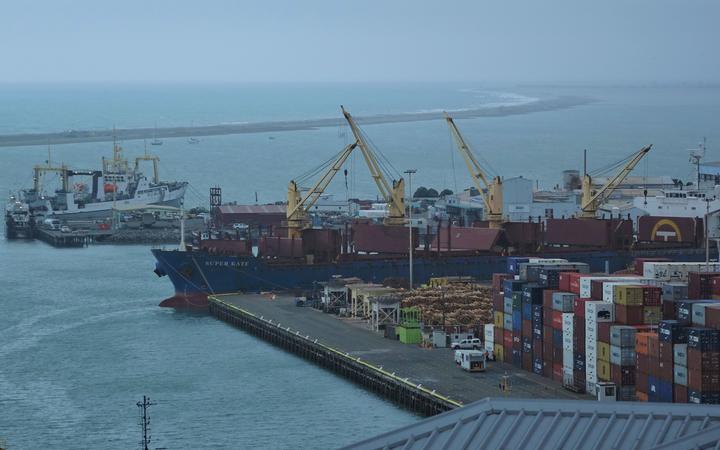
Port Nelson has achieved a new off-peak season record for container movements and wine and bottle imports despite facing on-going shipping reliability which is hitting small export businesses in the pocket.
During the first half of 2021 almost a quarter of the 80 container vessels expected to arrive in Nelson omitted the port, leaving exporters hard hit by disruptions.
This coupled with a dramatic 600 per cent increase in container freight costs in the year to July 2021 has left small exporters struggling to get their goods to international markets.
Despite the challenges Port Nelson saw a record-breaking week in August with 5141 Twenty Foot Equivalent Units (TEU) moved during the week of 9 August.
But a spokesperson says the record level of movements does not indicate an end to on-going shipping reliability and capacity challenges for the region, the Port, or the rest of the country.
The typically reliable container shipping service through Nelson has been caught by global and national challenges with the rise of Covid-19 and associated lockdowns.
A particular local challenge at Port Nelson is the tidal nature of the port, with vessels only able to enter the harbour during tidal windows.
“Occasionally vessels, under time pressure due to disrupted schedules, will choose not to wait for the tidal window and by-pass Nelson,” says a Port Nelson statement.
This happened almost 20 times in the first six months of 2021.
The nature of importing and exporting challenges impacting the region is a result of a global and national crisis.
In early 2020, Covid-19 first spread around the world, and countries went into shut down. This had the effect of leaving ships unattended outside ports and cargo creating congestion on the ports. While volumes continued to move, they did so at a slower pace and services became irregular.
Around June and July 2020, a new shipping crisis was triggered when the world’s consumers began coming out of lockdown with an appetite to spend.
Dramatic increases in the demand for products saw global cargo volumes rapidly increase which created unprecedented congestions in the system with ships waiting at ports to berth and cargo overflowing at ports while waiting to be distributed.
As an export-oriented nation, New Zealand has been strongly impacted by these global shipping challenges which have been accentuated by some local factors.
Firstly, waterfront labour issues on the east coast of Australia created delays in container supply followed by the overwhelming of Auckland Port’s capacity due to the rise in cargo volume coming at the same time as it was implementing a new container handling strategy and had labour shortages.
The result was significant delays in vessels unloading cargo at Auckland and the distribution of that cargo around the rest of New Zealand, including Nelson.
As a result, the reliability of container vessel services plummeted. Between February 2020 and April 2021, shipping reliability at Port Nelson fell from 100 per cent to 0 per cent.
The congestion was felt by import and exporters with the inability to obtain products in a timely manner and an equally dramatic shift in the costs of container movements.
There is less of an impact for larger exporters locked into long-term contracts with shipping agencies due to the volume of goods that are exported.
However, the impact on New Zealand’s smaller exporters is drastic and they are struggling to export their goods to international markets due to space availability on ships and delayed or cancelled vessels coming into Port.
Key exports from New Zealand are chilled and perishable goods, which require cool store capacity and refrigerated containers.
Shipping congestion has coincided with New Zealand’s export replenishment of chilled food and perishables for the North American and European summer retail season, but demand continues to out-pace supply of container equipment causing issues exporting these products which have a limited shelf life.
“Addressing the risk for the region’s importers and exporters as well as providing for the nature of 24/7 worldwide shipping, it is essential for Port Nelson to also operate on a 24/7 platform,” says the Port Nelson statement.
The intensification of lack of equipment, shipping disruptions, and increased costs has unfortunately resulted in Te Tauihu exporters dealing with the brunt of these impacts.
There is also high utilisation of storage facilities at this advanced stage of the peak export season in Nelson causing additional pressure.
At Port Nelson, the never-ending vessel schedule changes, cargo rollovers, and space capacity issues, require the Port to constantly reorganise the container depot and the resourcing of its team.
In May this year, space became a premium and for the first time in Port Nelson’s history, they were forced to close for receivals.
Full containers were stacked in the empty depot, roadways were adapted for four-high export stacks, and general containers were filling available space in reefer towers.
The container terminal had come to a critical point and had gone over and beyond its capacity.
Fast-forward to August and more records were broken.
Port Nelson’s containerised volumes moved for the week of 9 August were 5141 TEU. It was the highest number of TEU in one week in the last four years and the highest moves outside the apple season (March to May).
During the same week, the Port imported a record number of TEU containers 1021 which was the result of another record-breaking week for wine and bottle imports and exports.
626 TEU of wine and bottles was imported during the week.
Port Nelson says shipping volatility will continue to impact global shipping for the next 12-18 months and freight costs will remain high.
In the long term as congestion levels ease, record high freight costs should reduce in time, however industry experts suggest this may not happen for another two years.
Port Nelson has been working to resolve the key issues of delays to export shipments. As shipping reliability continues to increase, they say they will see the crisis move in a more positive direction.
