
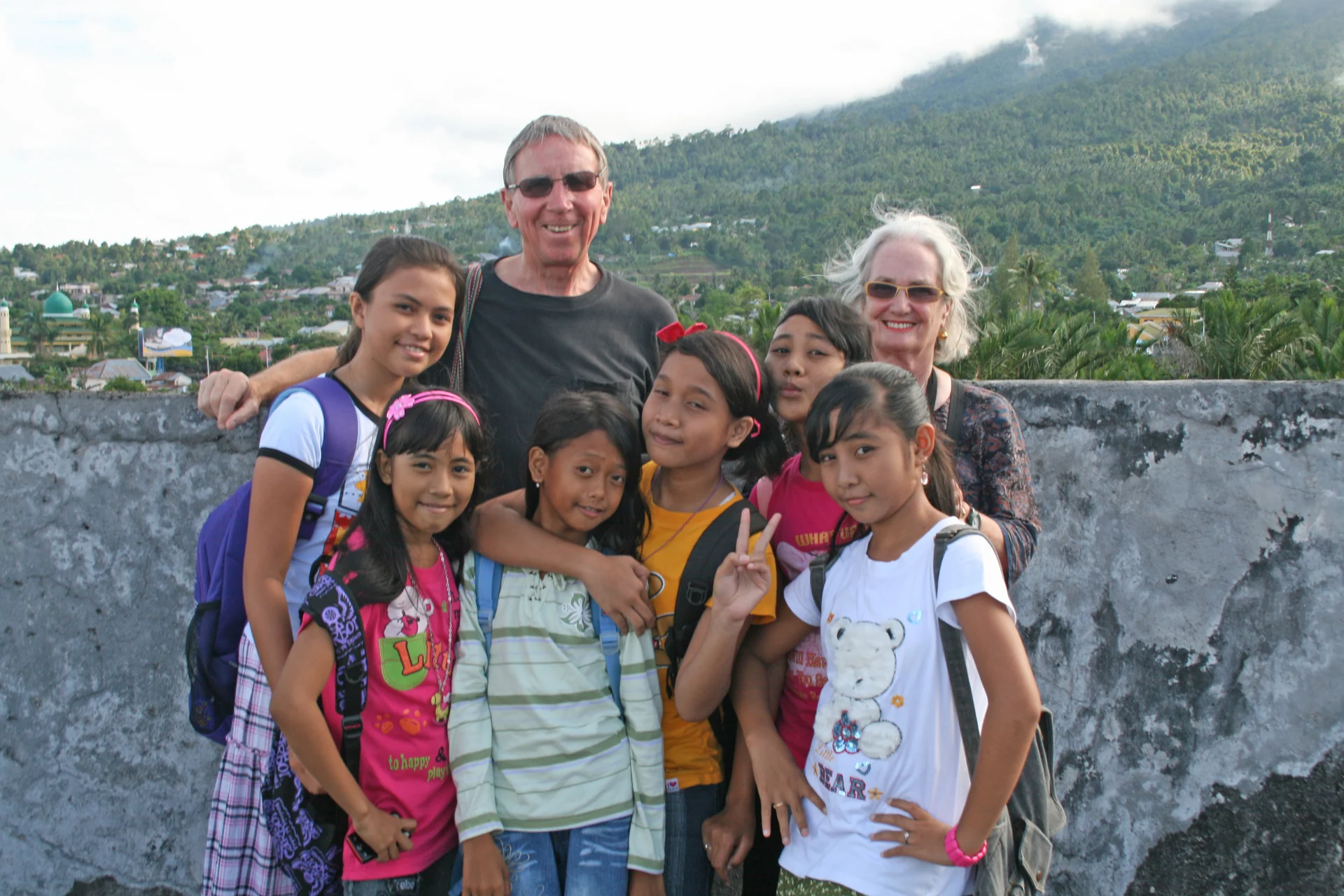
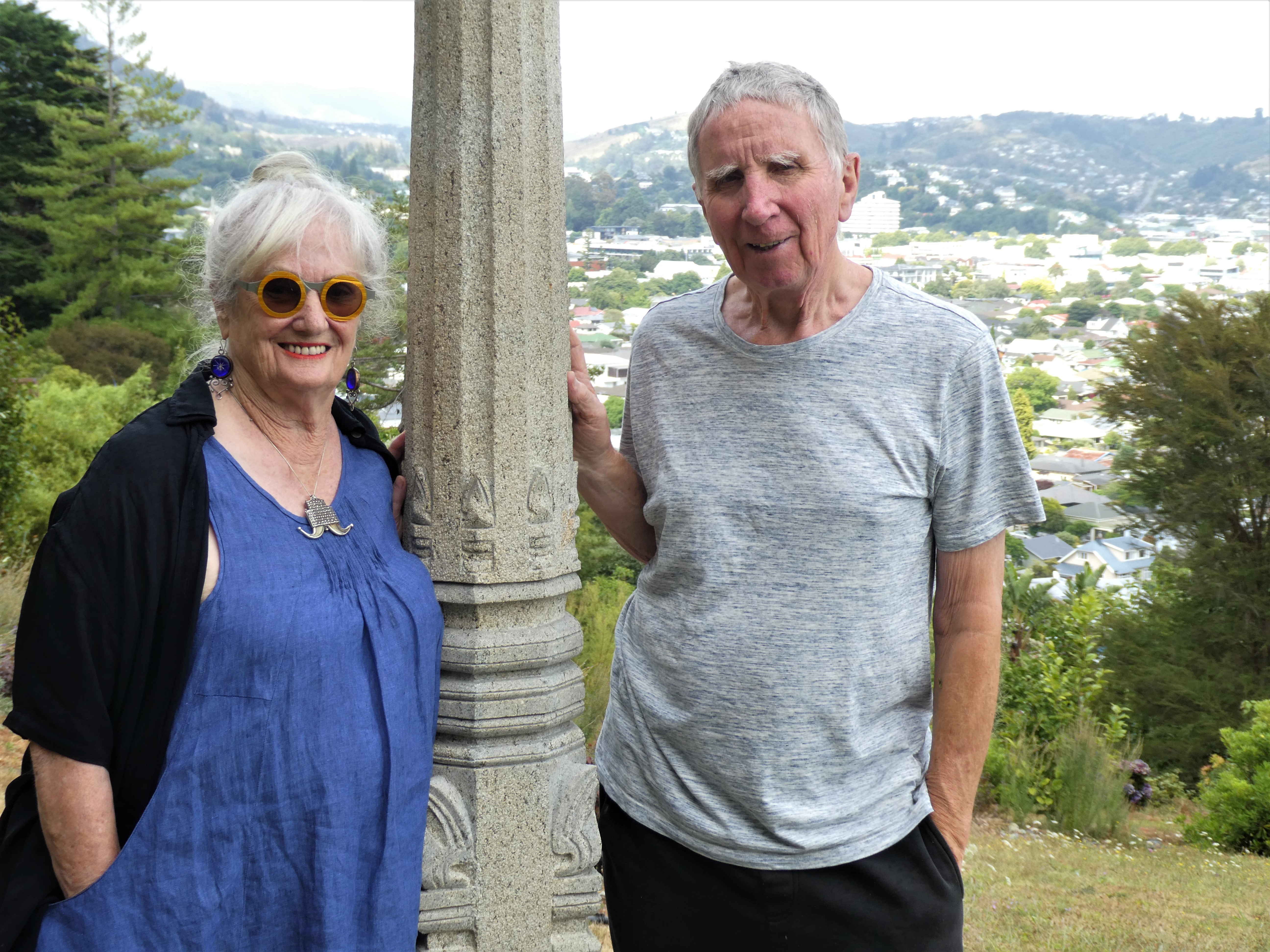
The McKinnons have a special connection with Nepal. From climbing its mountains with Sir Ed to working in a Nepalese hospital and now creating their own slice of Nepal in their Nelson garden. Frank Nelson speaks to the McKinnons about their incredible life.
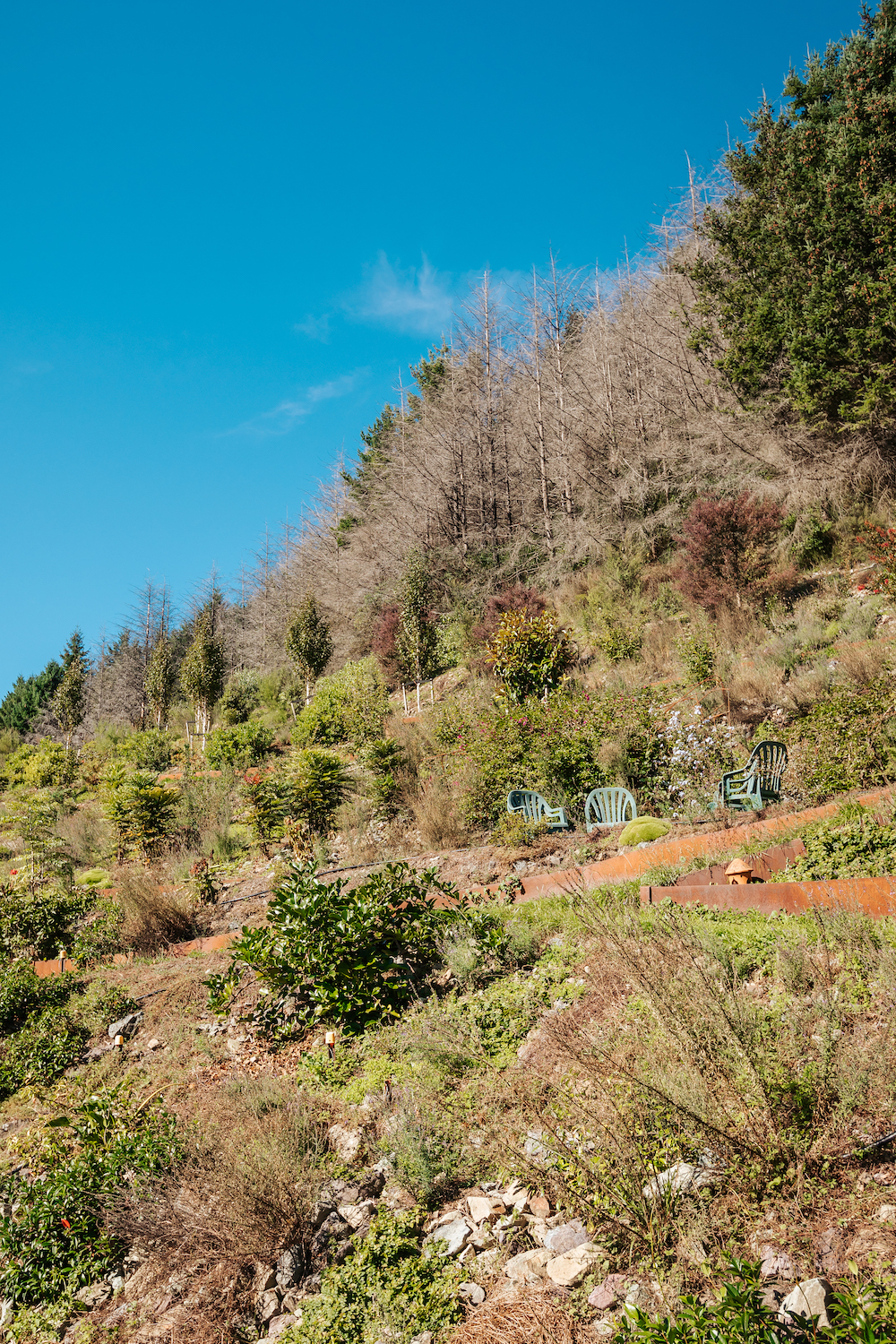
Almost three years after a raging wildfire left their Nelson property a blackened, barren moonscape, John and Diane McKinnon have created a new garden that promises to be even more beautiful than the original.
Though it’s still early days for some of the flowers, shrubs, bushes and edibles, there are signs that this prominent Iwa Road site, with its sweeping views over the city and sea, is being transformed into something special.
The flames of February 2019 took out about 70 percent of the established Douglas firs planted by the McKinnons to suppress gorse and broom on the upper reaches of their roughly four-hectare block.
From there the fire, which authorities believe was deliberately lit, raced down through about an acre of garden and was threatening the house before aerial fire-fighters saved the day.
John, undaunted by the steep terrain and an 84th birthday later this year, still does much of the gardening, however, when it came to starting again almost from scratch, he and Diane turned to Nelson-based professional garden designer James Wheatley.
Together they have created a network of grassy pathways meandering between rhododendrons and daphnes, canna lilies, radermachera, agaves, bird of paradise, pieris, mahonia, azaleas, osmanthus, orangeberry and juniper.
Further up the hillside is a significant stand of white Himalayan birch and nearby some olive trees that somehow survived the fire. And higher still, above the garden, the remaining Douglas fir trees have been under-planted with manuka.
The McKinnons are looking forward to enjoying the fruits of their labour including citrus, quince, plums, blueberries, red currants, figs, grapes, tamarillos, guava and New Zealand cranberries.
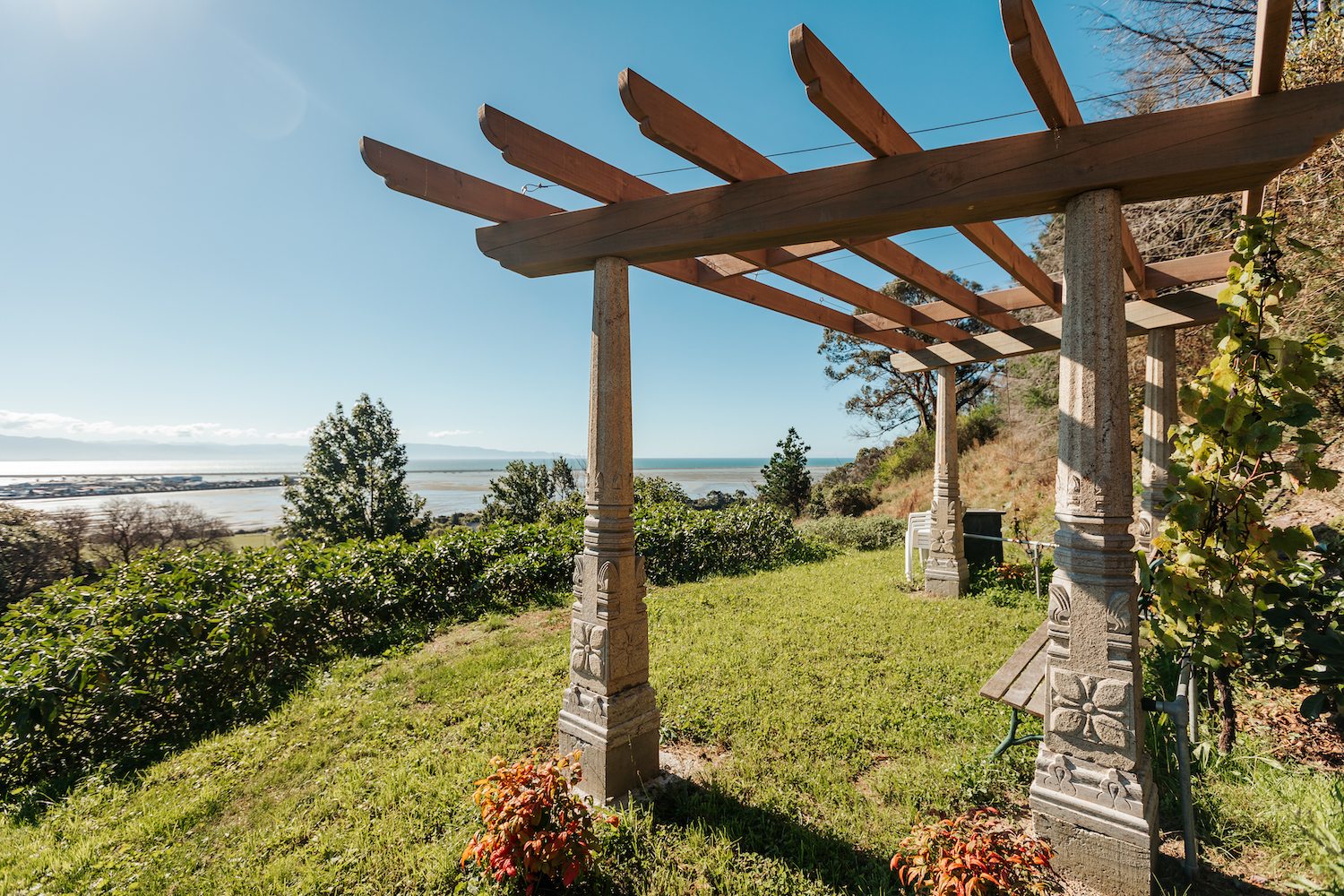
The garden includes an elevated sitting space created inside four carved stone pillars shipped from India; climbing up the structure are table grapes and the native flowering vine, tecomanthe.
This area, along with a few other intriguing features and the many plants originating in China or the Himalayan regions of India and Nepal, lend this garden a distinctly Asian feel.
Which is no accident… John and Diane have deep connections in that part of the world where they lived for two and a half years, have visited many times and plan to return to again next year.
John was born in Dunedin and grew up on dairy farms there and in South Canterbury. He went to St. Kevin’s College, Oamaru, but left at 16 not knowing what he wanted to do in life.
He worked on the family farm for a few years then as a labourer on the wharf and at a freezing works before, at age 21, going off to medical school and becoming a doctor.
For some time he’d been an enthusiastic and adventurous mountaineer, and in 1962, while at Otago University, he joined several climbs in the Mount Cook area which caught the attention of the late Sir Edmund Hillary.
Just nine years earlier, Hillary and Nepalese climber Tenzing Norgay became the first to summit Mount Everest, the world’s highest peak. Now he invited John and one of his climbing colleagues to join an expedition to Nepal.
There John was in a group of four that made the first ascent of Mount Thamserku, a 6608 metre peak described as being extremely difficult and technically challenging. Indeed, according to Wikipedia, the route they took has not been completed by anyone else since.
John’s twin passions for medicine and mountains fired his fierce affection for the Himalayan people and meant he shared Hillary’s ongoing commitment to improving their often meagre and impoverished lives.
“I experienced Sherpa life and enjoyed the Sherpas immensely,” John said. “So when Ed started planning a hospital in that same area and asked if Diane and I would like to be the first couple at the hospital, it was an instantaneous ‘yes’.”
John and Diane were married in 1965 and the following year became the first volunteer staff at the new Khunde Hospital.
“It was like stepping back into a medieval medical environment,” said John. “There was a lot of serious disease, like tuberculosis, and infection from things like fractures and burns.”
“A lot of it was extraordinarily simple stuff really but there was no tradition of adequate medical care.” For example, he said people who had been suffering with severe toothache, perhaps for years, were extremely grateful to have anaesthetic injections and teeth removed.
Tuberculosis was extremely prevalent in Nepal. Treatment was a long-term course of injections and pills, and John said people were very compliant because they quickly saw the startling recovery rates.
Another common problem was goiter, an enlargement of the thyroid gland which can produce grotesque swelling of the neck. In pregnant women the condition, caused by a lack of iodine, can also cause mental deficiencies in babies.
However, a single injection of iodised oil was enough to protect unborn babies while “more amazingly… the very big goiters, some the size of a football, gradually over a few months shrank away. That was magic.”
John’s experience in Nepal also led him to complete his training in ophthalmology. “When I worked at Khunde it was very obvious there were a lot of eye problems, particularly cataracts. People were blind, being led around by the hand by their grandchildren.”
Once fully qualified, John returned to Nepal every few years throughout the 1970s, ‘80s and ‘90s to carry out cataract surgery in remote hill villages, helping people he described as “stuck with their blindness by geography”.
John and Diane have long been involved with the Himalayan Trust, Diane is a trust board member, which Hillary and his wife Louise started in the 1960s to administer schools and other aid work.
Diane was born in Nelson but grew up in Hokitika. She trained as a teacher in Christchurch, taught in Greymouth, Hokitika and Mosgiel, and also spent about a year as a professional actor.
She was first invited to lead a tour to Nepal in the late ‘70s, a role that morphed into the couple establishing their own trekking company, Footprints Tours.
Diane has been primarily running the business for about 40 years with the latest planned trip scuttled by Covid two years ago. Over time the company moved into more specialised tours focussing on subjects like textiles (Diane’s specialty), botanicals… and Buddha.
John, a practising Zen Buddhist for about 30 years, is the author of "Homeland of the Buddha: A guide to the Buddhist holy places of India and Nepal", which explains the historical significance of the locations where Buddha lived and taught.
The couple have two children and three grandchildren. Their son Dorje (a Tibetan name) was born in Katmandu, “the first Kiwi born in Nepal,” said John, and now lives in Lyttelton. Daughter Rebecca lives in Auckland.
The last time John and Diane went to Nepal was in 2019 when they escorted (former New Zealand Prime Minister) Helen Clark shortly after she became the trust’s inaugural patron.
However, they are planning to return again next year for a very special occasion. The original aluminium school building built for the Sherpa community is being converted into a visitor centre and museum, and is due to open in May 2023… exactly 70 years after Hillary conquered Everest.
