
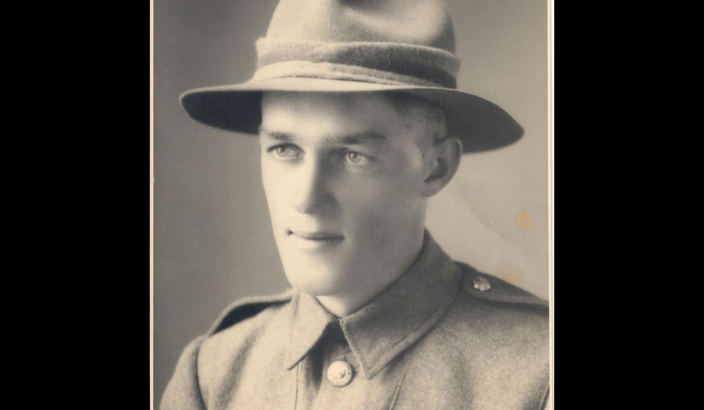
When Vic and Paulette Gardiner walked their cows from the Tinline to Mount Heslington in 1945, it was just another in a series of long journeys in their lives.
Vic, and his brother Ken, grew up in a farming family of Methodists in Pelorus. They both served in World War Two.
Ken was sent off to war with a celebration at the Pelorus Bridge. He met up with Vic in Lower Hutt, then took the train up to Auckland. Sailing on the Awatea, he noted he “got a good start on the boat, just as we were pulling out a sea gull crapped on my head”.
Once in Winnipeg, while training as a wireless operator, Ken noted much of his social life, including going out with his friend John and their girls, Gale and Fran.
Gale eventually began avoiding them and sent a letter saying she was engaged (“poor old John was in a great stew and went to town and got drunk”). After taking Fran to the circus, Ken decided it was the last time he went out with her (“I decided she was too expensive”).
The next month he went down town and wrote, “It was the first time I met Paul.”
Within in a month, after seeing each other almost every day, Ken was engaged to Paulette Lupien (Paul), a French-Canadian girl. Another month later they got married.
“When we got to bed my pyjamas were missing and there was an old cow bell tied under our bed,” wrote Ken.
Ken was then off training in the UK. He was part of a crew aboard a Lancaster and conducted his first official operation on 13 November 1942.
Three weeks later, his Lancaster was shot down during air operations against Hamberg. Ken didn’t survive. He never met his daughter. At the time of his death she was two months old.
Meanwhile, Ken’s brother Vic had enlisted in the war, too. He was shot and wounded by shrapnel in January 1943 and sent home.
At the same time, Ken’s widow Paulette arrived in New Zealand. Ken had made Paulette promise that if he died during the war, she would take their daughter to meet his family.
Paulette and Pat met the Gardiner family, including Vic, at Pelorus. Here, it is said that she nursed him as he recovered from his war wounds.
Perhaps Ken’s diaries might have indicated such things, but Vic, while also a prolific diarist, wrote dutifully (if a little less colourfully than his brother) every day of his farmwork and the weather, even if there was nothing to report.
An entry in his very first diary (1939) reads,
Monday 28 August 1939 buggering around in morning, breaking in horse in afternoon. dull day.
In the final entry of that year, he signed off matter-of-factly, “Thats the end”.
In this same vein, after returning from the war, he went on to fill decades’ worth of diaries.
By Ruth Russ.
