
Tony Orman
Kaituna Ridges farm just east of Havelock in the lower Kaituna valley has a long history of top pastoral farming management dating back to the 1960s when the late Albie Higgins took on the challenge of clearing the 824 hectare scrub-covered farm.
Albie converted it to a 824 hectare beef and sheep farm and then maintained it’s immaculate condition with a “war on weeds”, rarely spending an idle moment, instead grubbing out any thistles, gorse plants and other weeds that dared poke their heads above the pasture.
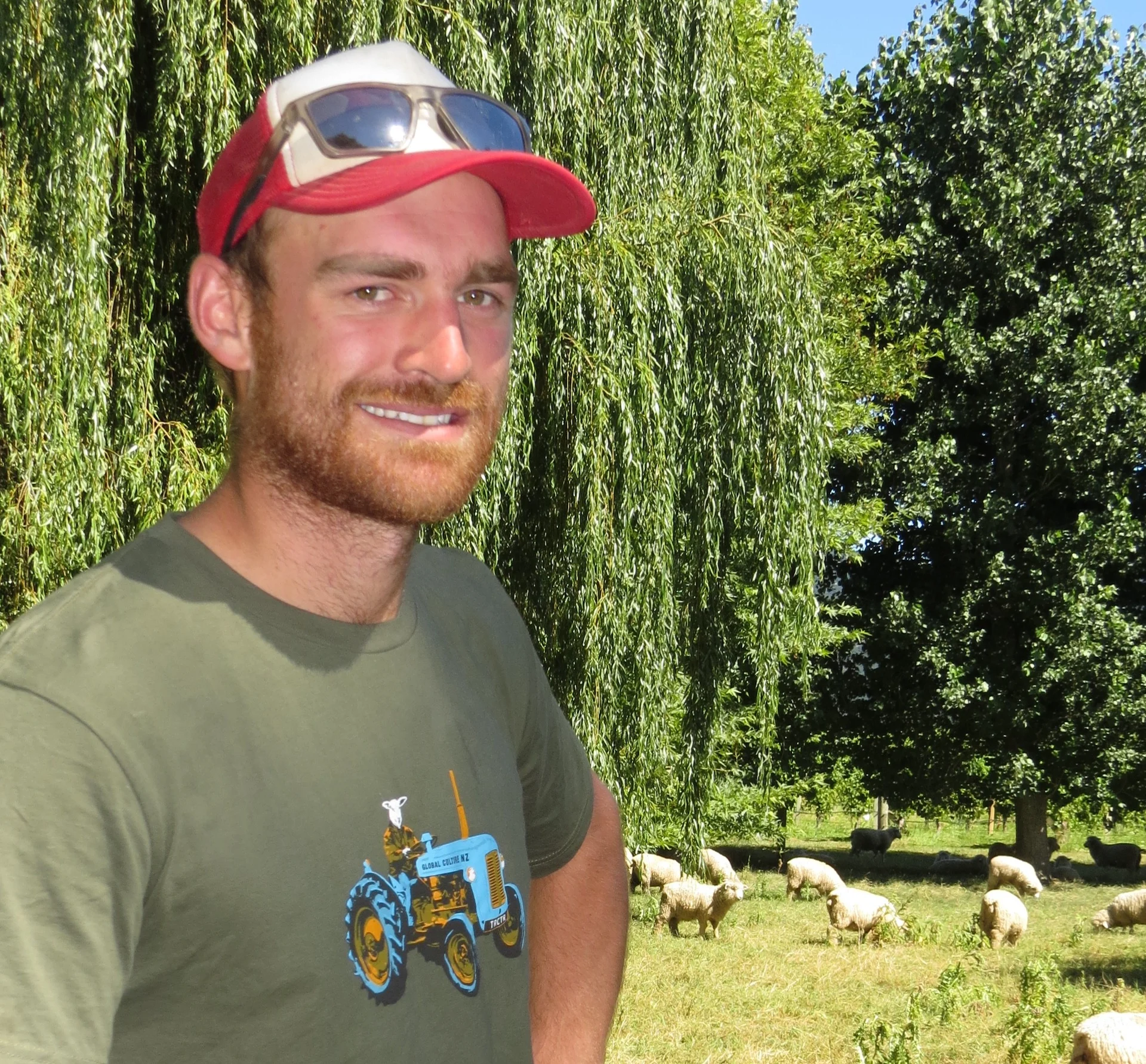
Albie eventually retired and Paul and Muff Newton took it over. Around this time, a young Freddy Gane would be returning to Nelson College from the family farm at Rapaura, near Blenheim, and often admiringly glanced at the “clean green” farm beside the state highway. Now Freddy and his wife Nikita are owners of Kaituna Ridges.
“I never dreamed that one day I’d be on Albie’s farm,” he says.
Twenty-nine year old Freddy remembers his grandfather talking of Albie.
“He said, in a complimentary way, Albie was ‘hard to please’, meaning that Albie was a perfectionist and a hard worker. And it showed in his farm at Kaituna Ridges,” says Freddy.
Freddy’s graduation to being the owner was via degrees in viticultural science and oenology at Lincoln University and then a stint highcountry mustering at Quartz Hill Station in Canterbury’s Rakaia Gorge which affirmed his attraction to hill country farming.
Upon coming back to Marlborough, Freddy spent the next 7 years casual mustering around Marlborough and running the family vineyard alongside his father Murray.
One of the properties that Freddy helped out on was Kaituna Ridges, where he got to know the Newton family.
Currently, Kaituna Ridges is 824ha and with some leases added on, is running 7,500 stock units comprising 85 per cent sheep and 15 per cent cattle. “I would love to run more cattle but the hills are just too steep and wet”.
A romney stud has been developed based on Paul and Muff Newton’s “outstanding commercial romney flock”.
The best 500 animals have been selected based on constitution, low input traits and high fertility.
“We want clean sheep that can handle a challenge but bounce back quickly and perform as soon as conditions improve. We want our sheep to be tough and survive, so the stud-ewes stay on the steepest country and are only on grass. I believe in heavy selection pressure, so we will only retain 10 rams for ourselves each year”, explains Freddy.
“I would expect around 400 ram lambs next season”.
Consumer Perception
Part of the aim is to get away from drenching to lessen the dependence on chemicals, for the simple reason that the consumers in the marketplace are increasingly wary of chemical input.
“If the market doesn’t want it, you have to strive to meet that consumer expectation.”
The family vineyard at Rapaura is 50 per cent herbicide-free. Sheep are an integral part in grazing the vineyard so Kaituna Ridges is very complementary to the grape growing.
Freddy revels in challenges. If Nature tosses up a curve ball like last year’s July floods, then you accept it and deal with it. Any such challenge as the abnormally wet winter is an opportunity to see how stock perform.
“We had just taken over our dream farm mid-last year and nine days later the big flood hit and silted some paddocks.” smiles Freddy. “What can you do? Just take it on the chin and face up to the challenge. We had some wonderful help from our friends and the Havelock community”.
Challenges and adapting to them are the name of the game.
Legacy Paramount
Above all, Freddy believes in good stewardship of the land. It may be a cliché but its undeniable and unavoidable. The legacy you leave is important, just as the fine legacies of Albie Higgins and Paul and Muff Newton were.
“Improve your land and in the same breath improve profitably. By positive attitude and judicious considered management they can go hand in hand.”
Lifting organic matter levels is a strong aim as it improves water holding and retention capacity and, after all, water is increasingly the big thing.
Freddy muses saying there should be lateral and flexible thinking in an endeavour to get out of some of the old ways and cycles. “Maybe what we’re doing traditionally and conventionally needs challenging from time to time.”
Freddy points to the issue of nutrient run-off into waterways. “We have a pretty low impact on our waterways with our current environment plan, but we still have an impact so how do we reduce it further still?”
Freddy intends to do a basic study comparing the conventional blanket fertiliser coverage with a “ridge and gully” scenario.
And he’s thinking far beyond that too, wondering what if in 10 years time, herbicides are phased out due to consumer or public pressure.
