
Darren Crawford
The flooding and severe weather events of recent weeks have certainly shaken up the dry summer that was expected, creating different problems for our rural community to handle.
While fire risk has decreased – prompting a return to an unrestricted fire season – the ever-present risk of wildfire remains, especially in the context of increased growth that can become a larger fire risk problem later in the season. Individuals wanting to light fires are encouraged to go to www.checkitsalright.nz and follow the “Can I Light a Fire?” prompt to see the current risk level, and to apply for the required fire permit.
Additional fire weather information can be found at www.fireweather.niwa.co.nz, so make sure you check it’s alright before you light.
Flooding and storm conditions bring fallen trees, slash and other debris which needs be disposed of somehow, but the best method for disposal may not be the most obvious.
While fires can effectively dispose of a significant amount of natural debris, their size and location should be carefully considered.
Setting up multiple smaller burn piles may reduce the risk of a fire becoming out of control.
Consider access to water, is there an area with less vegetation around that you could utilise for a safer burning space, and think about wind behaviour in the location when selecting a site.
If your neighbours have debris to burn as well, the whole community could get together and burn their debris in a more controlled environment – your local fire brigade may even be able to help out – but remember to get a fire permit for the burn.
The Lake Rotoiti community recently embarked on a project where a fire break was developed and residents encouraged to ‘thin out’ volatile vegetation to create defensible spaces, the unwanted vegetation was disposed of with the assistance of the Lake Rotoiti Fire Brigade.
The material was taken to one site and managed collectively in a suitable and safe location says Lake Rotoiti Fire Controller, Wattie Mortimer.
“A koha was collected and used to purchase a community woodchipper which now disposes of vegetation by repurposing it as mulch for local gardeners”.
Another great idea for sustainable and safe disposal of green waste and an excellent example of a community working together and taking collective responsibility for problems that have the potential to cause harm to their community.
As summer comes to an end, autumn provides ideal conditions for planting and preparing for the following fire season.
Removing highly-flammable plant species and planting low flammability varieties around your home can create a ‘green break’ of fire-resistant plants. Invasive species such as gorse are highly flammable – and often repopulate very readily after a fire.
Make sure you collect any littering vegetation off the ground regularly and keep grasses cut short to reduce fuels. Strategically plant varieties such as Five Finger or Kōtukutuku which can be planted to help create a defensible space of 30-50m around your property.
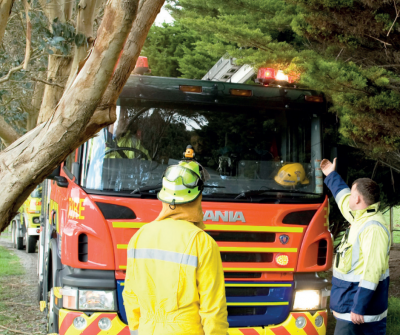
Another factor to consider when planting and managing vegetation is emergency vehicle access to your property. Help us help you by making sure driveways or entries are at least four metres wide and four metres high.
In a house fire you have less than three minutes to get out, so it is important that your whānau knows how to get out before our crews arrive.
Build your escape plan at www.escapemyhouse.co.nz.
