
Christ Church Cathedral is synonymous with the Nelson city landscape and its identity, but despite the church’s longstanding significance and longevity it wasn’t always the building that stands today. Through conversations with current cathedral staff and pouring through historical documents, Jack Malcolm pieces together the legacy of the church from its inception as a tent on the hillside through to the modern day.
In 1842 the first Bishop of New Zealand, George Selwyn, erected a tent on the side of Piki mai. He described it as “a most complete cathedral,” with seating to accommodate 200 people on boards placed over felled native trees. On that same trip, Bishop Selwyn purchased an acre of land on the hill which would become the permanent cathedral’s site.
Prayers had been read in the open air on the hill since the first surveyors arrived in Nelson in 1841, but without an ordained minister, it wasn’t until the March 20 1842 that Reverend Octavius Hadfield held the first formal worship. Now, also known as Church Hill, the site has become a rich tapestry of the history of the settlement and the emergence of Nelson as a city.
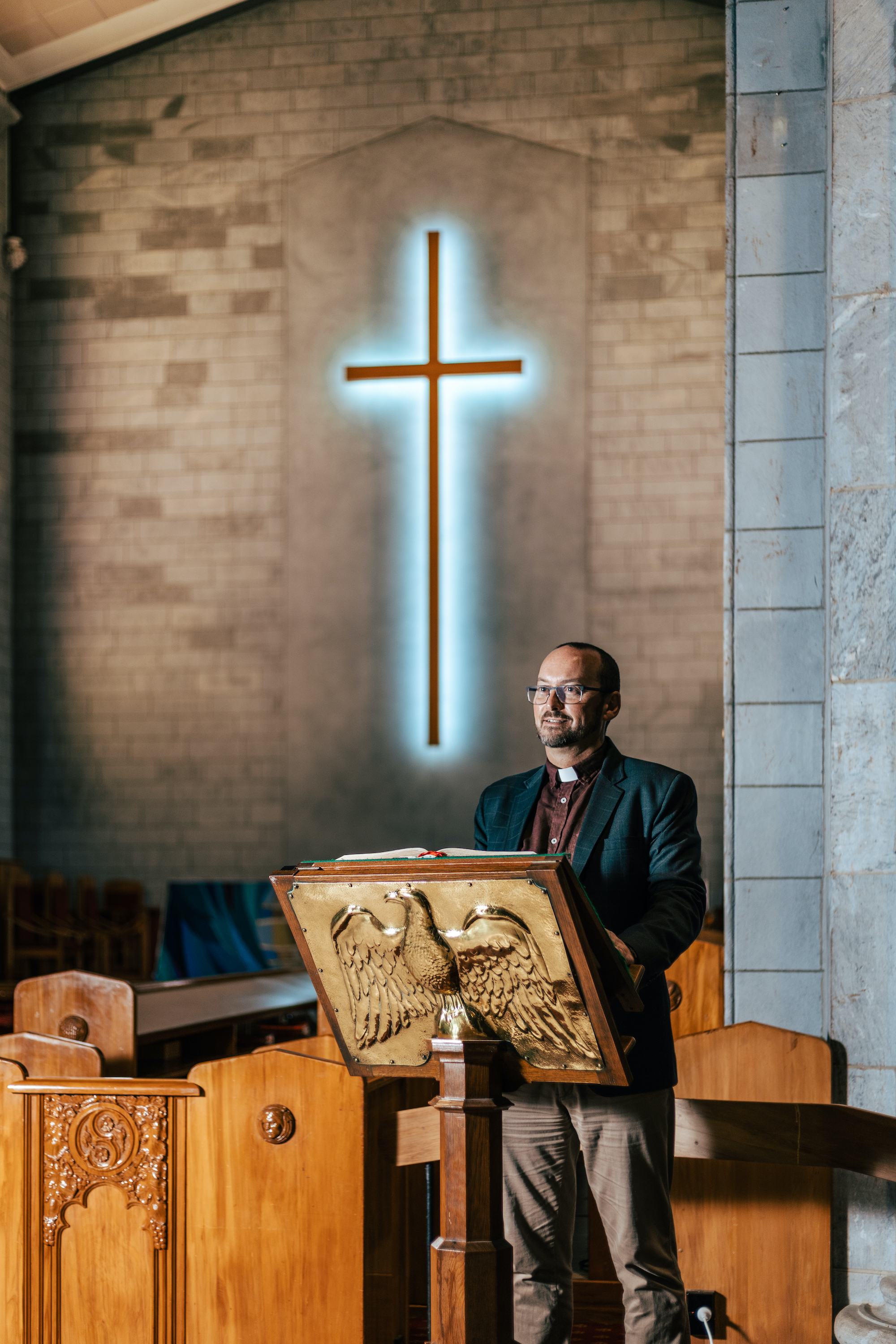
Nelson Cathedral Dean Graham O’Brien says Nelson is in a unique position because it was a planned settlement. “Nelson is a place where you get settler history from the beginning. The key thing is its location... it’s such a symbol for the city.”
Through the years, the site and its buildings have transformed into what it is today. From its humble beginnings as a tent on a hill, the Christ Church Cathedral now dominates the city’s skyline.
Originally, Piki mai was the location of a Maori pa that was used seasonally by Ngati Awa. Occupants of the pa would fish from the shorelines, hunt and trap Kererū in the forests and grew crops and harakeke (flax) at Koputiraha, the area now occupied by the Nelson City CBD. Meaning ‘come hither’, the site had seemingly appeared to be unoccupied when the European settlers arrived, and they quickly set up camp on the strategically important position.
After the Wairau incident in 1843, the first confrontation between Maori and settlers following the signing of the Treaty of Waitangi, residents fortified the hill fearing retribution. Four Maori and twenty European settlers, including several of Nelson’s leaders, were dead.
Named Fort Arthur, the hill was fortified entirely, including the use of a drawbridge, but the retribution the settlers feared never eventuated. Residents at the time commented on the apparent contradiction of having to cross the bridge and enter the defences to attend Sunday services. By 1848 the church had been granted the title to the land, and two years later they had raised funds to start building. The build was estimated to cost £800, with work starting on June 26 1850 and finishing just in time for Christmas on December 14 1851.
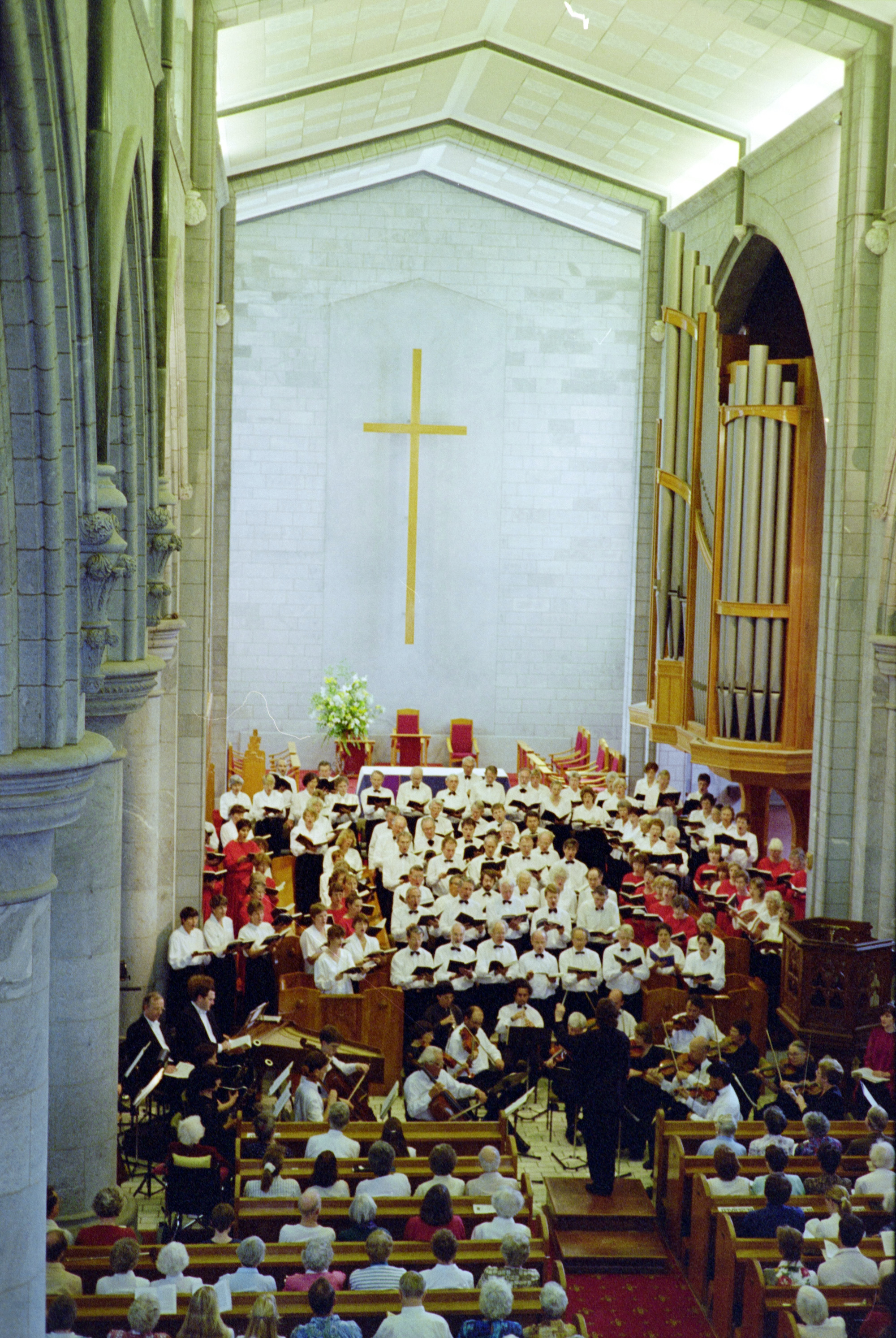
The first permanent church on the hill was officially opened and dedicated by Bishop Selwyn, with approximately 600 residents in attendance. It was described by The Nelson Examiner as a neat wooden building in the early English Style, with approximately 40 feet to be added to complete the design. The original structure lasted just eight years before it needed to be modified, with the need to extend the nave, where congregants sit, to accommodate the growing number of parishioners.
In 1858 Queen Victoria signed Nelson into cityhood, but the church would have to wait nearly 30 years before it had its first cathedral. Work was carried out to widen the original church and a town clock was installed before it officially opened in February 1887. The wooden building, which was largely still the original structure, suffered a major setback after an 1893 earthquake that moved the spire nearly a metre out of line. In 1913 the stairs, made from Tonga Bay granite, were built after a donation by philanthropist Thomas Cawthron. The church steps are a synonymous part of the Nelson townscape, says Graham. “It’s significant when we have these issues, like Ukraine, and everyone gathers at the steps. It’s a natural gathering spot, whether it’s religious or not.”
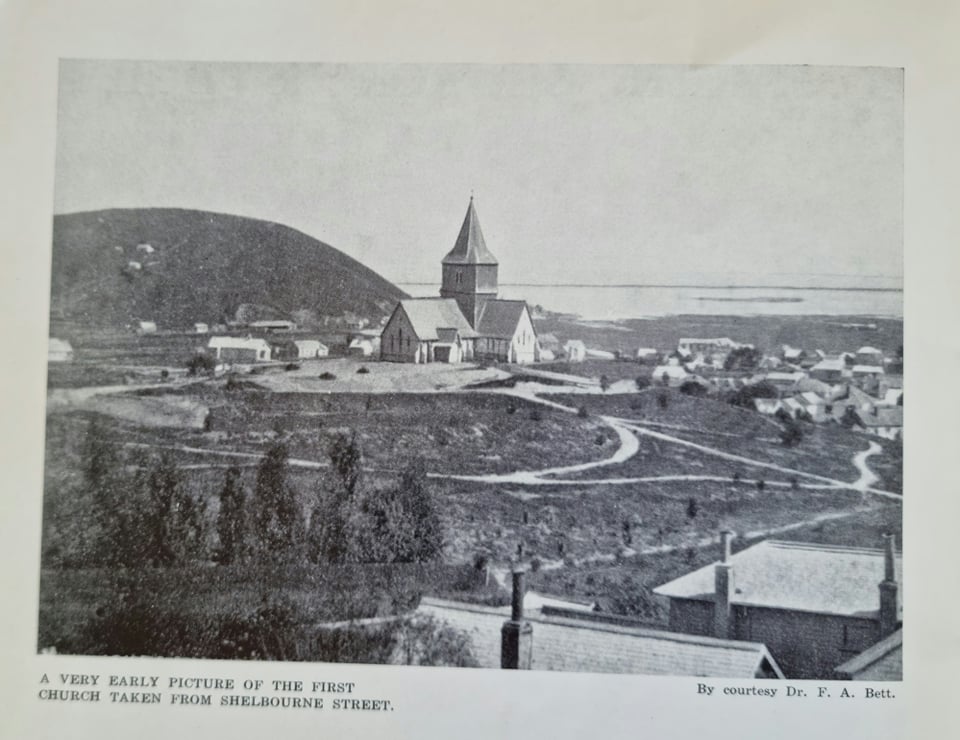
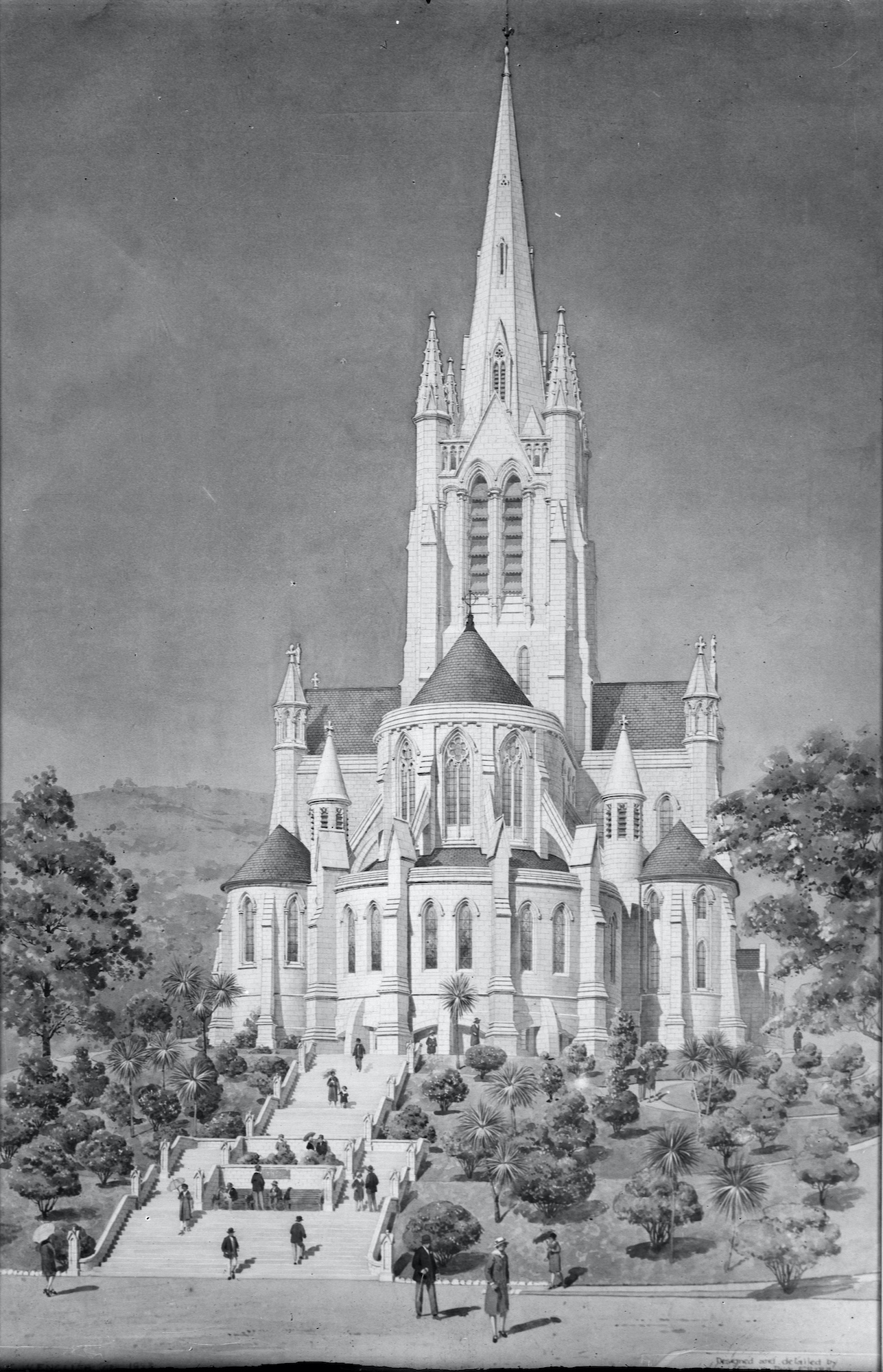
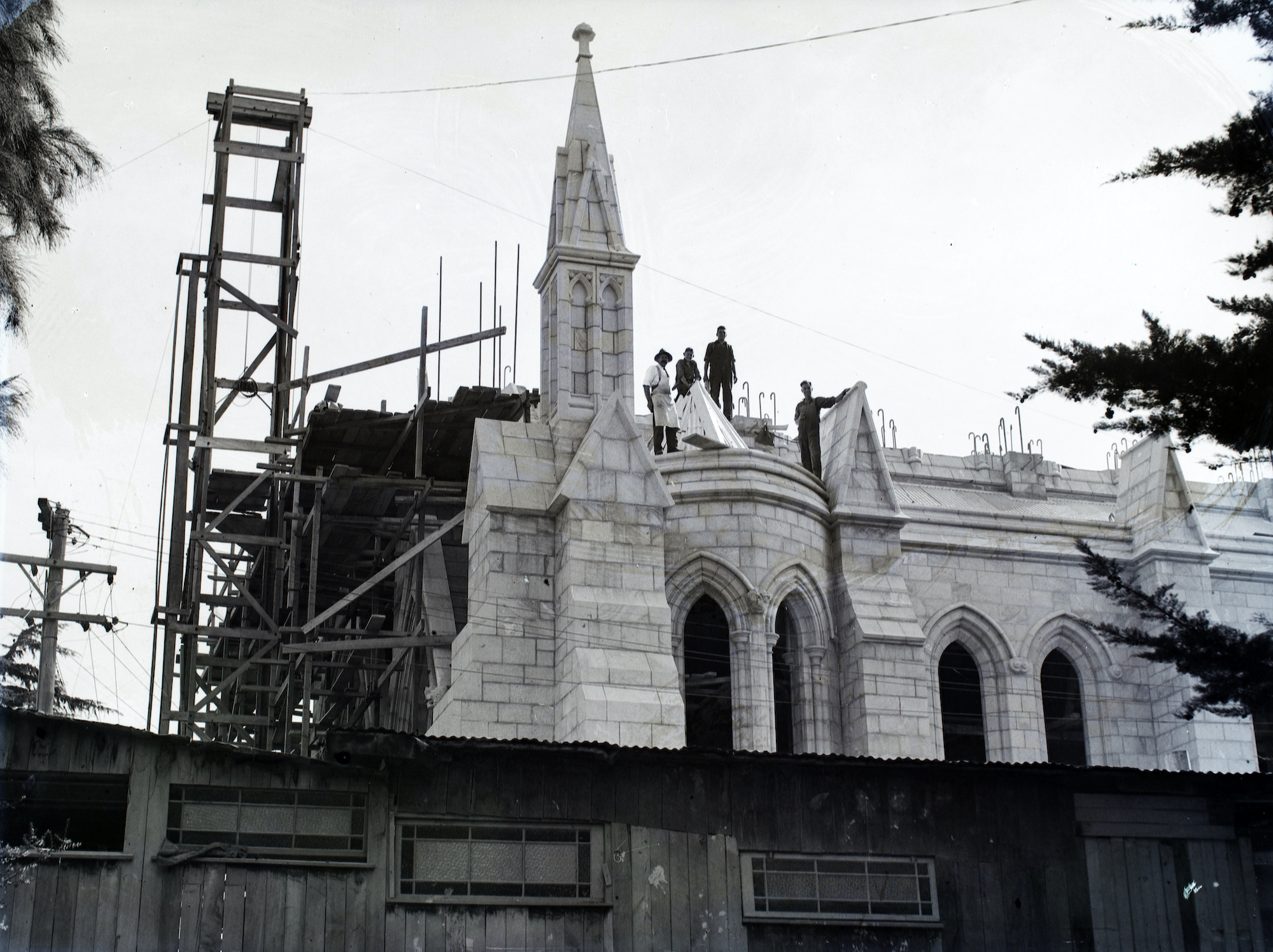
While the entrance to the church had been given a grand makeover, the building itself had fallen into a sad state of disrepair. The spire and tower had to be removed in 1916 and it was labelled as a “menace to the public”. A fire in 1920 served as a death knell for the building, and plans for the new cathedral were drawn by architect Frank Peck. They called for an extravagant church that would have been approximately twice the size of the one that stands today, with a giant spire instead of a bell tower. Work started in 1925 with an estimated cost of £80,000. But by 1931, questions were already being raised about the suitability of the building after the devastating Napier earthquake. The great depression also contributed to slowing work to a halt in 1932 with just the nave completed and a temporary roof erected, bandaging it together with the old church’s chancel and sanctuary.
World War II came and passed with the cathedral standing unchanged, and it became clear that Frank Peck’s grand plans were never going to be realised. Architect Ron Muston put forward a more modest design in 1954 and, despite the controversy over the remodel, work began. Instead of using marble, which was expensive and required skilled stonemasons, the new areas of the church and roof of the nave were built with reinforced ferroconcrete and faced with a ground marble plaster.
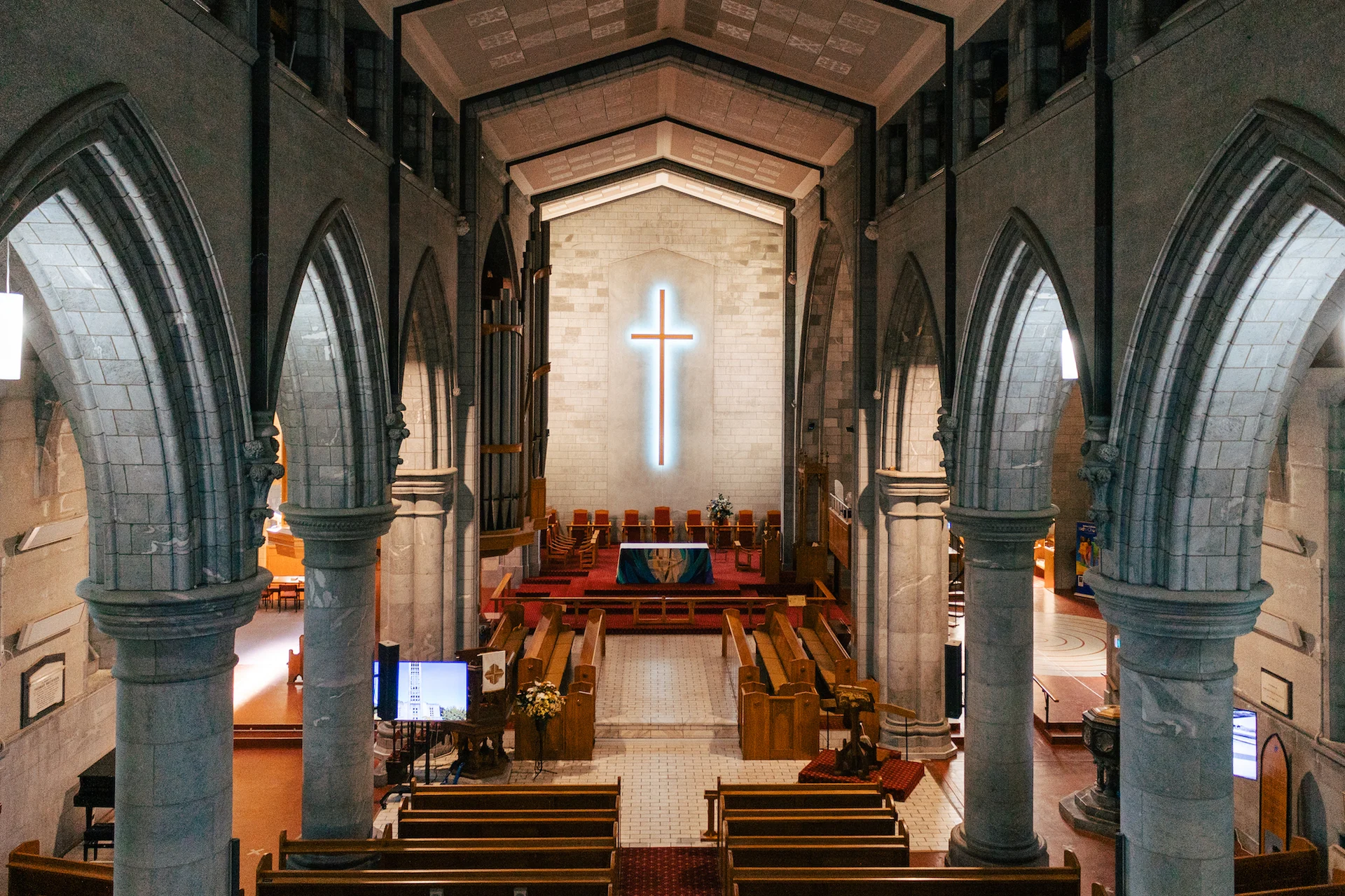
Reminders of the former church can be seen throughout the new church, with the wooden cross on the northern wall built from the wood of the 1887 church and the original lectern, pulpit, and several of the windows were kept. “They matched two visions of architecture together,” says Graham. “What we’ve got, against the old, original vision.”
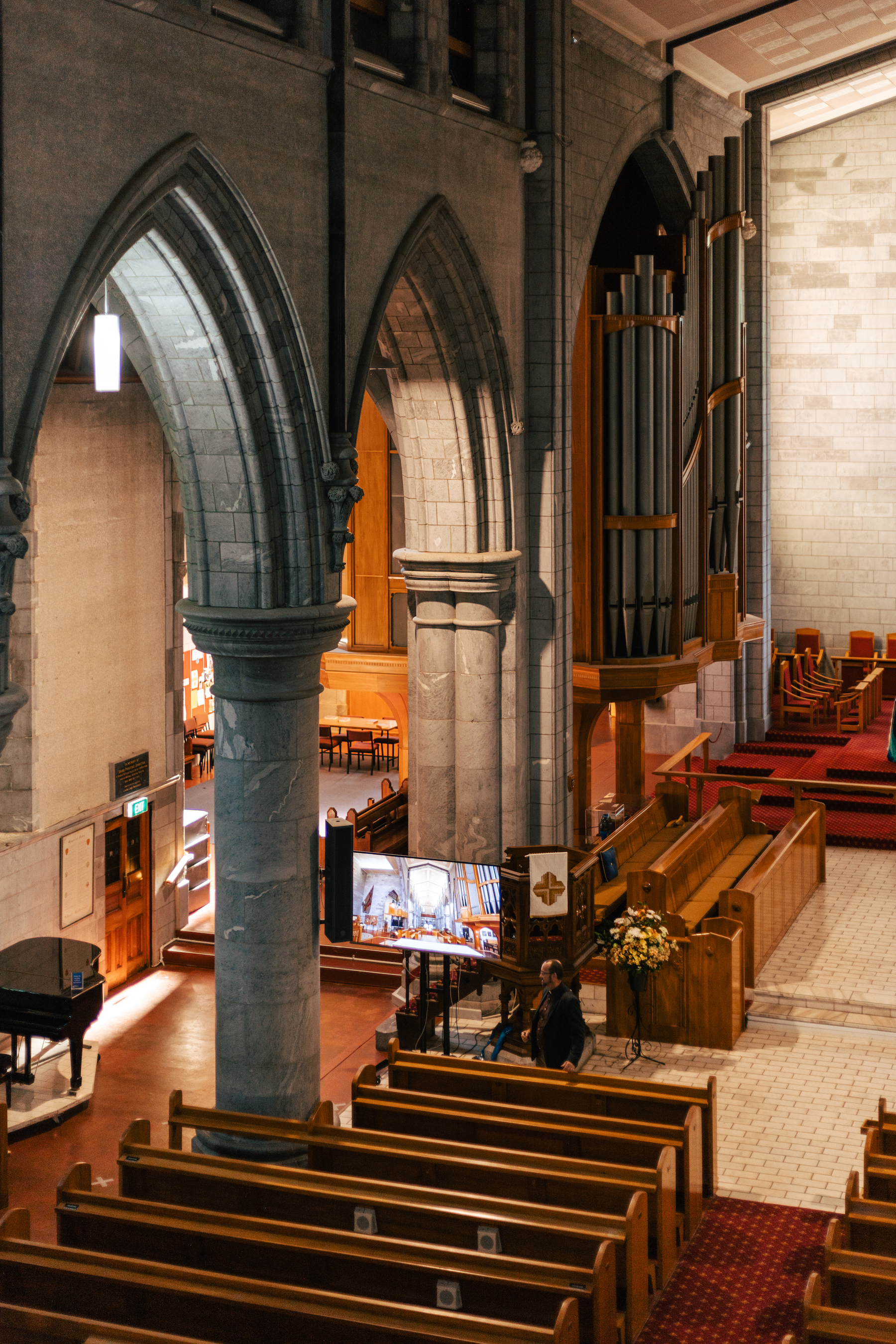
Forty-two years after the first foundations were laid, the church as it stands today was completed. It was opened in 1967 by Governor General Sir Bernard Fergusson, the son of former Governor General Sir Charles Fergusson, the man who had laid that first stone.
Further changes to the sanctuary and chapel took place in 1984 and further stained glass was installed, but the church was done.
Church bell ringer and spokesperson David Lucas says while the building is significant, it’s what they do inside that they think is important. “In some ways we see it hasn’t got walls. People look up the hill and think that’s just a building, but it’s very busy.”
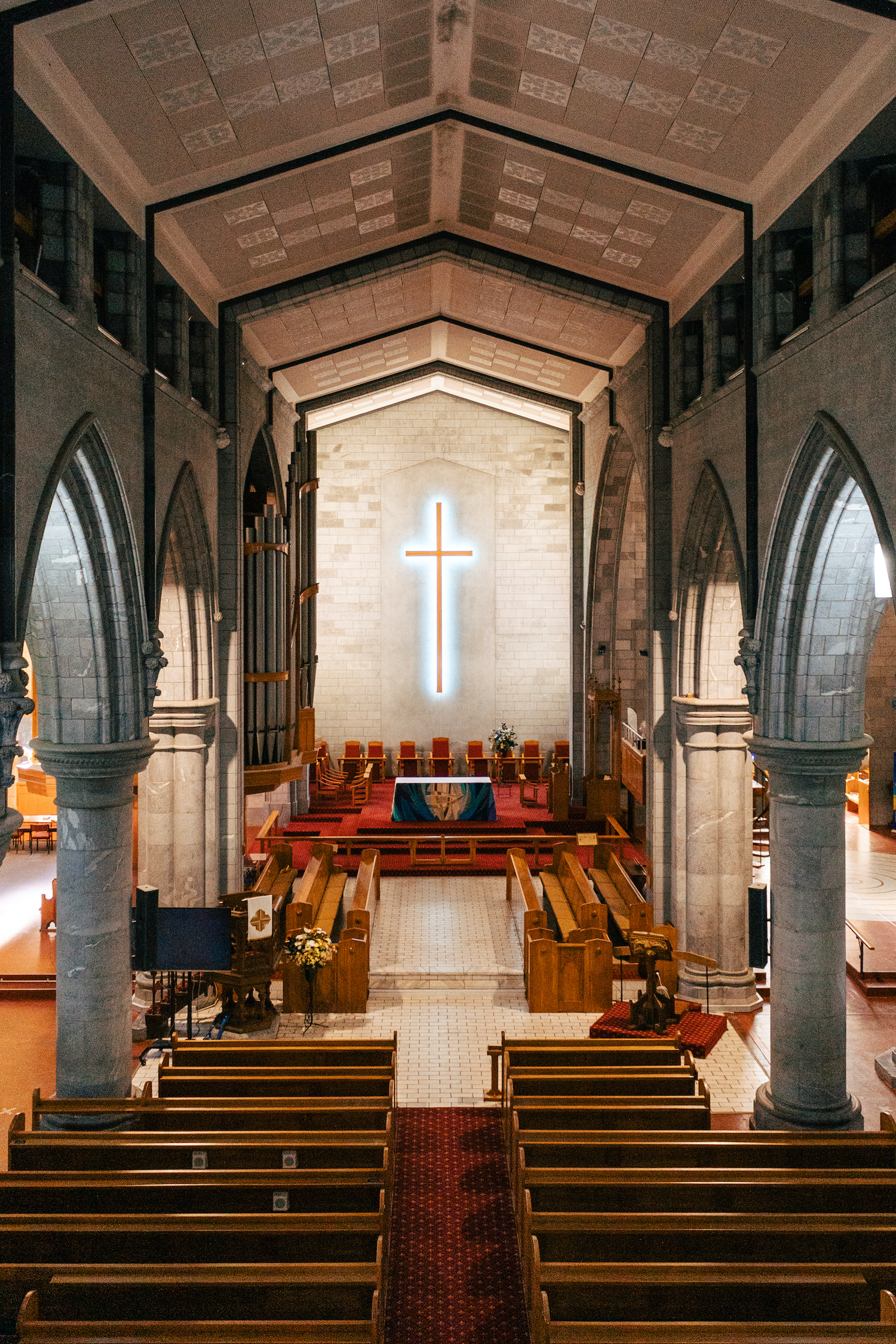
With a flag that was part of the ANZAC landings hung on the wall and the chairs that were used by Queen Elizabeth and Duke of Edinburgh during their royal visit in 1954, the interior of the cathedral hosts just as rich of a history. Dominating the building and catching your eye the moment you walk, standing high above the cathedral floor raised by four massive pylons, is the massive organ and its 2481 speaking pipes. Originally installed in 1871 after being shipped from England, it was rebuilt in 1968 but kept all of its original pipes.
The history of the cathedral of the hill will forever be linked with the history of Nelson’s European settlement. From its first days as a tent with men and women sitting on trees to the building Frank Peck dreamed would be built. While the building may seem permanent now, it will always be changing with history.
