
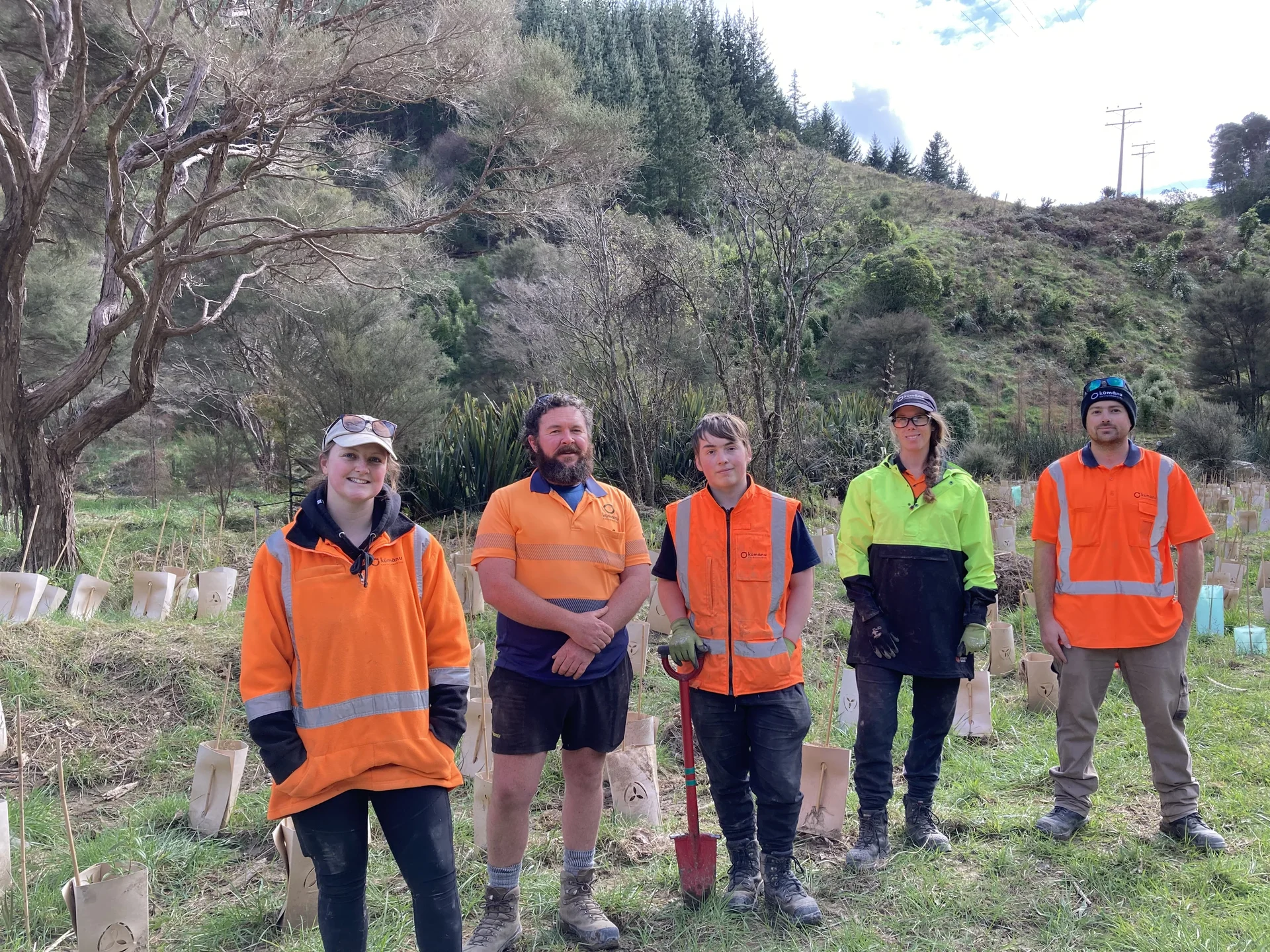
It was a “jaw-dropping” moment when Rod Alexander finally checked some 18,0000 plantings in the Maitai Valley after flooding ripped through the area - but thankfully almost all of them survived.
The Mahitahi, Kūmānu Environment project leader says of the 7000 plantings completed by Jobs for Nature in the wetland area over June and July, all but one paddock has recovered.
Plant guards and bamboo cane can be seen poking out of the former paddock where flood waters changed the shape of the river bed by depositing silt and rocks.
“You can see where we planted but that’s all that’s left,” says Jobs for Nature staff member Kynan Sampson.
Debris is stuck to trees, a lasting reminder of the peak of the floodwaters with plantings mainly covered by silt. The team is now focused on clearing this.
Rod suggests there has only been between three and five per cent loss of plantings.
Higher up the forestry access track, most of the 11,000 plantings remain unaffected.
NCC project manager Susan Moore-Lavo says that most cultures have proverbs about trees being flexible or they break, and just like a sapling, the Job’s for Nature team have been brilliant at adapting to their ever-changing work locations.
Some of the work done by Kūmānu on private land is inaccessible, including up the Lud Valley, where flooding and slips have caused damage.
Meanwhile, with 22 slips recorded and access remaining an issue at the Grampians Reserve, team leader Adam Lumsden says, “most of the work once they get up there will be weed control”.
“The plantings at the very top survived.”
Unable to work on the Grampians, Fairfield House is making good use of the flexibility of the Kūmānu team. And with seven acres of grounds, there is an incredible array of weeds to tend to.
Manager Catherine Brosnahan said they “had a lot of water pass through the property”.
“But were pleased with the upgrades made after 2011 and only had some sludge come down from behind.”
