
TONY ORMAN
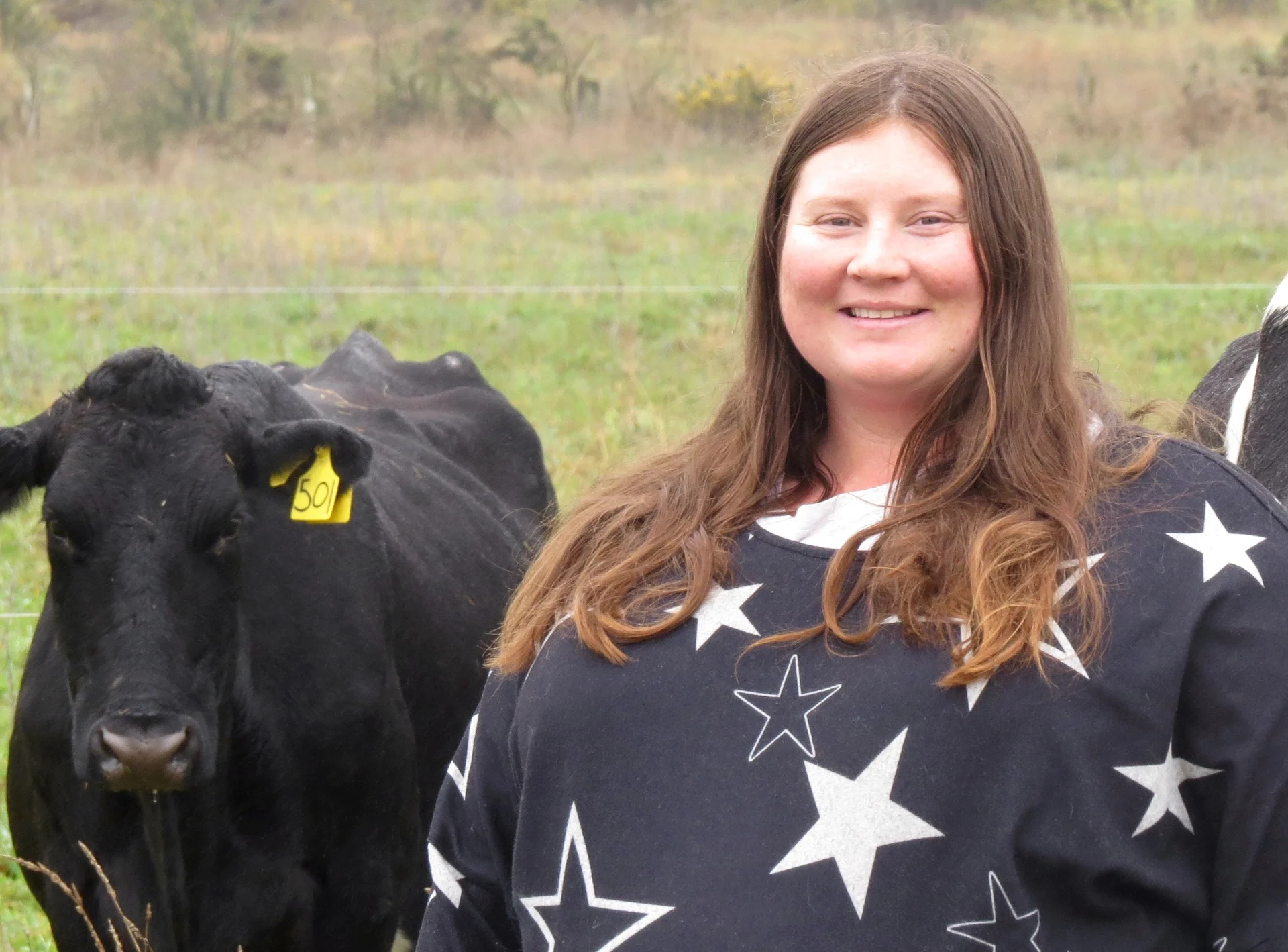
Amy White-Clarke comes from a long line of Marlborough dairy farmers. Her father Spencer White and mother Susan are dairy farmers on the Wairau valley’s Northbank, uncle Evan and Katrina’s farm near Birch Hill, Wairau Valley and grandfather Adrian and Marlene White farm at Marshlands, lower Wairau.
It is on Adrian and Marlene’s farm that Amy and her husband Jeremey Clarke, an engineer by trade, are 50/50 share milkers.
“I’m fortunate I’ve plenty of top dairy farming advice handy particularly from grandfather Adrian,” she smiles.
Twenty eight year old Amy grew up on her parent's farm. Unsure of what career path to follow on finishing secondary school, she did a season working on her parent’s Northbank unit.
She liked it so did a season on Stephen Todd’s Murchison farm and then headed south to a bigger dairy farm at Rakaia.
“I wanted to test whether I would be happy milking 1100 cows,” she laughs.
Amy came through smiling, proving to herself she could well cope milking 500 cows in 45 minutes. Amy headed back to Marlborough and did two seasons at Koromiko on Richard and Beryl Tripe’s and Simon and Amand’s Tripe’s Koromiko farm.
Then she headed to her grandparent’s farm as a “low order share milker,” taking a percentage of the milk cheque rather than wages.
She had to buy motorbikes, employ staff and manage on a month by month basis for four years. Then she progressed to a 50/50 share milker position.
Now she and Jeremy have set their sights long term on getting their own farm, ideally in Marlborough. Jeremey’s engineering qualification and experience is invaluable in on-farm maintenance.
Amy is under no illusions to the challenges in taking a career path into dairying. It can be volatile in terms of returns.
Dairy prices fluctuations are a constant challenge. Payouts are currently up, but costs keep rising. There’s lots of compliance too and paper work involved. Getting staff is an on-going problem at times and Amy is expecting she and Jeremey’s first child in early August, so she’ll be on maternity leave necessitating recruiting staff.
Then Nature can throw up a curve ball such as the big flood in July last year when they lost 20 percent of the milking platform but have since recovered.
Summer drought can challenge but judicious irrigation with water use controlled, remedies that. But Amy is not deterred by any potential hurdles ahead. She sees a positive path ahead in the dairying sector.
“It’s a good career industry with opportunities if you’re prepared to put your head down and get stuck in,” she explains. “And if you are happy in your job then that’s a big bonus. In fact, I absolutely love my cows and dairying.”
The 300 cow herd is 80 percent Holstein pedigree breed.
“Jeremey and I aim for strong, robust cows, good milkers and with longevity.”
As for the dairying industry in general, there is a need to try and narrow the urban -rural divide and get town dwellers to see what farming is all about. Public misconceptions can arise. Then there’s the movement promoted by vegans and creating artificial imitations of farm produce.
“You can’t beat real milk and real meat,” she says. “It’s a shame a some urban folks don’t understand the basics of farming,” she says ruefully. “So we encourage friends to visit to see how things are run.”
