
TONY ORMAN
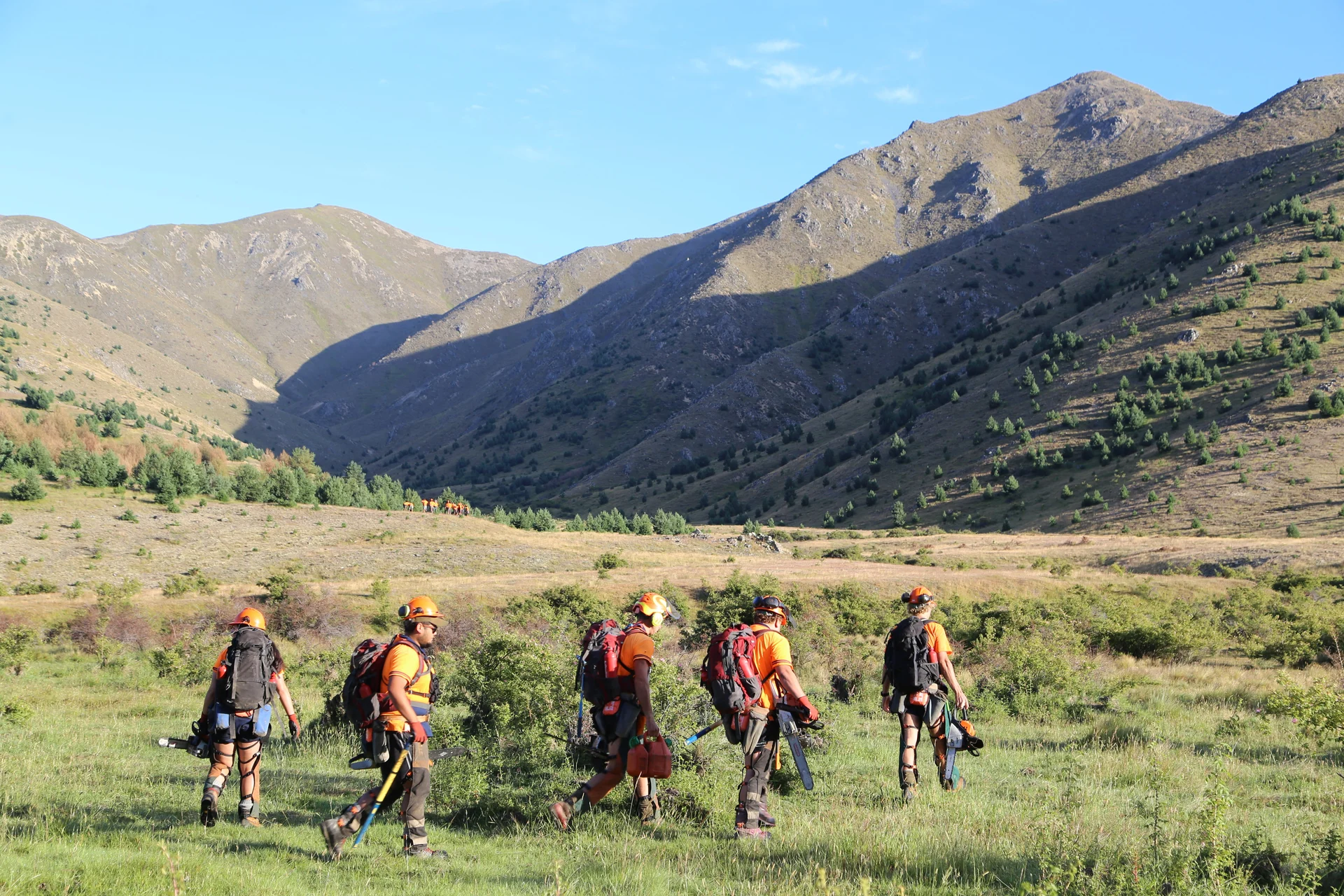
Molesworth Station’s invasion by wilding pines is being tackled with a determination and further energised by recent reinforcement. Since 2016 the anti-wilding pine programme has been boosted by central government investment overseen by MPI-Biosecurity NZ and delivered through the National Wilding Conifer Control Programme.
“The NWCCP is implemented through regional councils and unitary authorities across the country who either directly deliver programmes of work or team up with local partners,” says Marlborough District Council’s Biosecurity manager Jono Underwood.
“The boost has been significant particularly since budget 2000 when the ‘Jobs For Nature’ initiative delivered $100 million over for years into the programme,” he says.
Collectively since 2016 this boost will add up to an additional $13.4 million into the Molesworth programme. As a result the last six years has seen an immense amount of progress made in preventing wilding pines taking hold across large areas of lightly infested land while making inroads into historical established problem areas says Jono Underwood.
Molesworth has a history spanning several decades of areas adjacent to Molesworth Station being the source of conifer seeds. Back in the 1950s and through to the 1980s, the NZ Forest Service and initially the Marlborough Catchment Board planted pinus contorta in areas such as the Wye catchment on the mistaken belief that natural scree erosion could be eliminated. Pinus contorta has spread on to both Molesworth and neighbouring Muller Station.
From the south seedlings of both pinus conorta and Douglas Fir have invaded Molesworth. Within Molesworth stands of pinus sylvetris (Scots pine) that were planted near Tarndaleand have since been removed, have resulted in windblown seeds with seedlings still emerging.
The size of the task to remove wilding pines from Molesworth led to a new delivery model introduced three years ago. The Marlborough District Council engaged Boffa Miscall Ltd., to oversee delivery of a centralised programme of work. Backing the programme are Ngai Kuri as mana whenua, Pamu Farms, Department of Conservation, Biosecurity NZ, the South Marlborough Landscape Restoration Trust and the Marlborough District council.
Jono Underwood says while the last six years has seen immense progress, there is a potential danger that the gains made so far, could be diminished should adequate funding not be sustained from next year onwards for the National Wilding Conifer Control Programme as on Molesworth to reach its long term goals.
“Truly getting on top of serious wilding pine infestations like those at Molseworth takes much longer than we have experienced to date,” he says.
