
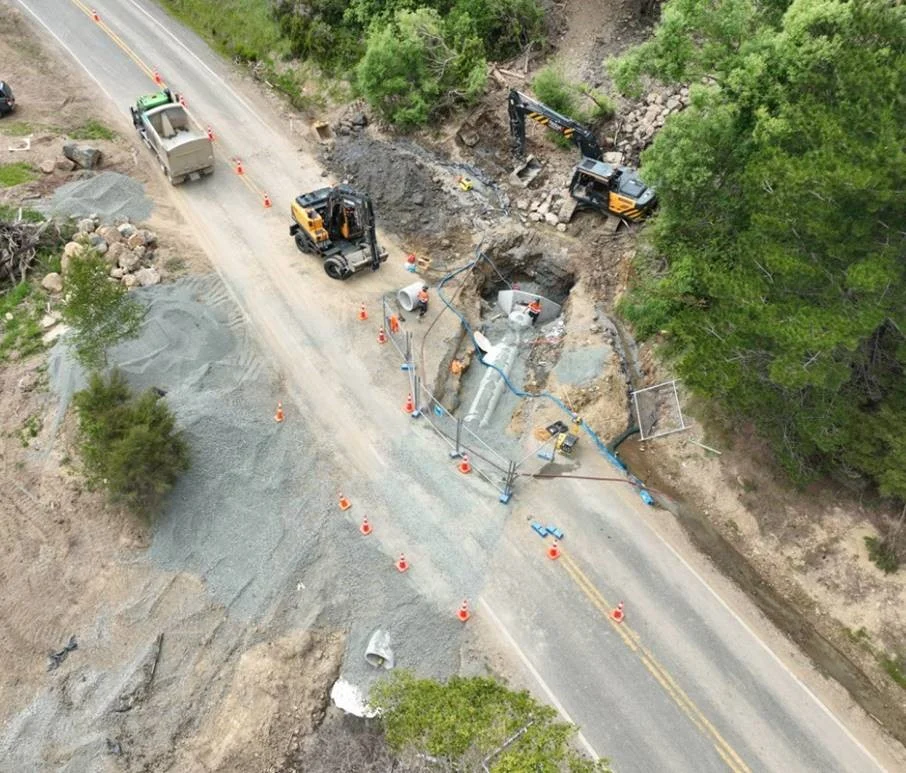
Repairs to SH6 have now passed the halfway mark with a huge amount of work happening on the main route between Hira and Rai Valley according to Waka Kotahi.
Regional manager Wellington/Top of the South Island, Mark Owen, says additional crews are working on Site One and Four as well as at the river and road realignment works at the Whangamoa River.
He says the road is expected to reopen in the later part of the evening on the 18 December.
“The emergency repairs are challenging. Unlike programmed road maintenance works at this stage in the repair programme we are not able to advise the exact reopening time,” he says.
Mark says contractors are working very hard to reopen the road on Sunday 18 December but will need every hour to complete the repairs.
He says the key focus at Site One has now been getting the first concrete pour, with the first one being the largest and most complex.
The wall is being constructed in a series of blocks each building on the previous block created by pouring concrete into form work (temporary mould). Each of the five vertical concrete lifts are approximately one metre in height and in total contain over 15 tonnes of reinforcing steel and 200 cubic metres of concrete.
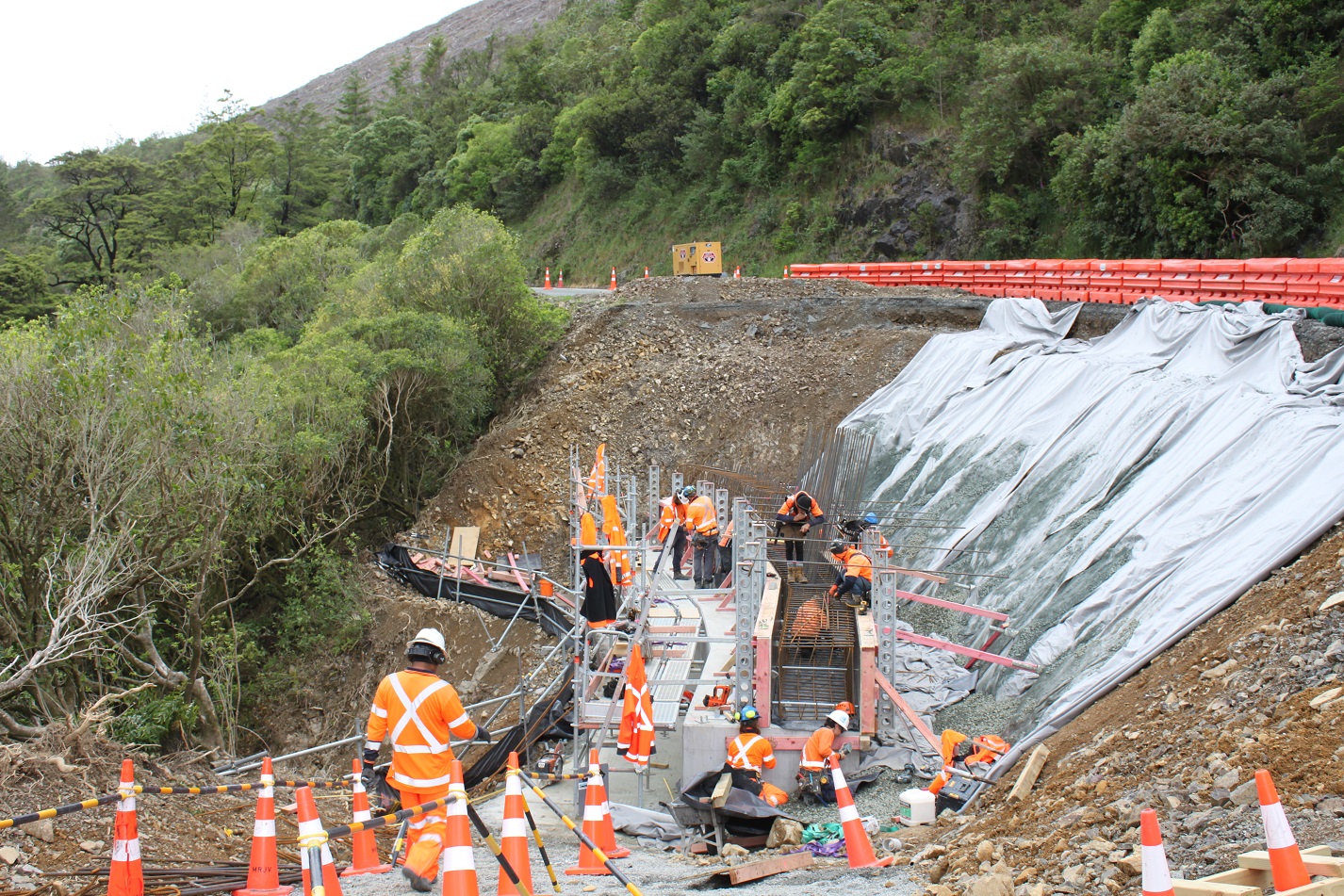
At Site Two, additional excavation and drainage has been completed. The crew have placed three of nine required layers of reinforced fill. Substantial drainage improvements are also going in for this site, of which two of the four double catchpits and some rock lined channel has been completed.
A catchpit is an empty chamber that is installed into a drainage system to prevent silt and debris from building up and causing blockages. The rock lined channel helps to carry surface runoff in a non-erosive way downstream.
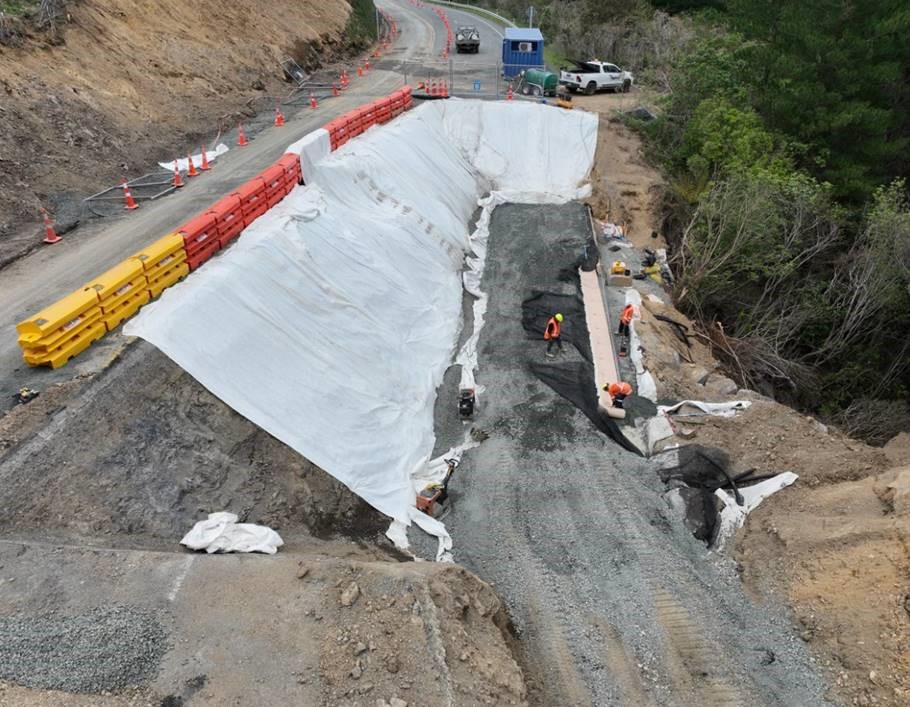
Mark says progress at Site Three is tracking well and is a similar block form to Site One. The crew have poured the first and second block and are now starting the backfilling and getting ready to start construction of the third and final block.
Once the final block is complete, construction of the road pavement and asphalt seal can occur, alongside replacement of the guardrail.
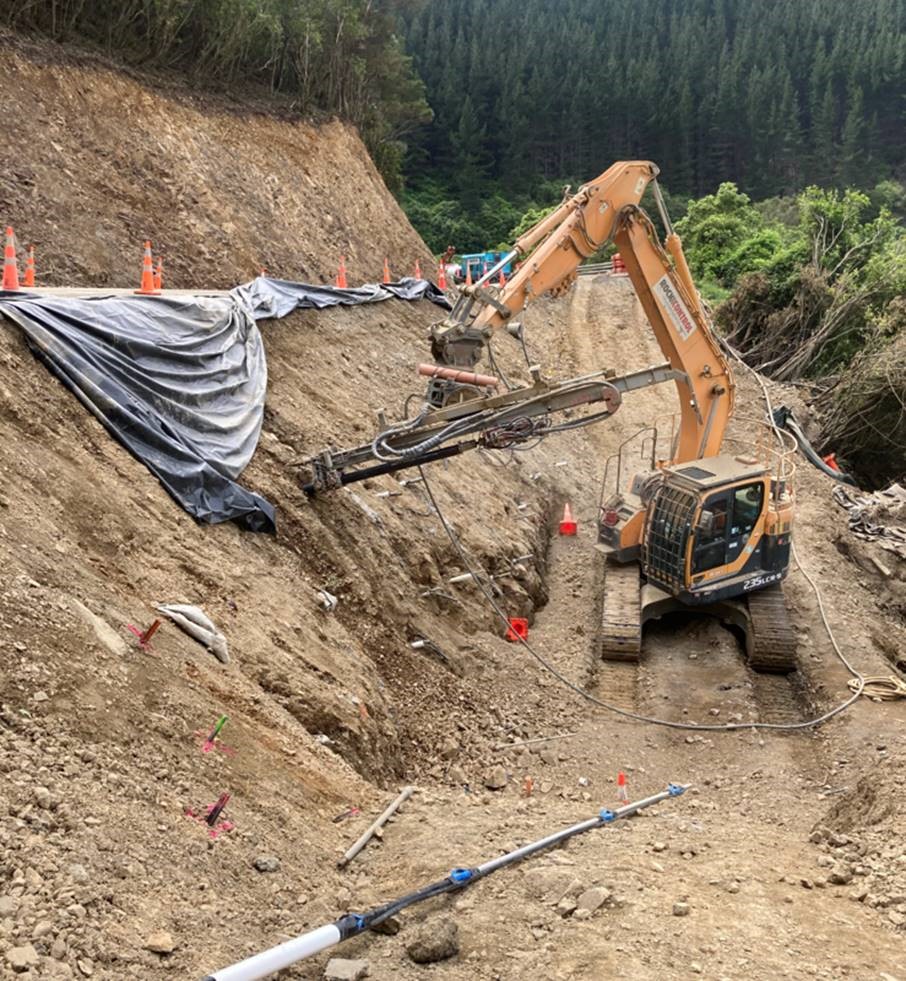
Mark says the focus for Site Four was getting the drilling completed, so the site concrete and formwork for the ground beam can begin.
“This is our most complex and largest site. Site Four had a larger crew flown in to work over the weekend to get the work done,” he says.
With the ground anchors and micro piles complete on the lower beam, site concrete was able to be placed last week. With site concrete in place, the crew is now able to start the steel and formwork construction, with the steel columns and timber lagging planned to be done at night.
The drainage crew have nearly completed the installation of the concrete culvert near Site Four, which is 1350mm in diameter, and have started on the inlet structure which consists of a large concrete wingwall, and railway iron driven into the stream bed to stop debris blocking the inlet.
Several other culverts are also being replaced throughout the closure zone to make the route more resilient to heavy rain events.
The scour site in the Whangamoa River now consists of two work areas, being the river scour rock work and a 200-metre road realignment.
The river works consists of river diversion, 2,500 tonnes of rip-rap installation and granular backfilling.
The road realignment consists of a newly designed road curve to shift it away from the river, culvert changes and 200 metres of new guardrail.
