
SAM NUSKE
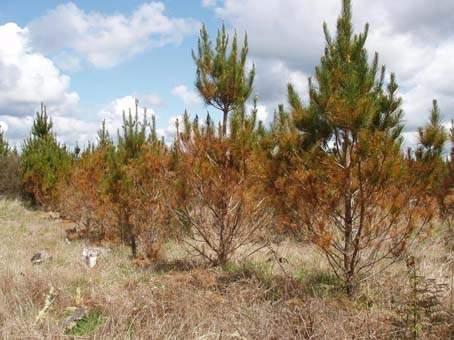
Due to all the wet weather of late, dothistroma needle blight is particularly prevalent in the Top of the South this year. Dothistroma is a fungal infection that infects Radiata pine, it kills the needles starting at the bottom of the tree and if left untreated, it moves its way up the tree. It can severely impact growth rates and in extreme cases kill the tree. Dothistroma spreads via rain droplet splashes or fog, so lower areas in gully systems which get less air flow are more susceptible.
Treatment of dothistroma is carried out by spraying a copper solution from a helicopter, this is completed in late-spring/early-summer each year. If the infection is bad enough (more than 30% of the tree crown has needle dieback) then a second application will be required in Autumn, the following year. The goal being to keep the trees at a low level of infection through the younger years, because after age 15 treatment is not practical as the tree canopy has closed in enough to stop the spray penetrating into the lower section of the tree crown.
Each year PF Olsen does a dothistroma surveying and spraying program across many different forest owners, keeping helicopter costs to a minimum as multiple forest owners can be sprayed in a single day. Please contact us 03 544 0066 if you would like to be involved in this program.
Log Market
The PF Olsen Log Price Index decreased $3 in November to $120 which is $3 below the two-year and five-year averages. At Wharf Gate (AWG) prices for export logs reduced an average of 6 NZD per JASm3 across ports in New Zealand in November. This was caused by a reduction in CFR log prices in China combined with the NZD strengthening against the USD. Log inventory in China remains stable. There is still a lot of uncertainty in China, especially with how the government will continue to manage Covid.
Domestic demand for sawn timber is holding up better than thought, defying inflation pressure on construction activity.
Carbon Market
As of 13th of December the carbon price was $83.40 per NZU.
$22,900 – the amount an average hectare of farmland in the Top of the South will earn in saleable carbon credits at the above price throughout the first 18 years of the timber crop, followed by log revenue from harvesting 6-10 years after that. These credits will not have to be paid back at harvest if the land is replanted after harvest.
Planting production forestry on your lowest productivity paddocks diversifies and increases your investment portfolio. For more information, visit www.pfolsen.com.
