
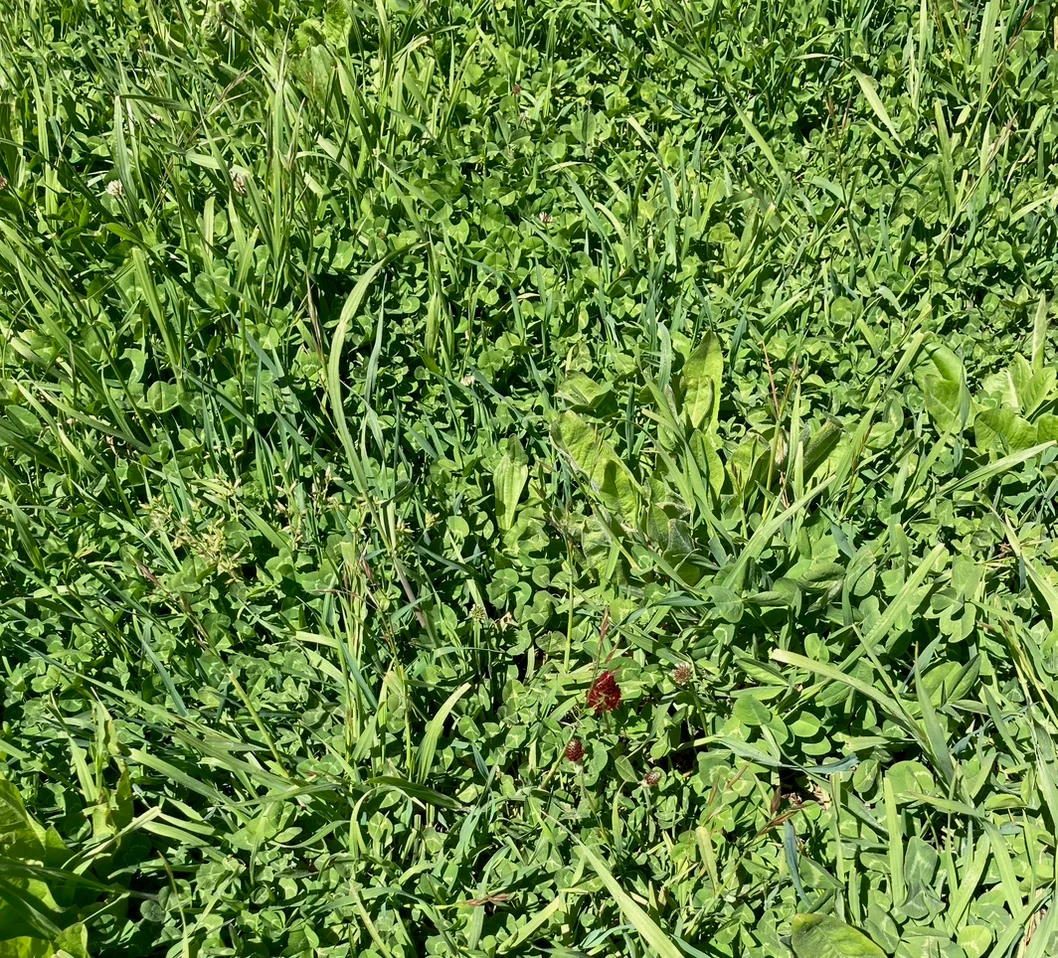
I’ve often heard the comment, “there’s plenty of clover in my pasture but I still require nitrogen for growth.”
There’s two issues at play here. Firstly, clover fixes nitrogen in response to declining plant available levels in the soil.
Work at Ruakura Research Station showed that less N was fixed by clover as increasing amounts of synthetic N were applied.
Clover may be present but is it fixing? Only examination of the roots will provide that information.
A healthy plant at this time of the year will have strings of plump nodules which when cracked open with a fingernail contain a sticky red substance, a clear indication of nitrogen being fixed.
A healthy well-structured soil with a 25% by weight clover content is capable of providing enough nitrogen for 18,000 to 20,000kg of DM per hectare in a twelve-month period.
And where carbon is being steadily sequestered any excess nitrogen will be stored and not lost to groundwater.
It is under intensive grazed pasture, without reliance on synthetic nitrogen, that carbon is most readily sequestered and should therefore be encouraged in sensitive water catchment areas, not excluded.
Landcare Research work has shown that irrigated pasture throughout the country is losing carbon. In our view it’s not water that is the reason for that loss.
When dry-land pastures are first irrigated new species are sown along with an application of synthetic N.
With large amounts of carbon resulting from years of sympathetic farming the extra growth from synthetic nitrogen is impressive.
Applied nitrogen burns soil carbon, however a single application has little impact. It’s regular applications of nitrogen that results in the steady depletion of soil organic matter.
Secondly, removing any nutrient, nitrogen is a nutrient, from an existing programme without replacing it energetically will result in less growth.
Unless other tests are specifically requested a soil test measures only what is plant available nutrient, usually somewhere between 1 – 5% of the total soil held nutrient.
It is however valuable information and particularly so when part of a comprehensive testing programme over time.
To make sense of a single test result it is essential to have information on both the physical state of the soil and historical fertiliser inputs.
Soil moisture and temperature influence how quickly nutrient from dung, urine, and decaying root becomes available. With soils ideally 25% air and 25% moisture the amount of crumb in the soil is therefore a key component.
The excellent Visual Soil Assessment process provides not only information on this aspect of soil health but also a clear indication of carbon loss or gain, and with the proposed taxation of carbon loss knowing what is taking place is essential.
The incorporation of CalciZest in a nutrient programme is a way to minimise any lag effect when reducing and eventually eliminating synthetic nitrogen.
CalciZest is a product developed and made by Functional Fertiliser and successfully used by famers throughout the country for over 25 years.
It is a mix of soft carbons inoculated with a wide range of soil friendly fungi and bacteria and calcium in the form of lime.
Lime creates the environment which favours beneficial microbes, and earthworms, creating more crumb in the soil and increased nitrogen fixation by clover.
Higher calcium input is essential for disease and pest resistant clover capable of fixing all the nitrogen required for maximum pasture growth.
Clover also is the best tucker for rapidly growing animals and all lactating animals. It’s higher in energy and more digestible resulting in extra total feed being eaten each day.
Because CalciZest is quick acting, early summer is an excellent time to apply. It’s available throughout the country and spread by conventional ground spread equipment.
For further information call Peter on 0800 843 809.
