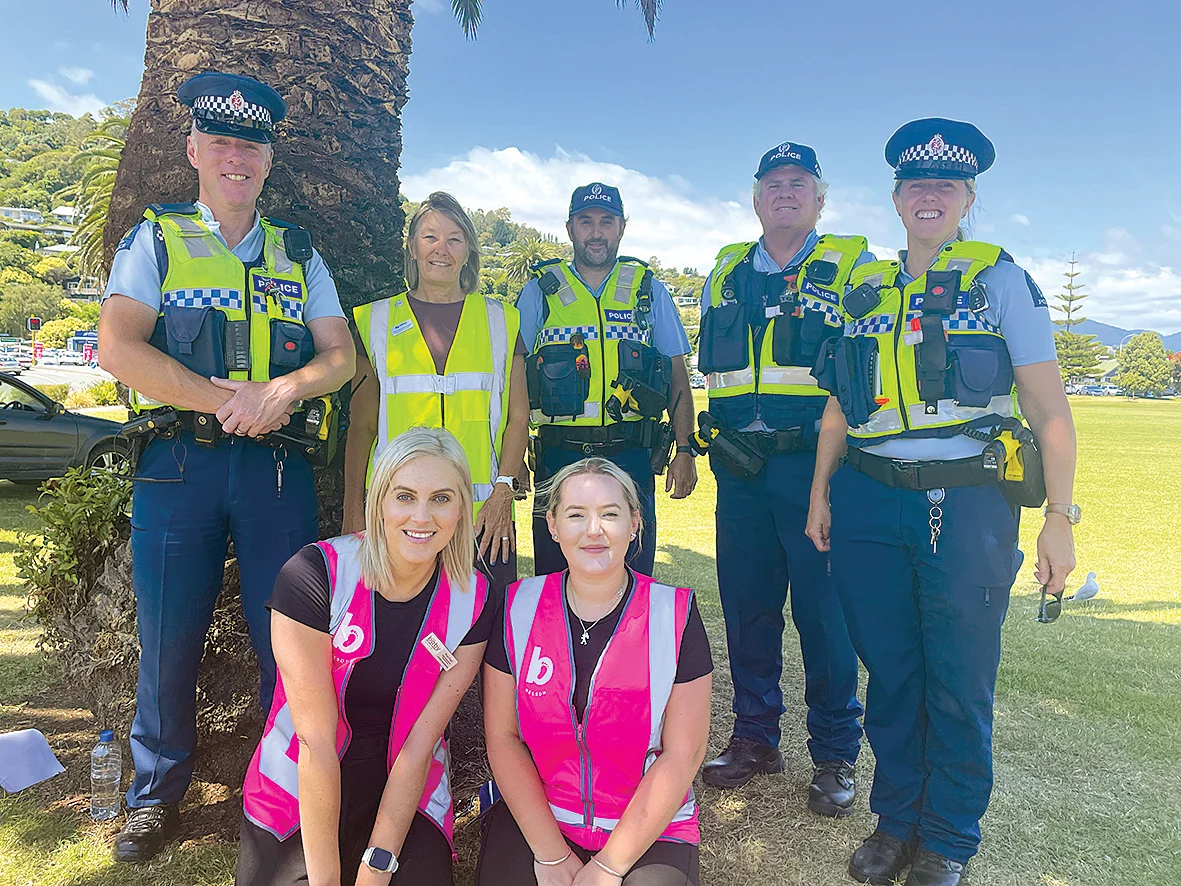
A collaboration between police and Baby on the Move is improving child safety, one carseat at a time.
Police and staff from Nelson’s Baby on the Move set up a checkpoint at Tāhunanui Beach on Monday to check the installation of child safety restraints, or carseats.
Baby on the Move manager Rachel Cooper says they were expecting to see a lot of incorrectly installed restraints, and that’s exactly what they came across.
“We’ve seen around 80 per cent of restraints not installed correctly,” Rachel says of the two-hour time period spent near the playground at the beach.
She says it ranged from minor errors, which could be corrected on site at the time, to more serious issues that required a proper consultation for correct fitting of three seats across the back and intallation of anchor points.
Rachel says they saw a lot of children in the incorrect seats for their size – around 50 per cent.
“A lot of children in half-boosters or children who are technically exempt from a restraint by law, but should still be in a booster seat to offer the best protection in an impact because the seatbelt is not correctly fitting their body.”
She says with the hoidays, a lot of people aren’t using their regular child restraints, with children chopping and changing between cars.
The partnership began when constable Mel Allen contacted Baby on the Move late last year to do a check at a preschool in Motueka, which they say was very successful.
“I think there was one compliant one out of 28,” Mel says of the check.
“It really highlights why we need to do more, it’s not necessarily that they haven’t got the right carseat, it’s just not correctly installed.”
Mel says restraints are vital to reducing injury and most people were suprised to learn that theirs was not correct.
“Parents want their carseats and their children to be safe. There are so many different seats and they are the hardest thing to install,” she says.
“Our law and our best practice don’t line up - we want more people to follow best practice because those are the children who have the best chance of survival in an impact,” Rachel adds.
Best practice includes a rear-facing seat until at least two years of age and an approved child restraint until the child is 148cm tall.
