
A hub for science and technology will no longer go ahead with parties citing financial viability and rising costs as to why they have pulled the pin on the project.
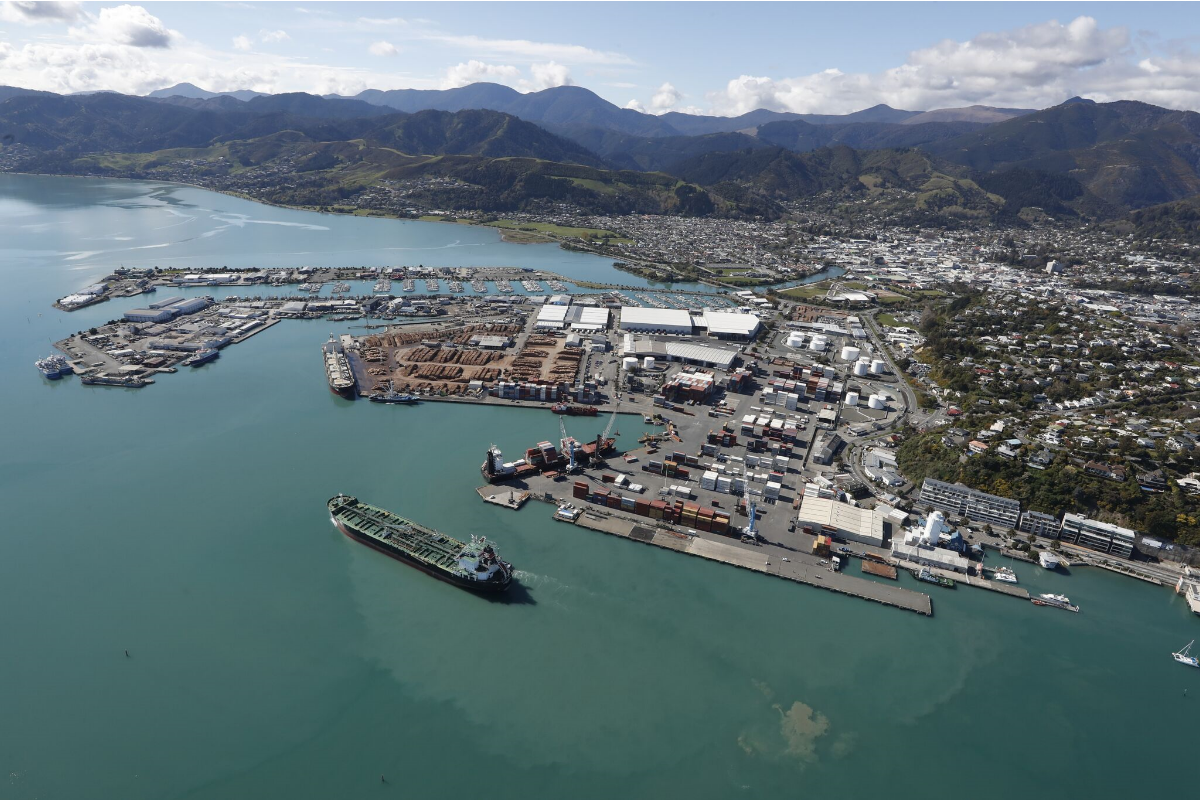
Cawthron Institute and Port Nelson Limited announced on Friday that the proposed Science and Technology Precinct at the Port will no longer proceed under the proposed concept.
The vision for the precinct was to create a hub of innovation and creativity for the science and technology sectors.
The Port was to construct three office buildings to house around 1,000 knowledge workers, and Cawthron had elected to purchase a section of the site to build its new laboratories, as well as become an anchor office tenant.
However, due to the challenging economic climate, and after conducting many design iterations for their respective builds to try to reduce costs, both parties have agreed the precinct is no longer financially viable.
Cawthron chief executive Volker Kuntzsch says the decision not to proceed with building its new laboratories at the site was purely based on financial viability.
"Laboratories are extremely complex to build, requiring a significant amount of specialist material. Supply chain disruptions and inflation pressures saw the projected costs almost double from $25 million to around $45 million in less than two years.
He says, as a charitable trust, those costs were simply not feasible.
"Cawthron has existed for 100 years, and we intend to be around for 100 more – my job is to ensure our long-term viability and there was no certain way to do that with the additional level of debt".
Vulker reiterated that Cawthron remained committed to the Precinct until the very end.
"As the increasing build costs became apparent, we decided to put our main Halifax Street campus up for sale in mid-2022 to raise some additional capital.
"Unfortunately, the tenders received did not achieve our expectations, which is ultimately a reflection of the cooling property market and meant we didn't have the finances required to cover the increasing costs."
Cawthron is now evaluating its options for redeveloping its main Halifax Street site, which it owns, to incorporate new laboratories.
Nelson Mayor Nick Smith says he is disappointed, but not surprised, that the organisations have been unable to commit to progressing the proposed Science and Technology Precinct given the sharp increase in interest rates and construction costs.
“The more than doubling of interest rates has had a massive impact on the commercial viability of a development estimated to cost $135 million between the two organisations.
"Other factors leading to this decision not to proceed include the reduction in demand for office space with more people working from home, the sharp rise in construction costs, and the difficult trading environment affecting the profitability of both organisations.
“I am disappointed but also understand the importance of both organisations remaining financially sound and such projects having to be commercially viable.”
Through its Long Term Plan 2021-2031, Nelson City Council consulted the public on supporting the precinct.
In 2021, it was decided this support would take the form of a $1.5m capital grant to Cawthron and a $1.2m capital grant to Port Nelson Limited. To further assist the development, stormwater pipes from under the Wildman Avenue site were relocated to provide a clean site for development.
The capital grants were conditional on the project proceeding and, as this has not occurred, Council has not drawn down this debt. However, the infrastructure work to relocate and upgrade the stormwater pipes has taken place at a total cost of $3.4m.
Nick says there is a conversation to be had with Port Nelson about this work and how it has benefited Port-owned land.
"While there is a wider community benefit in flood resilience from the increased capacity of these pipes, we do need to have further discussions because there has also been some benefit to this land."
Nick says the importance of both Port Nelson and Cawthron can’t be overstated and the continued collaboration of these organisations is key for Nelson’s economic growth.
Port Nelson chief executive Hugh Morrison also says he is disappointed the precinct is not proceeding.
"The Port and Cawthron were fully committed to realising the vision of the precinct and together we embarked on a robust due diligence process to progress the development for the science and technology sector."
"However, all is not lost for this site. The Port will explore other potential options for development that will contribute to economic growth for our region," said Morrison.
"I'd like to thank Nelson City Council and the Nelson Regional Development Agency for their extensive support of the Precinct so far, and we look forward to continuing to work with them on alternative ideas for the site."
Both organisations continue to work together to help Nelson Tasman become New Zealand's 'science and technology hub', including supporting Moananui, a collaboration with others to accelerate the blue economy.
Port Nelson has also partnered with Cawthron to support a three-year research programme into seagrass restoration in the Nelson Haven.
"These exciting examples demonstrate that we are not reliant on having a single site to collaborate to achieve great things for our region," said Kuntzsch.
Neither the Port nor Cawthron have accessed the capital grant funding allocated by Nelson City Council to help develop the Precinct as part of Nelson's Long-Term Plan.
