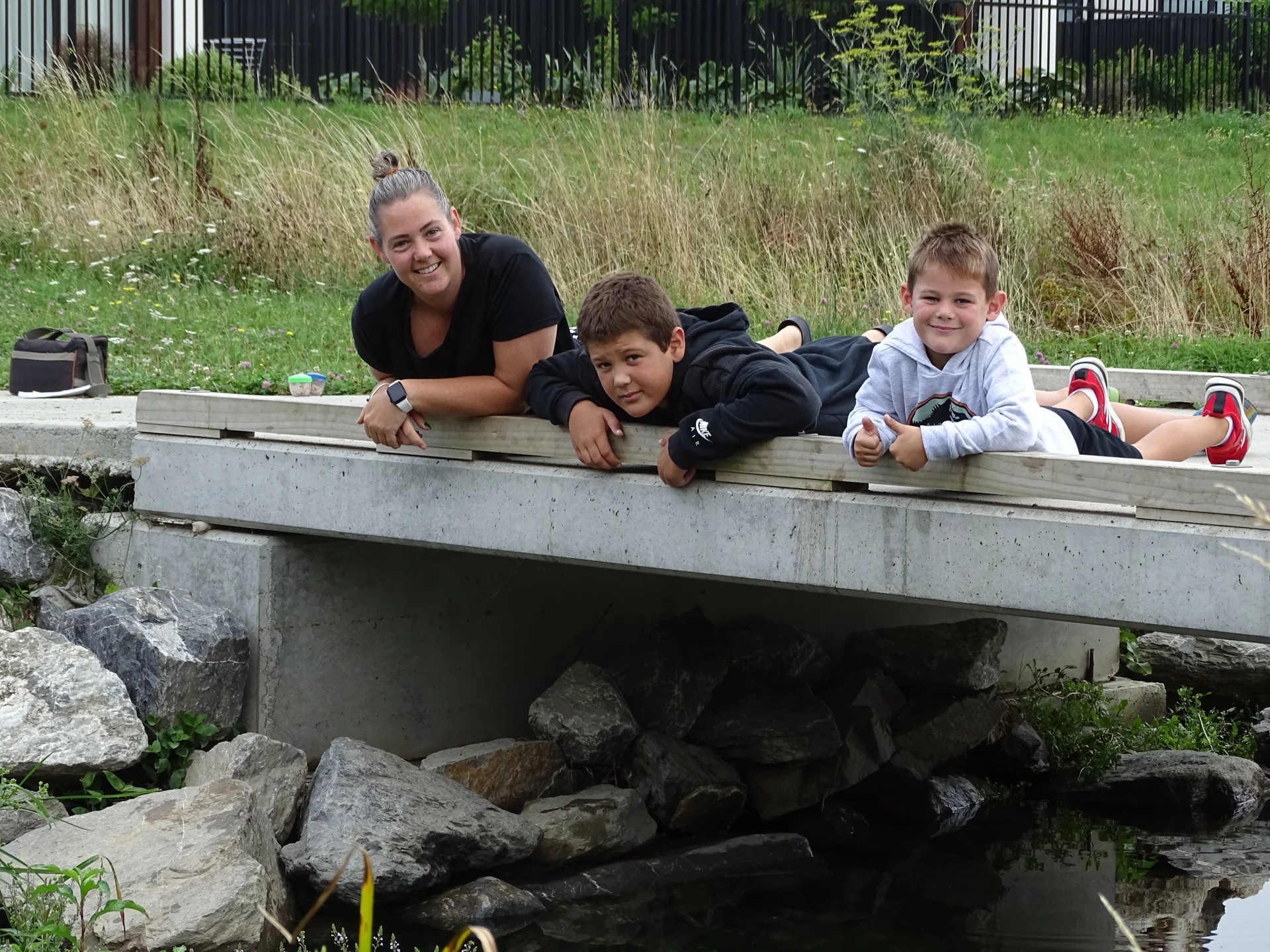
Eels in Borck Creek between Berryfields and The Meadows have been getting a bounty of food from locals fascinated by the slimy creatures, but they are being asked to stop feeding and petting them.
The community has been feeding the eels with good intentions, which was not only affecting the water quality but taming the eels and making them vulnerable to assault. Multiple posts on the community Facebook page have been concerned about the eels’ welfare and also the state of the creek from food thrown to the eels.
Tasman District Council’s environmental educator, Prashanti Lovegrove, says the eels, which are mostly shortfin eels, are best left alone to find their own food so they stay safe. Eels have been found injured by the Berryfield Drive Bridge where they have become tame.
“The thing about feeding them is they become vulnerable to misbehaviour. The younger population of intermediate and younger high-school are throwing rocks at the eels and treating them very badly.
“They’re really special and we’re very lucky to have them in our environment. We don’t need to feed them – they can feed themselves.”
The council is getting signs made to erect at the site to educate the public about the eels and their life cycle. Now a second sign is in the planning to explain the eels are special and should not be fed, touched or hurt.
“The way we can support the eels and ensure they have enough food is to look after the environment.”
Prashanti says stormwater flows into the creek, so people need to think about pollutants they may be inadvertently putting into the waterway, such as the water from cleaning paint brushes.
“A lot of toxins get washed off the road including micro plastics and oils that are beyond our control, but there are some things we can be careful about like washing our vehicles with chemicals.”
She says Borck Creek is a good example of combining engineering with ecology to re-establish the environment from a channel to a meandering waterway with still areas and undercuts for fish to hide from predators.
During the next couple of years, more plants – largely single-stemmed for floodwaters to pass around and including large natives such as kahikatea – will be planted to provide more shade over the water and consequently a colder, healthier waterway. Part of the plan is to have community planting days to get locals involved.
