
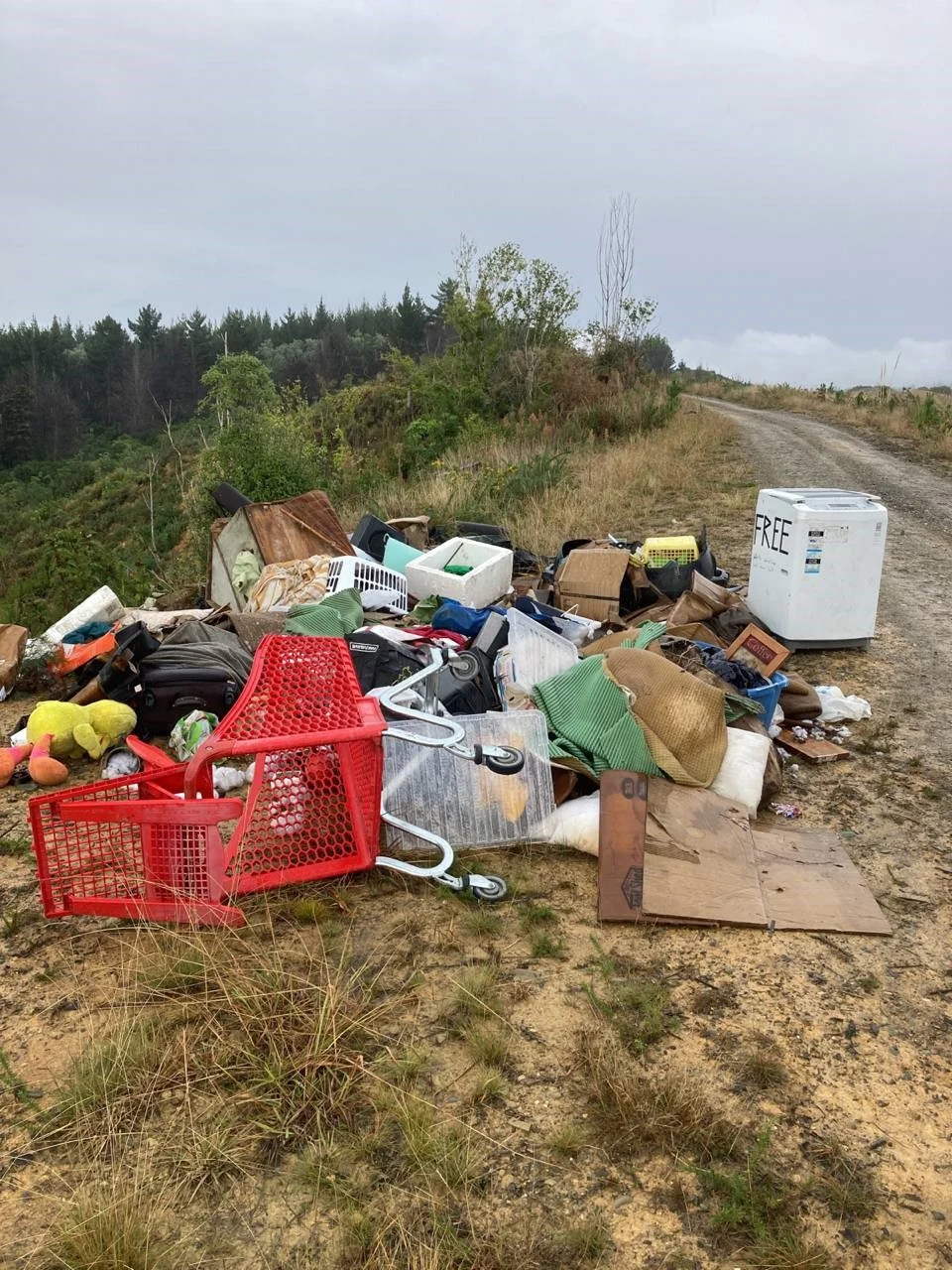
In just one day the Tasman District Council received five calls about illegal dumping, with one job needing a digger and a crew to clean it up.
Communications officer Tim O’Connell says last week, crew had to clean up human waste along with a pile of whiteware and recyclable items that do not cost anything for disposal at a refuse centre.
One of the loads was too big of a job for a regular two man patrol and required a crew with a digger, as the rubbish cascaded down the hill, and there was also human waste to contend with.
One pile had a large number of bottles that could have been recycled and another pile even had a Warehouse shopping trolley.
“While we absolutely appreciate that the cost of living is affecting us all – we don’t believe this is a valid excuse for people to dump rubbish and waste on roadsides or any public place that requires others to clean up after them.”
He says the cost of sending staff and contractors to clean up the illegal rubbish dumping falls on ratepayers and it is higher than it would be if everyone took individual responsibility to dispose of their own rubbish and recycling.
Earlier this year the council said the clean-up of illegal rubbish dumping added up to tens of thousands of dollars each year.
Tim says Tasman’s rubbish disposal costs are very affordable compared with other councils around the country.
A load of general/mixed refuse costs $266.80 per tonne at the Richmond Recovery Centre - which means $26.68 for 100kg and $2.66 for 10kg.
That cost is increasing in July to $282.90 to cover the New Zealand Waste Disposal Levy increasing from $20 to $30 per tonne, additional capital costs for upgrading the landfill, plus additional interest and depreciation costs.
From July, it will cost $40 per tonne to dispose of whiteware and Tim says one item of whiteware will be a fraction of that.
He says it is an offence to deposit litter in a public place and an infringement can be issued for $400.00.
To issue an infringement notice, the council requires the date, time and location of the offence and photographic evidence.
It also needs to be able to establish the name and address of the person carrying out the offence.
If culprits can be identified, he says the council can prosecute them.
