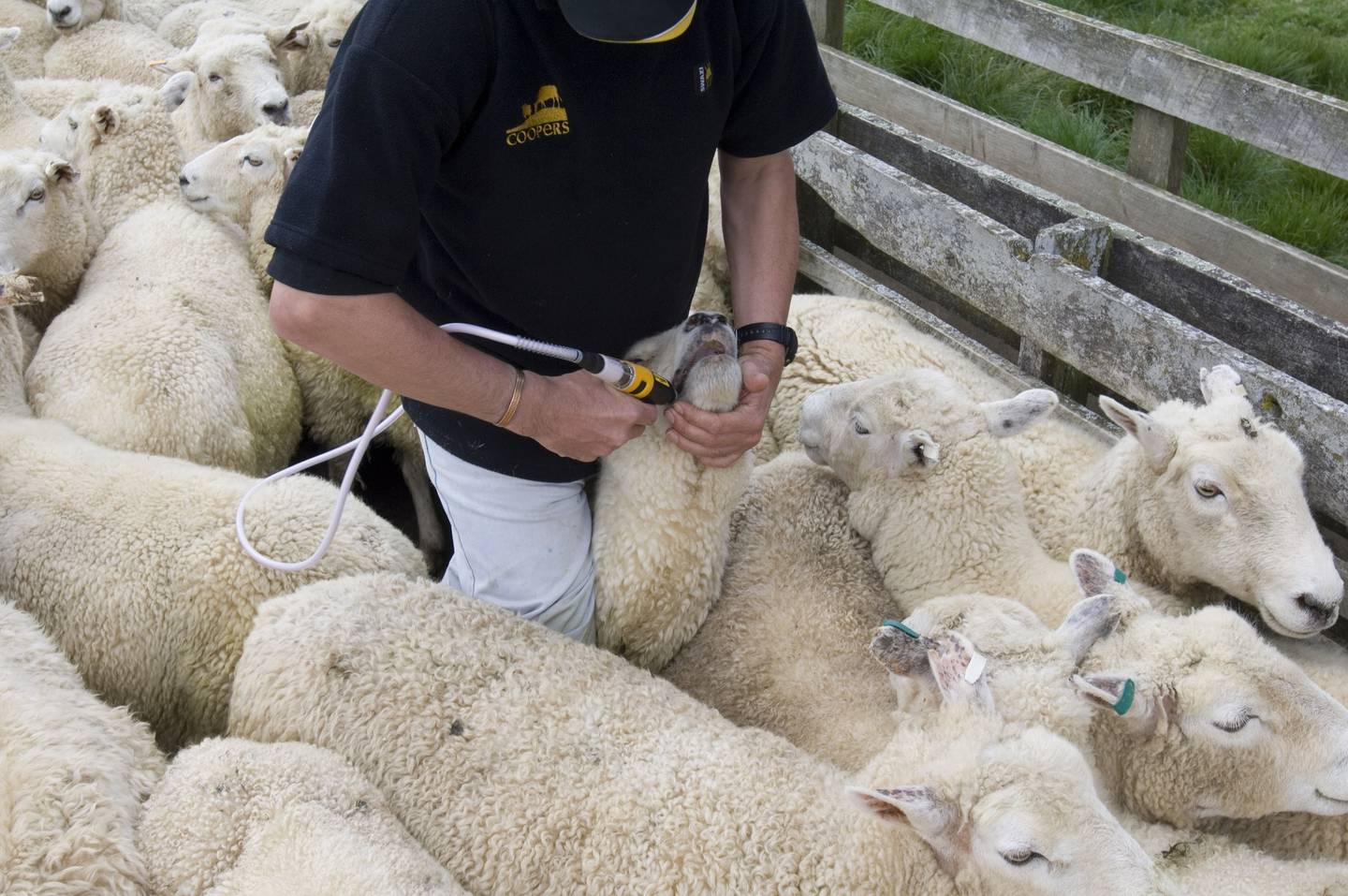
A parasitic worm, that thrives in moist and warm conditions, is unfortunately making the most of Nelson Tasman’s latest bout of weather, affecting farms across the region.
Haemonchus contortus, otherwise known as Barber’s pole worm, is an internal blood sucking parasite which affects sheep, alpaca and goats. It’s currently thriving in our recent moist and warm conditions, severely affecting local sheep.
Barber’s pole worms like moist and warm conditions, so often impact sheep in wet summers and autumn. These conditions are ideal for egg and larval survival and development.
When conditions are ideal, infective larval numbers can build up quickly, becoming a danger to sheep.
“Barbers pole is a tricky one to treat as animals can become reinfected very quickly, they also produce a large number of eggs compared to other parasites,” says Cassie Lundie, a vet from Richmond’s Town and Country Vet Clinic.
“These worms are different to other parasites as they attach to the stomach lining and feed on blood, resulting in anaemia. They are found in the abomasum, which is one of the four compartments of the stomach, and have a characteristic candy-cane red and white striped appearance.”
Any sheep, alpaca or goats displaying weight loss, lack of appetite, lethargy and a bottle-jaw could be infected.
A classic characteristic of Barber’s pole is pale gums and conjunctiva, due to the loss of blood making the animal anaemic.
Long time Ngatimoti sheep farmer Alastair Eggers says the last two years have been bad for Barber’s pole.
“The best thing is not to get to the point where you have them, work on prevention and an effective way to do that is to not use the same drench all year round where the parasite can develop a resistance to it.”
Alastair says that using a range of different drenches that are labelled effective against Haemonchus contortus is the best tool of defence against this parasite.
“The local vets can help with a drench programme and make it cost-effective. Explain to them what you’re doing and how many animals you have, don’t just walk in and buy two litres of drench. Have a chat with someone.”
Another tip Alastair has is around the benefits of having a paddock rotation plan.
“Get them out of the paddocks they have been in and don’t let any animals in those paddocks, this will reduce your reinfection rate.”
Barbers pole can come on quickly when there has been a dry spell and then a sudden downpour.
“The parasite lives longer in damp areas so keep sheep out of swampy grounds, move them to higher ground or into paddocks with a bit of wind,” he says.
The advice from Cassie is to prevent infections happening, not to wait until animals are showing clinical signs of infection.
“A lot of people are doing the right thing and drenching regularly, but the key thing is that they are not using a drench that has persistent activity against Barber’s pole,” Cassie says.
Correct drenching and weather observation are critical to prevent health issues in your animals.
