
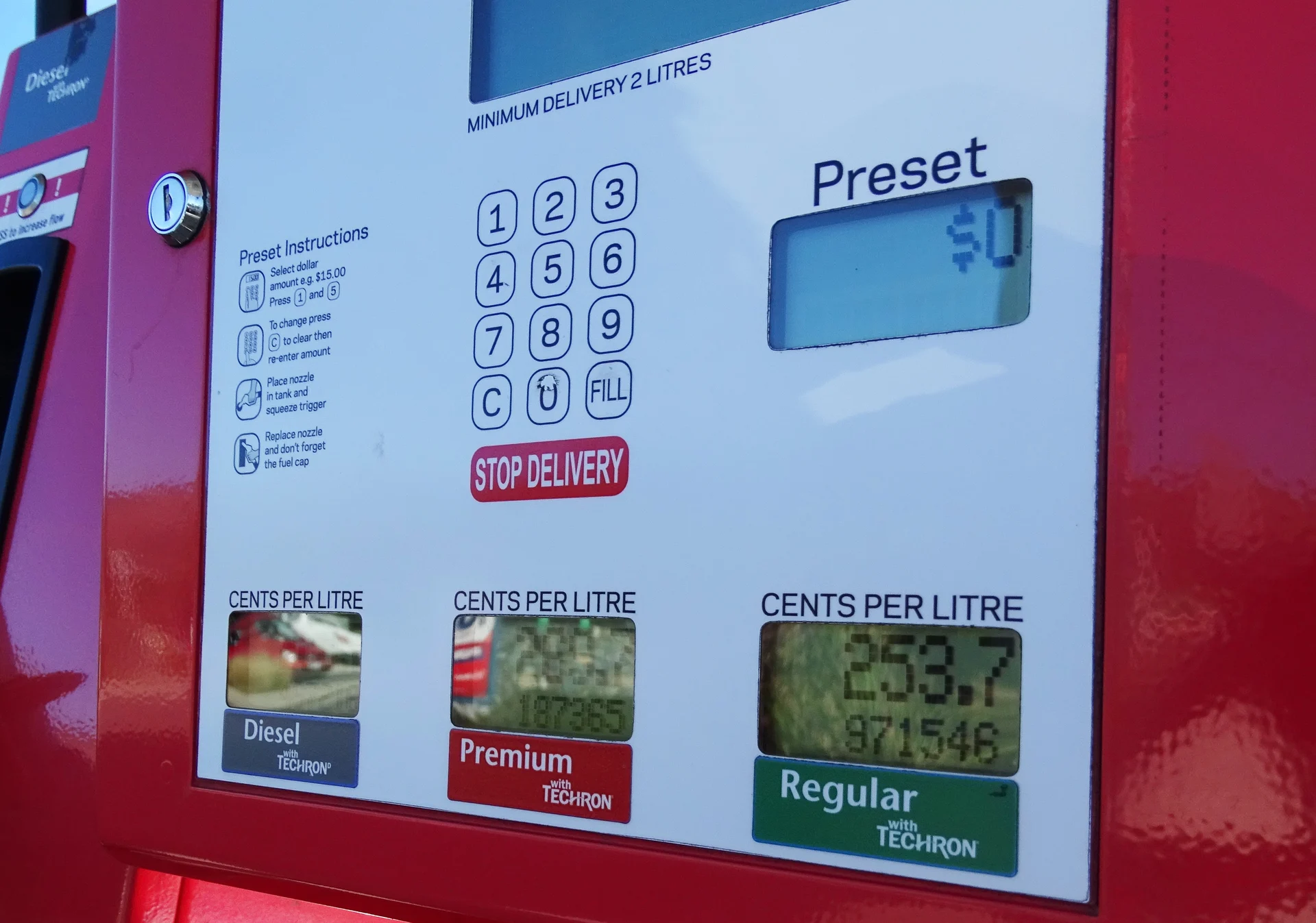
Drivers will be paying about 30 cents a litre more for their fuel when the Government’s fuel excise subsidy is removed at the end of June and Nelson-Tasman drivers already pay some of the highest prices in the country.
The removal of the Government’s subsidy of 25 cents per litre plus GST means fuel companies will be charged 29 cents per litre more which can then be passed on to customers.
The subsidy was introduced in March 2022 as part of the cost-of-living relief package and in response to the fuel price spike caused by Russia’s invasion of Ukraine. An equivalent subsidy applied to road user charges.
Last week, figures produced by the Gaspy fuel-finding app show Nelson petrol prices were the second highest of any region in the country and Tasman was fourth highest.
Petrol prices were as low as $2.04 per litre for unleaded 91 in Te Awamutu and even Gore had prices down to $2.13 one day. The average price of active petrol stations around the country was $2.36 per litre on 7 June.
Gaspy director Mike Newton says prices are sampled at the same time each day and include all active stations in each region. On that same day, prices displayed on the pumps in the Nelson-Tasman region were generally between $2.49 and $2.53 per litre.
New Zealand Automobile Association principal policy advisor Terry Collins says the high price of petrol in the region is puzzling and fuel companies tend to charge what the market will pay.
“We’re perplexed as to why you’re paying as much as you are compared to other areas.”
He says the Commerce Commission intends to assess competition in some of the smaller provincial towns due to pricing inconsistency.
In rural communities, farmers often buy fuel in bulk and bypass the petrol stations, which he suspects keeps prices down in those areas.
Then there are places such as Nelson where they “charge as much as the market will pay”.
Terry says people should not wait until the closing days of the subsidy to fill up vehicles with fuel.
He says it is human nature to wait until the last minute but that can result in queues and even the possibility of petrol selling out before the price goes up.
He says an option for regions such as Nelson and Tasman that pay high prices for fuel is the new Z Energy app Sharetank.
It enables drivers to pre-purchase up to 1,000 litres of each fuel grade on the app when they are in a region selling cheaper fuel and use it when they buy fuel back home.
A Z Energy spokesperson says customers can pre-purchase litres of fuel by scanning every Z service station within a 30km radius of their location and access the lowest pump price within that area.
They can then redeem their pre-purchased fuel at any Z station in the country at that price. This means fuel can be purchased when visiting low-priced locations such as Gore or Te Awamutu and spent in Nelson-Tasman.
Nelson MP Rachel Boyack says she has long been concerned about South Islanders often paying more for fuel than North Islanders.
The Government is passing legislation to encourage more competition in the fuel market and she says that is one of the best ways to ensure fair prices for consumers.
She says that will give the Commerce Commission further powers to step in and set fair fuel prices if needed.
Rachel says Nelson’s improved public transport system from 1 August will make it easier and cheaper for locals to use public transport.
The Automobile Association points out that when fuel prices increase on 30 June, public transport subsidies will also lapse, which will double prices for many people.
The increasing cost of fuel is a concern to Nelson Budget Services coordinator Tessa Bell who says people are already struggling and the price of petrol will flow into other goods, such as food.
“There’s nothing people can do to prevent this cost of living. Everything is going up and there’s no options for people anymore. Food is what drops off people’s budget the quickest.”

She says the cost of living is more than financial hardship as it is affecting people’s mental health and social well-being.
School sports is now a luxury for many families and being cut from their budgets which will have an impact on the younger generation. Higher petrol prices will make it even harder, she says.
