Every Friday a group of Nelsonians aim to make their voices heard outside Civic House. But they feel their pleas to address climate change aren't being addressed fast enough. Britt Coker speaks with some of its members about why they're so passionate about their cause.
It began in October 2018, when British activists assembled in London to announce a Declaration of Rebellion against the UK Government. People blocked major bridges across the Thames, super-glued themselves to the gates of Buckingham Palace and dug a hole in Parliament Square to bury a coffin representing the future. But from that symbolic death, came life too. The beginning of Extension Rebellion.
How did we get to a point where people all over the world are so desperate to save the planet that they protest regularly in front of local and central government buildings? Their answer is, of course, ineffective and/or non-existent action by their respective governments. Even on our shores many an archetypal No worries, mate New Zealander has turned in to a frustrated rebel. Extinction Rebellion (XR) now has over 1063 groups in 86 countries, 24 of them are in New Zealand. The rebellion has three demands. Tell the Truth. Act Now. Decide Together.
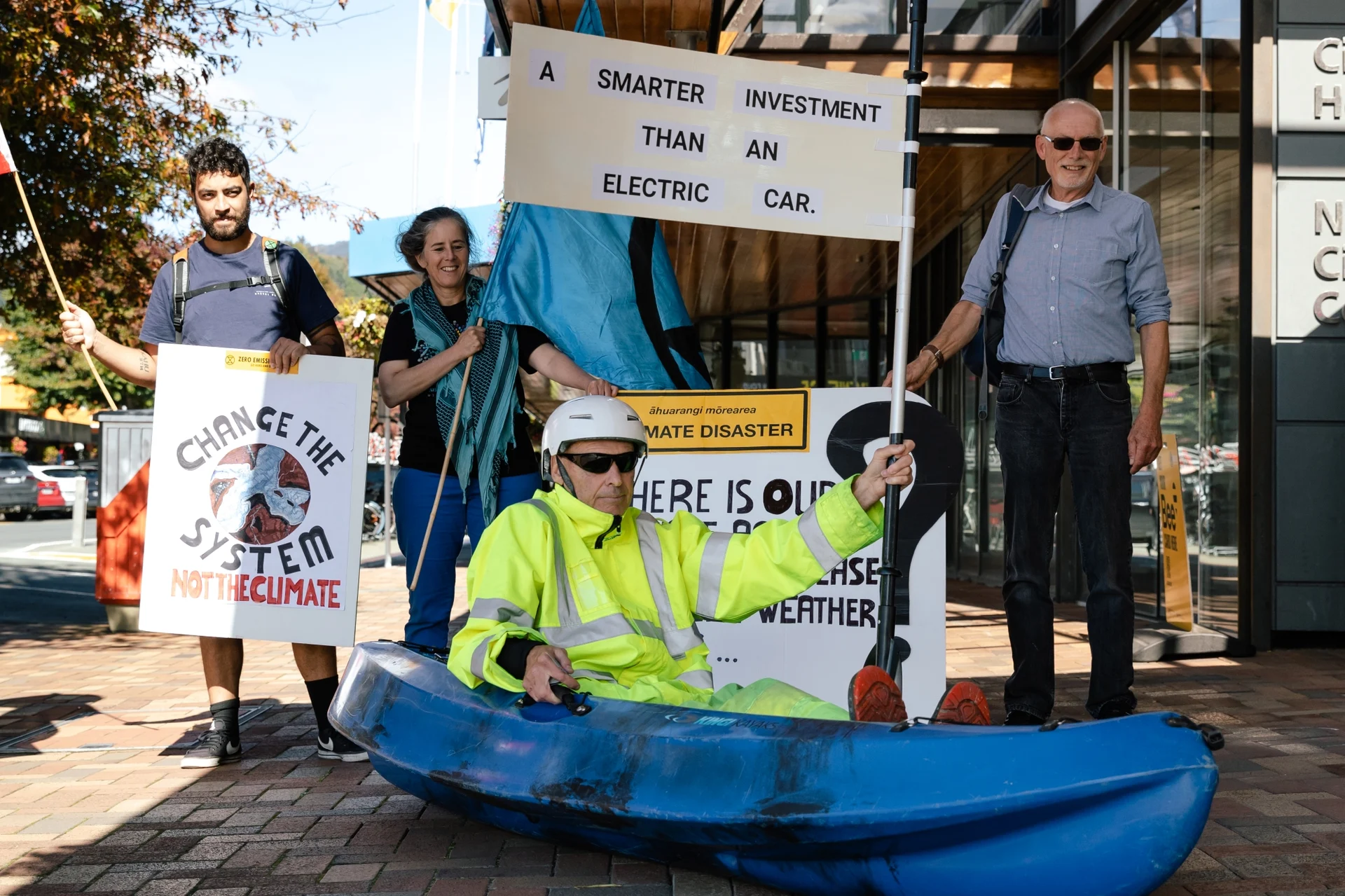
You’ll find members of the Nelson group every Friday outside Nelson City Council between 12-1.30pm. Their ‘Fridays for Future’ live action group clutch placards and engage with passers-by about the climate crisis and issues inextricably linked with it.
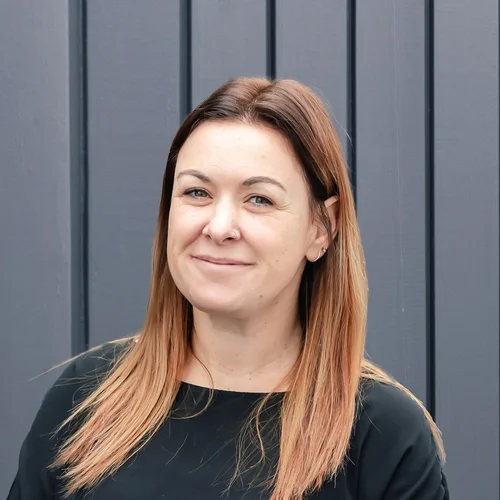
Ami Kennedy has been part of XR Nelson since 2019, restless for urgent action like everyone else involved. In addition to the climate crisis, she sees a link between it and cultural racism, and that we have become disconnected from the land, observing it as something separate from us in the same way that many of us see people of other cultures as separate from us.
“It is such a complex thing but I think it needs to be talked about, and especially in the climate at the moment where we've got conversations about anti co-governance and talking to people on the street on Fridays for the Future, the comments they come up with are just like out of this world, Victorian times, and we haven't moved on from a lot of our attitudes where people are seen as less because of their heritage.”
“Through land clearances in Europe and being marginalised off our land where we were able to sustain ourselves - and that's still happening today - we have trauma that separates us from that real deep connection to every living thing that’s on this planet…If we had our deep connection to our planet still, and the life-giving aspects of it, we wouldn't be able to do what we're doing.”
“I don't want to belittle the trauma and the effect of people when they've had their livelihoods and houses destroyed and people have been killed, that’s very traumatic and horrific, however, we forget in between times. It appears there is no active consciousness of what is actually happening in our planet, and I want people to be outraged. It’s heart-breaking what's happening and it's really easy just to feel hopeless and just go into ourselves and just want to lick our wounds and be comfortable, I suppose. And for some people, they don't have the resource or the time to be out on the street, so for those of us that do have that privilege to do that, we should be out there demanding that our councils and our central government are actually constantly working on this and constantly talking about it and also learning and listening to each other as well, because there are huge divisions being caused and that comes into more focus during the national elections.”
While we are all encouraged to minimise our footprints, Ami feels it is big industry that could make the biggest difference and that we are often given the false impression that they are doing a lot when, in fact, they’re not doing much at all, (it’s so common, the phrase ‘green washing’ was coined to describe it). She feels a lot has been deflected toward consumers for us all to change our ways, rather than the producer taking responsibility. Having said that, doing something personally is still better than doing nothing at all.
She says Nelson City councillors and staff will occasionally come and talk to the XR group, though a changing of the guard with last year’s local election has meant some new relationships need to be established. But XR is not going away anytime soon.
Deputy mayor Rohan O’Neill-Stevens sees them. “I appreciate the regular reminder of the scale and urgency of the climate crisis facing us. It’s a good reminder of the importance of the mahi we do, as well as the need to do more to reduce our emissions.”
Plenty of Nelsonians see them too, with decidedly more mixed reviews. It’s admirable I think, to willingly subject yourself to random acts of unkindness for something bigger than yourself. The average human prefers to avoid difficult conversations and rejection in any form. But for XR Nelson, the alternative is not an option.
Ami says, “We get people shouting out windows, we get people smiling and going ‘yes, well done and good on you’, and you know we get a whole range of responses. I think it is uncomfortable, we need to face the uncomfortable aspect of it and we need to seek community where we can actually work through the possible solutions together.”
Steve Browne is sitting in a canoe on the pavement outside the council building to make a point. He’s been part of XR Whakatu for just three months but is a long-time environmentalist who says he could see ‘we were polluting ourselves off the planet’. He has found his niche here and, like Ami, acknowledges the importance of community.
“The strange bit about the XR guys and what we are on about is that we don't want to make things harder for you, but easier. Our motivation comes from trying to preserve the very things we all love about living in and around Nelson. They are about working and stressing less, and spending more time doing what's important. Getting to know your neighbours because that's where the real security lies, in the community. Feeling safe where you live because you know the people around you and that they will be there when they're needed. In the words of James Baldwin, “Not everything that is faced can be changed. But nothing can be changed until it is faced.”
Steve bestows the virtues of a meat-free diet. Vegans are still seen as society fringe dwellers, but I hear the inaugural ‘Earth is Round’ meeting had low attendee numbers, too. It’s quite possible that one day long after you’ve scoffed at this sentence, veganism will be the norm and omnivores will be the ones scanning the small print at the bottom of the restaurant menu, to see if ‘Meat dishes are available on request’.
If we like Earth so much, why are we not unanimously in support of XR, agreeing that mass consumerism is harming the planet, and for our part, taking steps to do less of it? Steve will tell you it’s because ‘we are filling a hole in our heart’ with material things, desperately seeking satisfaction from outside ourselves. I guess, to want things is just an extension of needing things. Food and shelter taken care of, the desire to have more, remains. To stave off boredom, to find some pleasure amongst the stress and tedium.
Yes, there are plenty of folks who don’t list shopping as a pastime, who shudder at the sight of plastic packaging, who love big, live small. But even if this is you, there are still demands that take you away from the big picture and into the day-to-day detail. Not just that roof over our heads, but work too, and personal tasks and obligations on a mental list that never goes away, titled Important Things To Do Before Bedtime Lest My Internal Hard Drive Crashes. Internal hard drives are crashing.
Government officials have a more formalised list. At the top of it right now is the cost of living crisis. Then there is the housing crisis, and healthcare crisis, education, employment, and yes, still on their list is the climate crisis. But they are so busy putting proverbial fires out, that except for those times, ‘putting out fires’ moves from a metaphorical to literal expression, the climate gets usurped by other crises.
There is passion and frustration in the voices of Steve and Ami. No time for ambivalence, no space for half-heartedness. Not for them. Meantime, the rest of us will focus on what’s in front of us. We’ll drive between the red cones and tidied skirts of last August’s slips while the wreckage of Hawkes Bay is not even in our periphery. We are empathetic to all the bad things happening, but that list of Important Things To Do before Bedtime is not going to shorten itself. Still, somehow we need to find a balance between the things that don’t really matter and the things that really do. Like this amazing, blue-green marble we call home.
