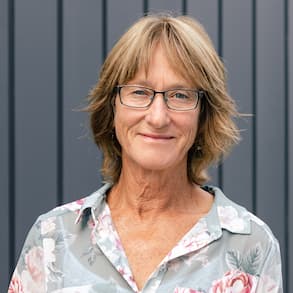

Linley Smith is usually a busy person who fits a lot into life, but four months after being infected with Covid-19 her life is still on hold as she struggles through each day.
She is one of an estimated 300,000 New Zealanders who have experienced long Covid, but she says the public seldom see the effect on people because they do not have the energy to go out, and when they do it is for the brief periods they can manage.
A team of researchers at the University of Otago has recently found that long Covid and ME/CFS (Chronic Fatigue Syndrome) are one and the same after examining the similarities in the molecular patterns.
The research showed that in both, an ongoing chronic inflammatory response led to a cascade of effects that involved the brain’s immune system, inflammatory system and the central nervous system.
The brain then starts to misfunction in terms of its regulation of body physiology.
For Linley, that means exhaustion like she has never known before.
“I’ve never experienced mental fatigue before. On a good day I’ll be up and about for two to three hours and then I’ll have to go and lie down for at least an hour.”
Prior to Covid, she led a full-on life as a mother, a commercial business partner with New Zealand King Salmon and wife of Nelson Mayor Nick Smith.
Now she manages three hours a day for work, mostly from home where she can spread it out through the day, and social functions with Nick are a thing of the past.
For six weeks, she could not work at all because she was simply exhausted.
For two days each week, she stays home on the couch and rests – so she can manage a bit more on the other days.
Even when she does manage to get outside the house, it is usually only for an hour or so and the last time she walked on the beach was months ago because it is just too hard.
People only see her out and about when she is at her best and do not realise she will have to go home to rest.
She says they are often surprised that she has not recovered yet, with few realising that long Covid can go on for a very long time.
She admits she was quite relaxed about getting Covid-19 and thought she would get “get sick, get over it and get on”.
“I’m quite frightened of getting Covid again.
“Ten to 20 per cent of people (with long Covid) get better after their second bout of Covid and 80 to 90 per cent get worse.”
Apart from the physical effects of long Covid, she says it is incredibly isolating for those who are forced to rest at home.
For those who can no longer work or not work as many hours, there can be a financial impact on the household and she also feels for employers impacted by staff who cannot work.
Linley is not alone with long Covid and, like many of those with the condition, is now part of a Facebook group that has an expanding membership.
In Richmond, Nic Ross’ journey with long Covid began 14 months ago when she was so exhausted that she slept most of the day for three weeks.
As time went on, she would begin to recover and then catch a cold or some other virus that would set her right back to square one, sometimes bedbound.
“It’s the world’s worst rollercoaster,” she says. “I’m really not getting anywhere because I get these setbacks and I can’t work because even after 20 minutes my brain feels fried.”
Walking even 200m leaves her wobbly and weak and she can only dream of the mountainbike trails she rode before she got Covid.
Reading can make her brain hurt, driving is too demanding, her hair has been falling out and the fatigue can be extreme.
“You feel sad for everything you have lost. A tiny thing that was easy to do before is now so hard.”
Yet she considers herself lucky, because she knows there are others with long Covid who have it worse and are completely bedridden.
She also has her mother to help her with cooking, housework and getting her to health appointments, and she feels for people with long Covid who have no help as well as family members trying to support those with the condition.
Doctors have been understanding, but she says a 15-minute appointment is not enough to talk about long Covid and they do not have any solution for fatigue.
Instead, it has taken time, energy which she does not have, and money to search for anything that might help her recovery.
She says the Government has decided Covid-19 is over and has little to offer long Covid sufferers.
Instead ,there is the Facebook group and a website developed by people with long Covid where anyone with the condition can register and learn more.
It can be found at www.longcovidsupport.co.nz
According to the Ministry of Health, most people with Covid-19 recover within two to six weeks, while others take up to 12 weeks and some report a range of symptoms that can be ongoing.

Episode 09 - Loving life with The Giants and chasing his NBA dreams — The Nelson Pod
A major Covid study carried out by the Te Herenga Waka/Victoria University of Wellington found one in five people reported long Covid symptoms such as fatigue, brain fog, shortness of breath, muscle aches and joint pain.
The study pointed out that this equated to as many as 300,000 New Zealanders likely to experience long Covid, yet it was still poorly understood by doctors and those with the condition struggled to get help.
