
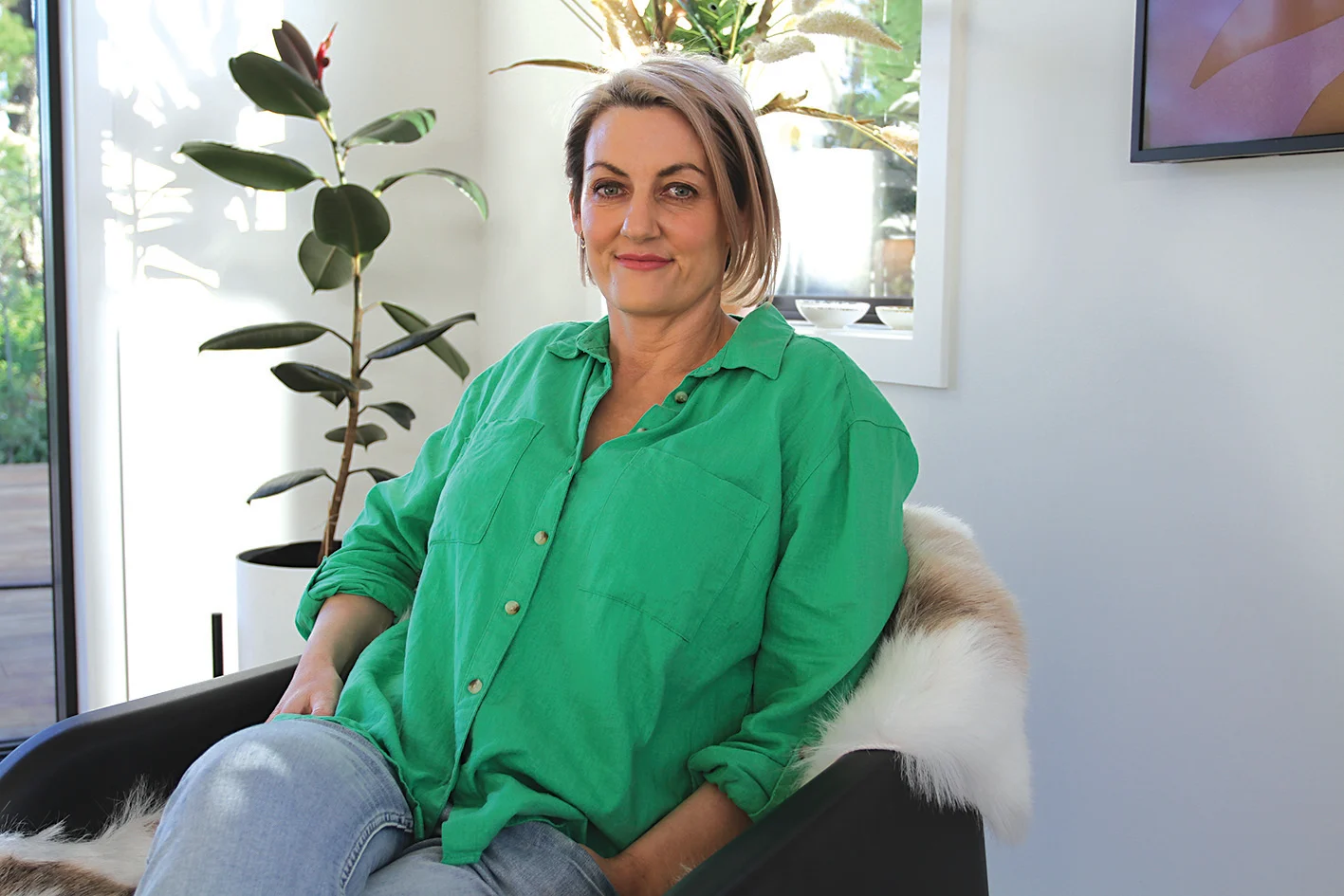
Relieving the “huge impact” of a family member’s dialysis treatment was the motivation for Rachel Bartlett to donate one of her kidneys.
The Best Island resident and former Nelson Hospital theatre nurse’s cousin, Ben Bartlett, who is originally from Nelson but currently resides in Brisbane, was diagnosed with microscopic polyangiitis in 2007.
Rachel says the disease has gradually caused permanent damage to his kidneys and has taken dialysis to treat since 2021.
Ben currently spends nine hours on dialysis each day, while still working five days a week.
“[Ben] came home in October and we caught up with family and he showed me his dialysis, and I thought ‘oh man, this is just no good’, so I offered to donate [one of my kidneys] to him,” Rachel says.
“If I was in that situation, I would want someone to donate to me because there’s not a lot of organs around and people don’t realise how safe it actually is [to donate] if you meet the criteria.”
According to Kidney Health NZ there are currently around 600 people on New Zealand’s kidney donation waitlist, many of whom could remain on the list for up to five years before a transplant.
Rachel, who is a registered nurse at the Skin Institute in Richmond, says she underwent scans in October last year to determine if her kidney was suitable for donation.
“Once the scans had all been tested and done, they then went to Australia in January and they looked at all my tests, and then there was about a three or four month wait once I had been cleared from Australia’s end.
“They did the matching at the same time to see whether we were a match or not, and we are a match, but if we weren’t, there’s a process called [the Australia and New Zealand Paired Kidney Exchange Program],” she says.
Living kidney donation accounts for over a third of all kidney transplants in Australia and New Zealand. However, up to 30 per cent of living kidney donors who want to donate directly to their loved one are found to be incompatible.
The ANZKX program matches incompatible donor and recipient pairs with other incompatible pairs across Australia and New Zealand so they can donate to each other.
Rachel will travel to Brisbane at the end of July where medical staff will assess whether she and Ben are in good health, before she goes under the knife at Princess Alexandra Hospital for the kidney removal on August 1.
Her kidney will be implanted in Ben’s body on the same day.
“They say that with a live donor, as soon as they hook up the blood vessels, [the kidney] starts working immediately, whereas a deceased donor could take two or three days to work,” Rachel says.
She says there shouldn’t be too many long-term risks for her after losing a kidney.
“I shouldn’t be anymore prone to potential problems; it would only be trauma to the one kidney if it were an accident or something like that or if I developed an autoimmune disease attached to my kidney.
“That’s about the only risks really, which is the same risk for everybody else.”
Rachel says bodies could start rejecting a donated kidney after the procedure, so her cousin will take anti-rejection drugs for the remainder of his life to combat the risk.
“Hopefully he won’t need to do dialysis again, and hopefully he’ll get longevity out of the kidney,” she says.
“With the number of people on dialysis, [hospitals] just can’t keep up… people need kidneys big time, and it would be great if [my case] gave [the public] something to think about.”
