
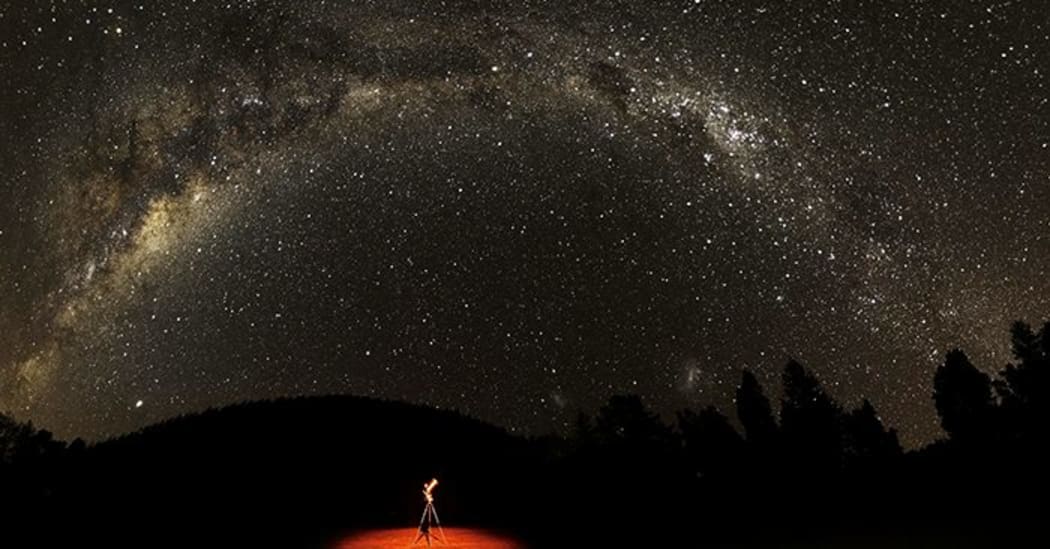
Star gazers seeking the Matariki cluster in the sky need to be early risers or have a very late night, says the instigator of the Wai-Iti Dark Sky Park.
Ralph Bradley says the cluster rises into the sky in the early hours of the morning and fades as the sky lightens with the rising sun.
The cluster is also referred to as the Seven Sisters because of the seven stars that can be seen by the naked eye, though he says Māori counted nine stars and through a telescope there are numerous stars that make up the cluster.
Matariki is visible through summer, he says, but disappears for a while until it re-emerges in winter when it marked the new year for the Māori calendar.
Ralph says it is not the only cluster lighting up the winter sky, with Scorpio and Sagittarius dominating the evening sky and, where they almost touch, lies the centre of the galaxy.
“In mid-winter when they’re’ up there early, we’re staring into the dust clouds of our galaxy,” he says. “We don’t see them in the summer because they’re up during the daytime.”
The early July full moon was known as a full buck super moon because it was closer to earth than usual and that is why it appeared so large. Then there are two full moons coming up in the one month of August, making the second one a ‘blue moon’. Despite the term ‘once in a blue moon’, Ralph says they are not actually that unusual.
Everything depends upon clear skies though and he says too often cloud frustrates plans to see the dark sky phenomena.
