
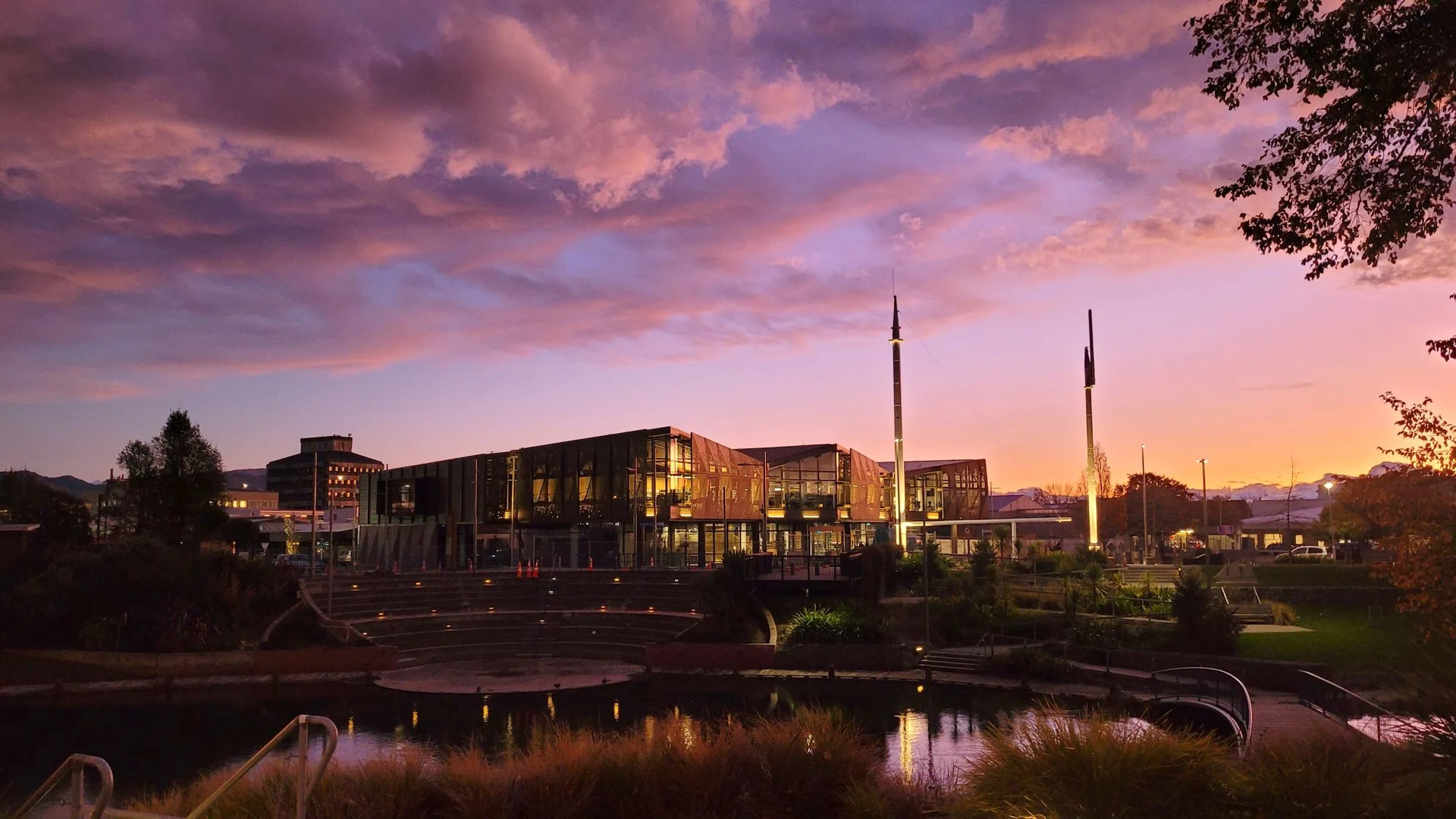
Blenheim’s new library and art gallery highlight both the value of civic
investment and a lack of direction on this side of the Whangamoas.
Matt Lawrey thinks Nelson could learn a trick or two from its neighbour and warns that the city needs to come up with its own vision for the future, before it’s too late.
Words: Matt Lawrey
Ever get the feeling Nelson might be getting left behind?
I don’t want to sound negative. God knows, I’ve been a cheerleader for this place since I first landed. For almost a quarter of a century I’ve been raving to anyone who will listen about how brilliant it is, and yet lately it’s felt like things have been starting to slide. Seriously, the city’s ability to spend large amounts of money, time and energy talking about great ideas, that then never come to anything, is starting to look like a serious character flaw.
Don’t get me wrong, there are some good things happening that have been in train for a while, including the new electric public transport service, the upcoming bus hub at Millers Acre and the plan to remodel Bridge St in way that will put people first.
These are all steps forward but they’re not going to save the city from the impact of online shopping, people working from home and the inevitable growth of Richmond. Electric buses are wonderful things, but you’ve got to give people a reason to get on them.
Pedestrianised central cities are a great idea too, but you need to give people reasons for being pedestrians.
Over the last 14 years we have repeatedly seen potentially-transformative projects wither and die. These include the performing arts centre, the gondola, and the science and tech precinct. Even the Church St upgrade that had huge support from local businesses and landlords fell into the way-too-hardfor-Nelson basket. At the time of writing, question marks hang over the future of the 175-dwelling Kainga Ora development planned for the central city and the walkway-cycleway destined, in theory, for the waterfront. Add to this the decision to put the new library on hold, and you end up with a big question mark hanging over the future of the central city.
It’s a very different story over the hill in Blenheim. A lot of Nelsonians look down their noses at Blenheim but, when it comes to investing in their future, Malabarians, leave us for dead. In 2016 the town celebrated the opening of its 700-seat performing arts centre, ASB Theatre Marlborough. In 2019 another smaller theatre was added to the centre. In April this year, Blenheim was in party mode again as the town cut the ribbons on its brand-new library, which is three times the size of its old library, and its new art gallery. That’s three major economic activity-generating, community-building projects, worth over $42 million, all opening in the space of seven short years.
Marlborough’s Mayor, Nadine Taylor, expects the investment in the library and art gallery to help to revitalise Blenheim by attracting people, businesses and opportunities into the downtown area. She told Radio NZ that it is much more than a library and a gallery. “It's a living space, it's a children's space, it's an all-ages space and it's a future technology space, and that's what the people of Marlborough wanted.”
I can’t help thinking that the people of Nelson need to figure out what they want before it’s too late. I know the impact of last year’s floods and slips need to be taken into account but we also need a vision for the future of the city; a vision that goes beyond watching the place turn into a giant retirement village. Our predecessors understood the importance of civic investment; the people who built this city believed in working for a brighter future. They believed that they had a duty to try to make Nelson a better place for future generations. That spirit appears to still be alive and well in Blenheim, but can we can honestly say it still exists in Nelson? I hope we can.
I also hope our elected representatives can look past the naysayers and actually commit to a vision. Planning for Marlborough’s new library and art gallery began in 2013. The longer it takes for Nelson to come up with a plan, the more expensive and the harder it will be to implement. The clock is ticking.
