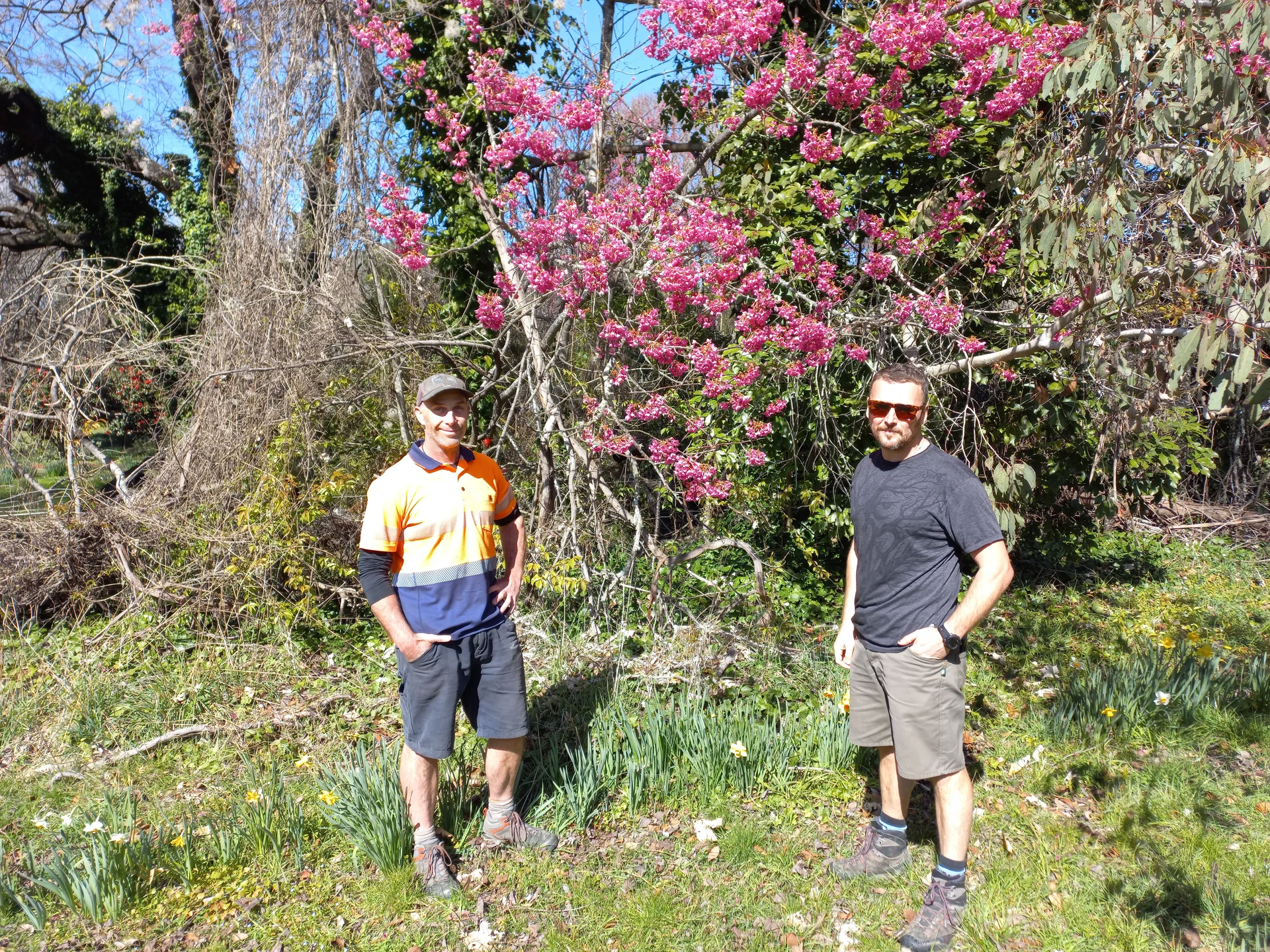
While it’s an attractive tree and pretty to see in a backyard, the reality is that the invasive nature of Taiwan cherry trees (Prunus campanulata) is changing the look and feel of our native forests.
Taiwan cherry trees have been sold by nurseries for their amenity value since the 1960s and were often mistakenly marketed as sterile trees. However, the trees produce fertile fruit which has allowed them to spread.
“It’s gone rampant up north in areas such as the Bay of Islands, Bay of Plenty and Whangarei,” explains Tasman District Council (TDC) senior biosecurity officer, Lindsay Barber.
“The spread up there is truly worrying, which has really highlighted the opportunity we have in Tasman and Nelson to prevent that happening here.”
On a recent work trip to Paihia in the Bay of Islands, Lindsay says he was staggered to see how significant the Taiwan cherry invasion is.
“Driving through the native bush I was expecting to see natives along the roadside such as pongas, broadleaved native trees and mixed podocarp forest, with a few kauri trees in the mix. The reality instead was seeing an ominous invasion of Taiwan cherry trees interspersed amongst the native trees and competing with them. It just didn’t even look like natural New Zealand.”
In an effort to eradicate the species, the TDC are offering to remove Taiwan cherry trees at no cost, treat the stump, and approve a replacement tree for each Taiwan cherry removed up to the value of $75 per tree, to all cooperative landowners.
“We have one chance of eradicating this pest tree and if we can’t get onto it now then it’s out and we won’t be able to control it, we will have it forever,” Lindsay says.
“And while these trees are attractive, they only provide nectar for tuis, bellbirds and bees for a couple of weeks of the year, but then for the rest of the year they don’t provide anything.”
Lindsay explains that while the eradication effort is currently a cost to Tasman ratepayers, the benefit will be in 30 or so years’ time when many parts of the North Island are covered in Taiwan cherry, and the forests of Tasman and those surrounding Nelson are free of it.
“The integrity of our native forests will have been maintained and I think people will realise that while it was an ambitious undertaking at the time, it was well worth the effort,” Lindsay adds.
“We are not too late to attempt eradication and keep our native forests native, but we need the support of the community. We are doing this for the generations to come.”
To report a Taiwan cherry tree, or for further information, contact the TDC biosecurity team on 03 543 8400 or biosecurity@tasmangovt.nz
