Children from Lake Rotoiti School have been gearing up to learn about the negative impact wasps have on our native birds, insects, invertebrates, and recreation.
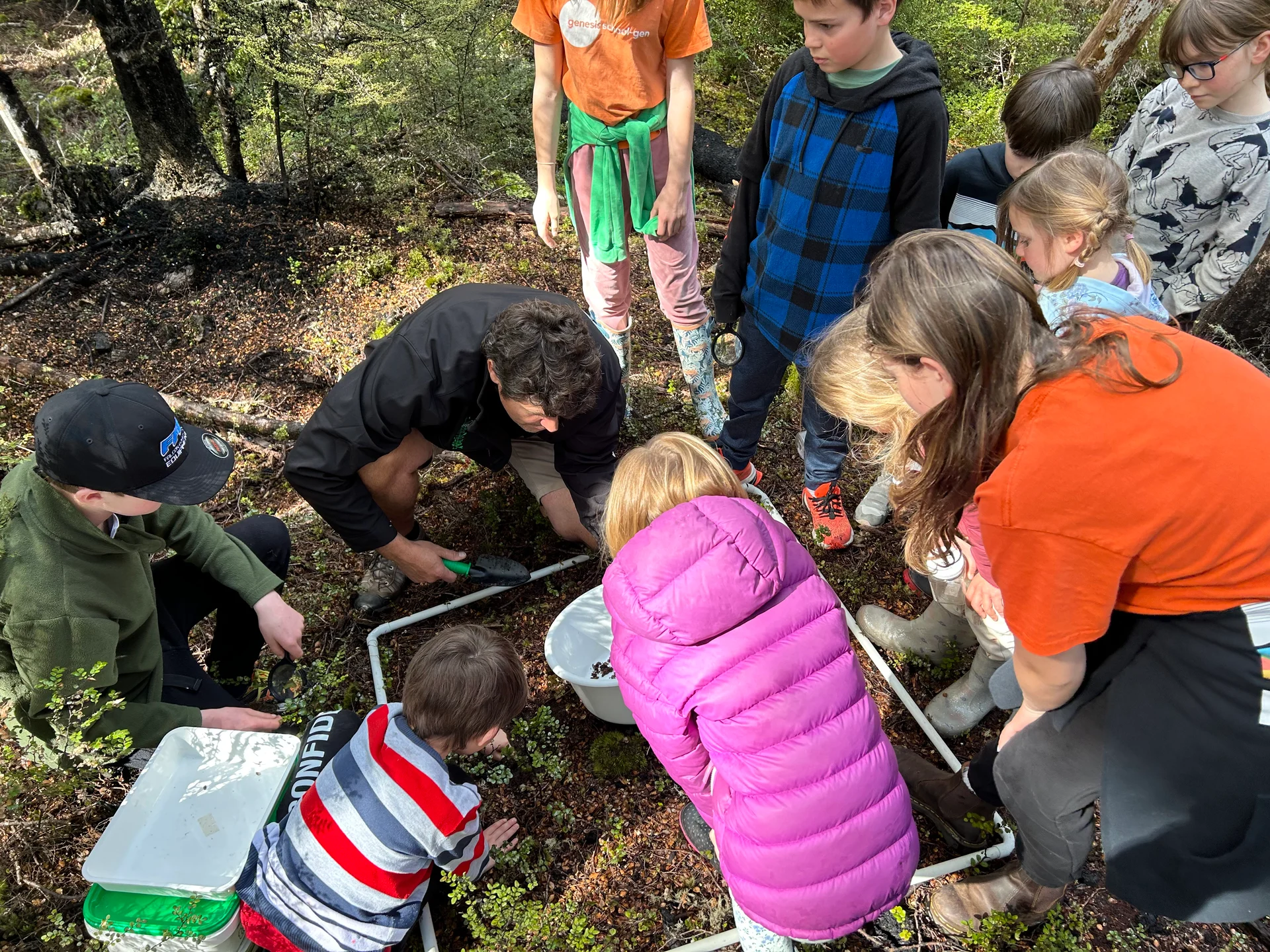
The starting point for this saw the group spend time in a part of the Nelson Lakes National Park and using one metre quadrants looking for invertebrates.
“Previously, we visited the park and looked at fungi and the plants. This time we were looking at what is underneath it all,” says principal and teacher at Lake Rotoiti School, Mike Allen.
The wasp population feeds on a wide range of invertebrates, insects, spiders, ants, bees, and flies. Their consumption of these heavily reduces what is available for our native birds and other insects to feed on.
The connection between wasps and invertebrates was completely new to the students.
“This is the pre-wasp stage, just as the weather warms up and everything comes to life again,” says Mike.
“We selected invertebrate samples which we spent the afternoon looking at more closely through microscopes and jeweller loupes. Students identified and sketched their findings before releasing them back into the forest. It was a great day of learning in our natural environment.”
Discoveries included learning that we have a very healthy and diverse environment, and how the invertebrates in our forest help it to grow.
Early next year the group will head to the same area and compare findings to understand the negative impact of wasps.
“We are going to have another look after the wasps have been through on their protein diet. There is a general fascination from the students to have a look at what happens next,” Mike says.
“The more contact you have with your learning, and why you are learning it, the better. Most of our learnings are related to where we live and the students always really enjoy it.”
