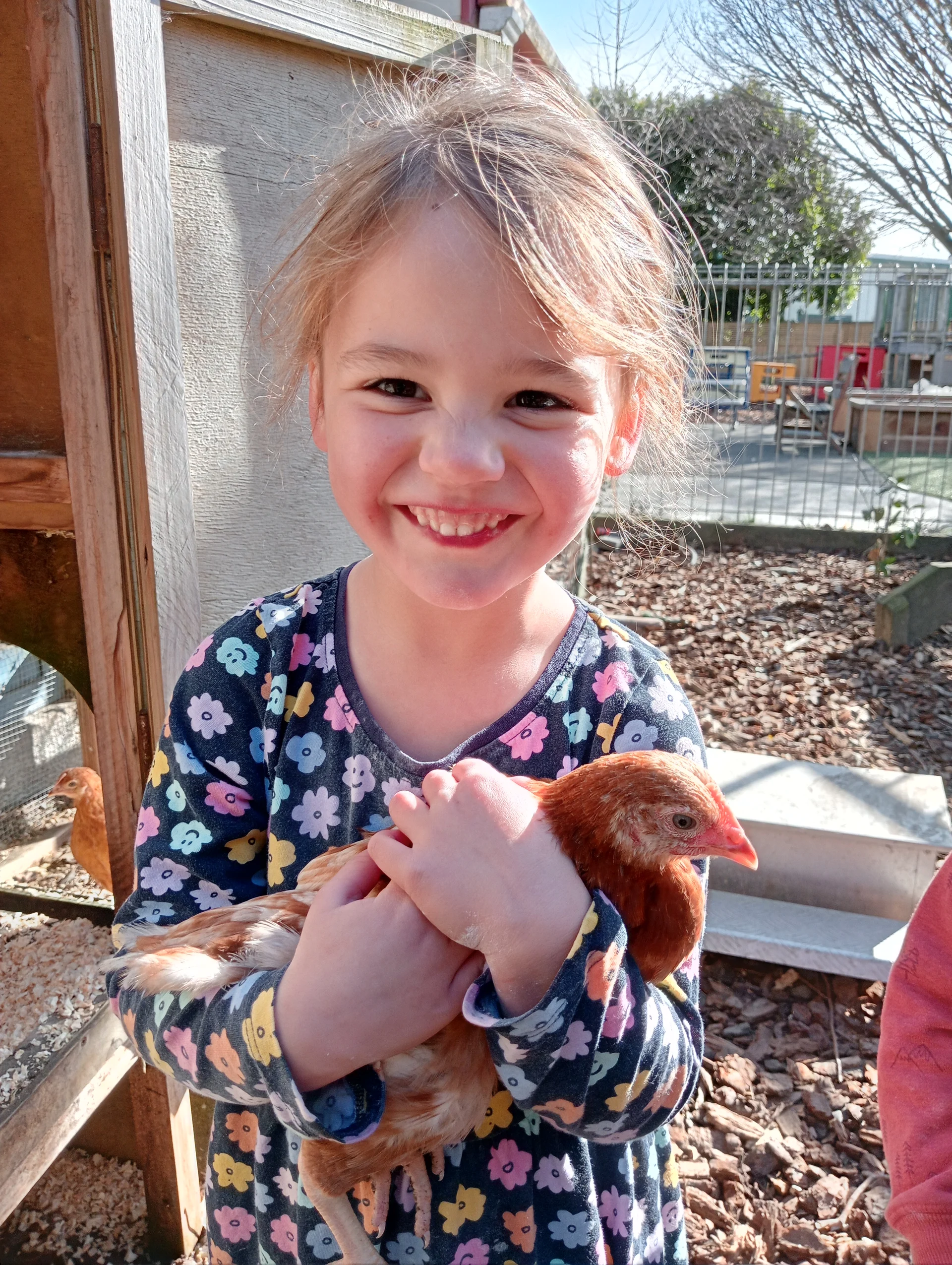
Chickens are helping teach children valuable things at Pinegrove Kindergarten in Brightwater.
“The chickens help teach children so much like where food comes from and how to care for animals, others and the environment,” says head teacher Leanne Rodman.
Leanne also says that for various reasons many families aren’t in a position to have chickens at home so it’s great to be able to offer the children the experience at kindergarten.
Children and teachers grow green vegetables such as silverbeet and spinach for the chickens, which adds another dimension to their learnings as well as connecting with the environment.
“It’s a great example of kaitiakitanga, one of our kindergarten values around being guardians and caretakers of living things,” Leanne says.
“The chickens can also provide a beautiful settling experience for children that are finding it hard to say goodbye to mum or dad, the child can transition into checking eggs, or the chicken’s water or food which they really enjoy doing.
“We also go on bug and insect hunts which we then feed to the chickens which we all find a lot of fun.”
During the seven years that the kindergarten has had chickens, there has been old and new chickens which has been a platform for children to learn about the cycle of life.
Teacher Karolyne Dunn says new chicks create opportunities for the children to gain understanding of empathy.
“We explain that the new chicks are similar to new children starting, they need time and kindness to adjust to their new surroundings while they get to know us, and we get to know them. It’s a great way to learn about manaakitanga - kindness and support.”
Food scraps from morning tea and lunch are collected and fed to the chickens, and eggs are shared with local families or given as gifts to people within the community.
“Sure, having chickens is a bit of work for us, but it’s well worth it,” Karolyne says as she hangs a child’s freshly painted picture of a chicken up to dry.
Pest control has been another aspect of learning associated with the chickens. Kids help check traps regularly, opening conversations that are relevant to the wider community and environment.
