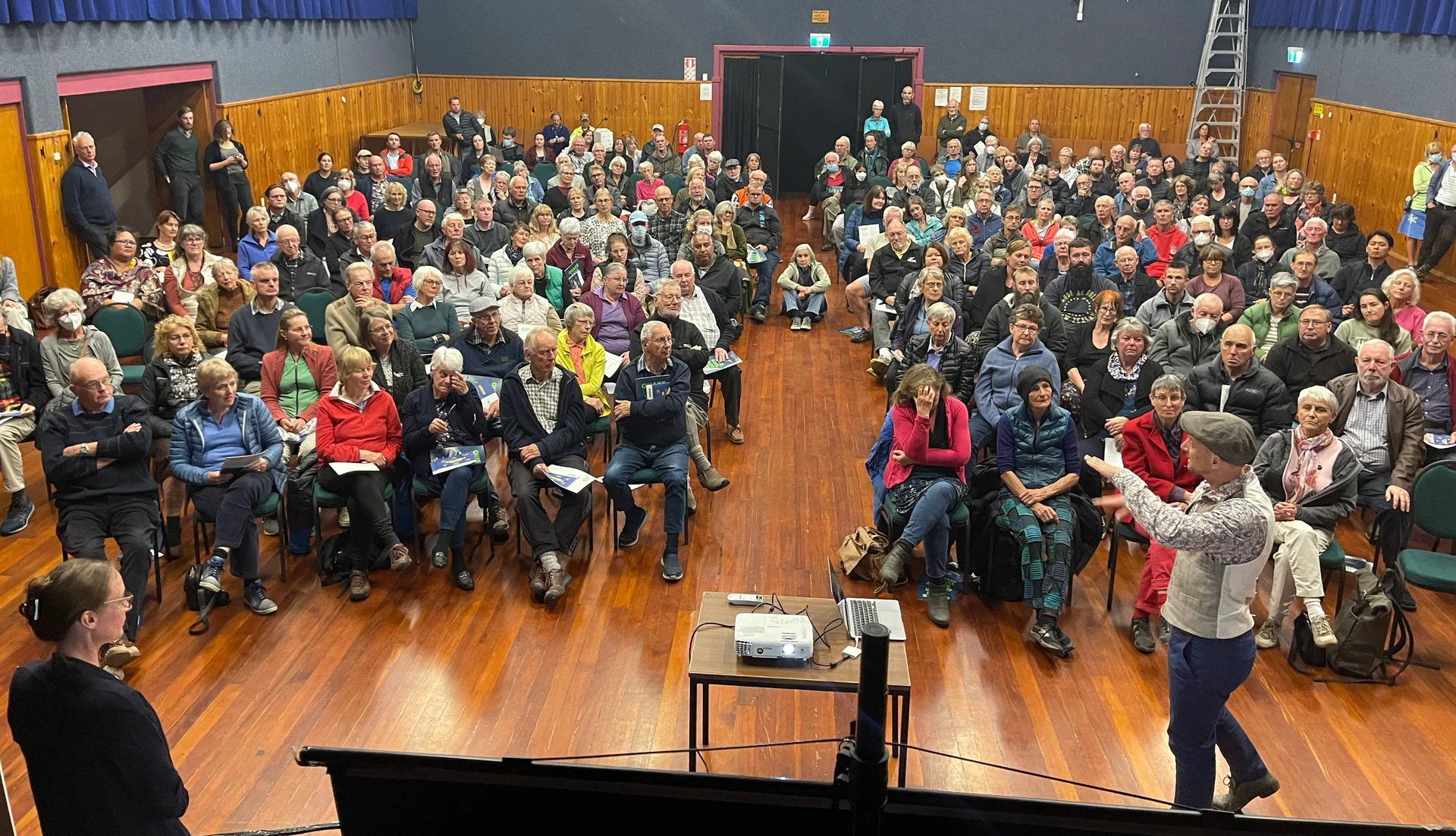
A Wakefield woman is leading the way in helping others prepare for and understand large-scale Alpine Fault earthquakes.
Scientific research indicates that there is a 75 per cent probability of an Alpine Fault earthquake occurring in the next 50 years, with an 82 per cent chance that it will be a magnitude 8+ event.
AF8 (Alpine Fault magnitude 8) is an award-winning programme of scientific modelling, coordinated response planning, and community engagement, designed to build resilience to the next Alpine Fault earthquake.
“Geological evidence shows us that the Alpine Fault has a remarkably regular history of producing large earthquakes on average every 300 years,” says Wakefield-based Alice Lake-Hammond, who is the AF8 programme manager.
“The last significant Alpine Fault earthquake was in 1717, which means the next one is likely to occur within the lifetime of most of us, or our children.”
The Alpine Fault is the active boundary between the Pacific and Australian tectonic plates where they intersect on land. It’s 800km long and runs up the spine of the South Island. It’s visible from space, and without it, our beautiful South Island would look very different or not even exist.
“It is the large earthquakes that the Alpine Fault generates that have lifted our beautiful landscape up out of the water - without that movement, our landscape wouldn’t exist.
“So, when we talk about an ‘AF8’ we’re not talking about the end of the world, we’re talking about understanding how our landscape moves, so that next time it does we are all better prepared to move with it,” Alice explains.
Over the last 8000 years it has ruptured 27 times, on average every 300 years, hence why geological evidence is telling us to be prepared now.
“Preparedness looks different to everyone but can be as simple as having a conversation,” Alice says.
Alice is encouraging people to have conversations with neighbours, workmates, and family about how they can support each other ahead of time.
“Before we lose power, water, and facilities it’s good to connect and have a conversation about how you will all look after yourselves. The better connected we are beforehand, the easier it will be to support each other during and after.”
Unlike a flood or fire, which tends to be a localised event, an Alpine Fault earthquake will affect everyone in the South Island, resulting in a much longer than usual time for help to arrive.
Emergency services will be overwhelmed and getting help will be challenging, which makes having those conversations now important.
“It’s not a matter of if it will happen, it’s just a matter of when, so it’s great if people can increase their awareness around the Alpine Fault, enable conversation, and be a bit more prepared,” Alice says.
To find out more, go here.
