
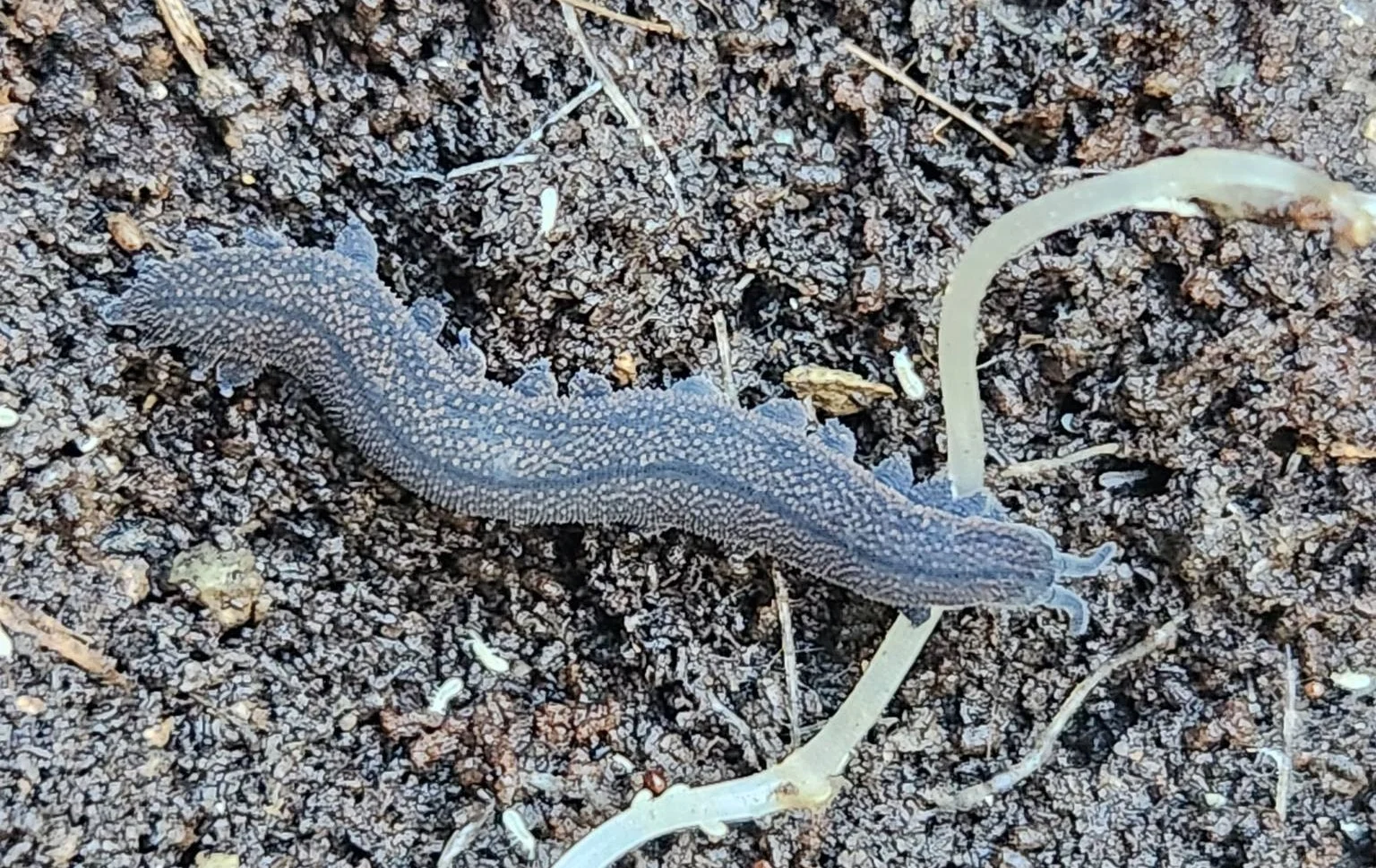
The Brook Waimārama Sanctuary is backing a rare wiggly insect in this year’s Bug of the Year competition.
Velvet worms are thought to have made good on the land surrounding the sanctuary for 80 million years during New Zealand’s attachment to Gondwanaland.
There is now some evidence that climate change, habitat loss, and predators could soon wipe out the species.
Events and media coordinator at the sanctuary, Olivia Gallagher, says the velvet worms are often seldom sighted, but staff who have managed to get up close think they deserve to be put under the microscope for the competition, which is hosted by the Entomological Society of New Zealand.
“The main reason we’re excited about velvet worms is because they’re a super unique creature, they are an entirely separate group of invertebrates, so they don’t have any other close relatives and so they fill a pretty big evolutionary gap between insects and worms,” she says.
“They have their own genus, their own type of category in terms of taxonomic classification, and there’s hardly any data on them and we think they deserve the spotlight this year.”
Olivia says velvet worms range from two to eight centimetres, and are found in shady, cool and damp areas due to permanent open pores on their skin.
They hunt at night to catch other invertebrates using sticky jets of fluid, which is also used to digest their prey.
Olivia says habitat loss for the critters could threaten their survival.
“The main thing is keeping their environment healthy, making sure they’ve got the right habitat, and so the best thing people can do is protect any of these areas in their communities by fencing off stock or predatory animals, and enhancing these areas by planting natives.
“Also making sure you don’t get rid of fallen leaves or logs, especially native trees because when they start to rot and break down it provides amazing habitat for these species, and reporting any sightings you see to DOC because that helps fill the gap in the current data.
“Unfortunately, there is some evidence that the change in climate will affect the habitat and living conditions of the velvet worm.”
Olivia says about 220 other invertebrates also reside at the sanctuary, which include glow worms, giant dragonflies, the New Zealand praying mantis and the New Zealand red admiral butterfly, which are also among the nominees.
Go here to cast your vote. Voting is open until 12 February.
