
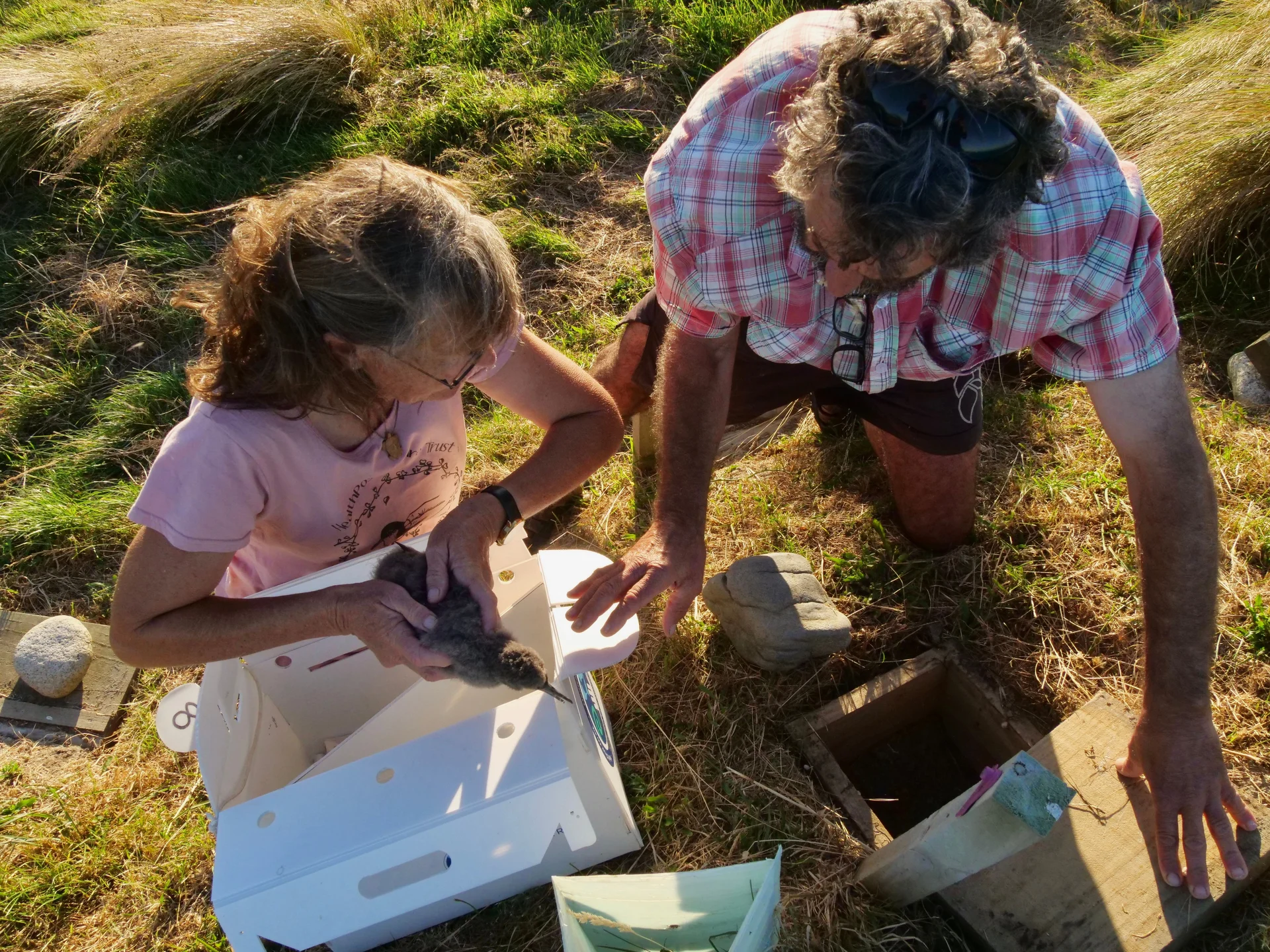
Almost 100 fuzzy, grey, fluttering shearwater chicks were taken to their new home at the Wharariki Eco-Sanctuary last weekend, as part of a project that aims to re-establish the relict species on the mainland.
The project is run by HealthPost Nature Trust, and has resulted in the translocation of a total 198 pakahā/ fluttering shearwaters to the Golden Bay sanctuary.
This most recent group were selected from Kokomohua/ Long Island in the Marlborough Sounds by the trust’s trained and knowledgeable team.
Pakahā are small brown and white seabirds, whose burrows are very vulnerable to predation.
Their breeding colonies are now confined to offshore islands where pests have been fully eradicated.
Spokesperson for the trust Nate Wilbourne says their vision is to ‘create a wondrous nature sanctuary’, meaning that they are supporting threatened species once abundant on the mainland and now restricted to off-shore islands. Their hope is that they will once again return to the safe-haven of the Wharariki Eco-Sanctuary.
“Because pakahā are a faithful bird, returning the colonies they fledged to breed, we select chicks that are two-to-three weeks away from naturally fledging in hope that they will return to the sanctuary.”
He says that the last three translocations have been a huge success, and the trust is well on the way to its goal of moving a total of 250 pakahā to the sanctuary over a course of four years.
The hope is that a sustainable population can be established, which will return to the area for its triennial breeding.
“This is what the last few years of planning, fencing, trapping, planting, and making of burrows have all been for – to reintroduce fluttering shearwater and other native species to the mainland where they can flourish in the predator-free habitat.”
The HealthPost website states that bringing seabirds back to the mainland is an important step towards restoring a whole ecosystem, as their guano (bird poo) is a powerful fish-based fertiliser that nourishes the land, encouraging vegetation to thrive which in turn creates habitat for other species.
The three-hectare sanctuary is mesh-fenced and incorporates the Cape Farewell cliffs, which act as natural predator protection as well as providing the right conditions for the young seabirds to take flight.
