
As Richmond grew the need for infrastructure and public necessities became more urgent.
A burial ground was one such need and a suitable piece of land was secured for a public cemetery. The civic men of Richmond meet in 1856 at the hotel to enrol shareholders, elect officers and consider other important matters concerning the cemetery.
Meetings, some important and some not so, dinners and events, continued over the years with the following a sample - Company of Nelson Volunteers 1862; Nelson and Marlborough Steam Navigation Company public meeting, Oct 1862; Richmond Company Rifle Volunteers, Aug 1865; 25th Anniversary of Nelson dinner, Mar 1867; formation of the Waimea Flax Company, Oct 1869; formation of a Farmers Club, Jun 1871 and formation of a Coursing Club, Apr 1878.
The latter Coursing Club in New Zealand was the forerunner to modern greyhound racing.
In August 1878 locals meet to discuss the formation of the Richmond Volunteer Fire Brigade. Mr Croucher was voted to the chair, Messrs Lammas and Harkness were appointed to canvas the district for subscriptions and officers were appointed, C. Gapper-Captain, E. Fairey- Lieutenant, Foreman of Hook and Ladder-M. Lammas, Foreman No.1 Hose Company–H. Webb, Foreman Fire Company–T. Gibson, Secretary–G. Hurst, and Treasurer–J. Croucher.
By September 1854 the hotel’s publican was William Dale. William Watson Nicholson then took over the licence in December 1856.
Other landlords included Robert Disher 1858, Robert Malcom 1863, John Disher 1865, Thomas Benfield 1866, G Snow 1868, C. Percival 1869, William Tovey 1869, George Thompson 1880, Mr Harris 1887, Mrs A Kearns (proprietress) 1887, and Matthew Green 1888.
As 1900 rolled in other surnames of landlords included Hurley, Schroder, Brandt, Borham, Beatson, Ewers, Scrimgeour, Kearns, Bowers, Moore, Harford, Griffith, Harden, Marr, Stobie, Alexander and Maguire.
Of the above landlords, William Tovey was reported for keeping his house in a disorderly manner, John Schroder had his licence opposed with Constable Cameron saying the premises required repairing, modern fire escapes were needed and the lean-to kitchen needing repair, Peter Beatson was charged with Sunday trading. George Marr, William Stobie and Daphne and Malcolm Maguire all faced charges for selling liquor outside of hours.
There was a narrow escape for the hotel and its occupants on a Thursday evening, 7th of April 1906, when two passers-by observed smoke coming from the rooms. An occupant of one of the lower bedrooms had been reading and left the light too near the curtains which caught on fire and quickly igniting the ceiling and walls. Fortunately, the fire was put out before too much damage was done.
Henry Richard Duncan was the owner of the hotel for many years and in 1942 a report on the condition of the Star and Garter building was considered at a licencing meeting. The police report stated that the building was in a very bad state and past repair. Questions were asked about the safety of the building, its cleanliness, and the sanitary conditions. The issues were remedied.
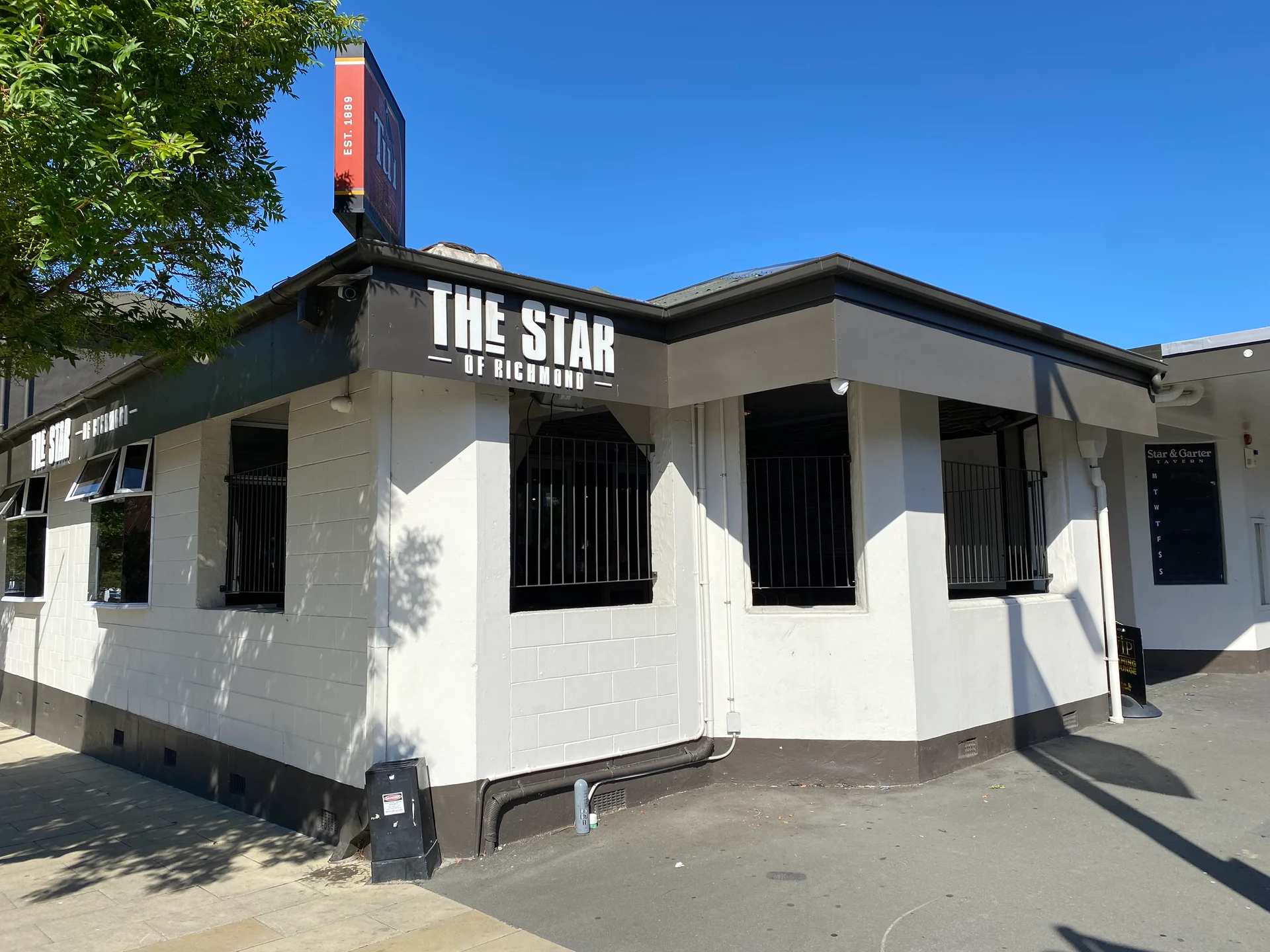
In 1950 the Star and Garter was gutted by fire. The bar itself was saved, but the remaining building was demolished before being rebuilt where it stands today.
From 1950 to present day the Star and Garter, now called the Star Tavern, has had many more landlords and landladies, has continued to be the place where people meet and has been a silent witness to change and progress. As a final point, based on a generation being around 25 years, the old hotel has had seven generations of locals through its doors.
