
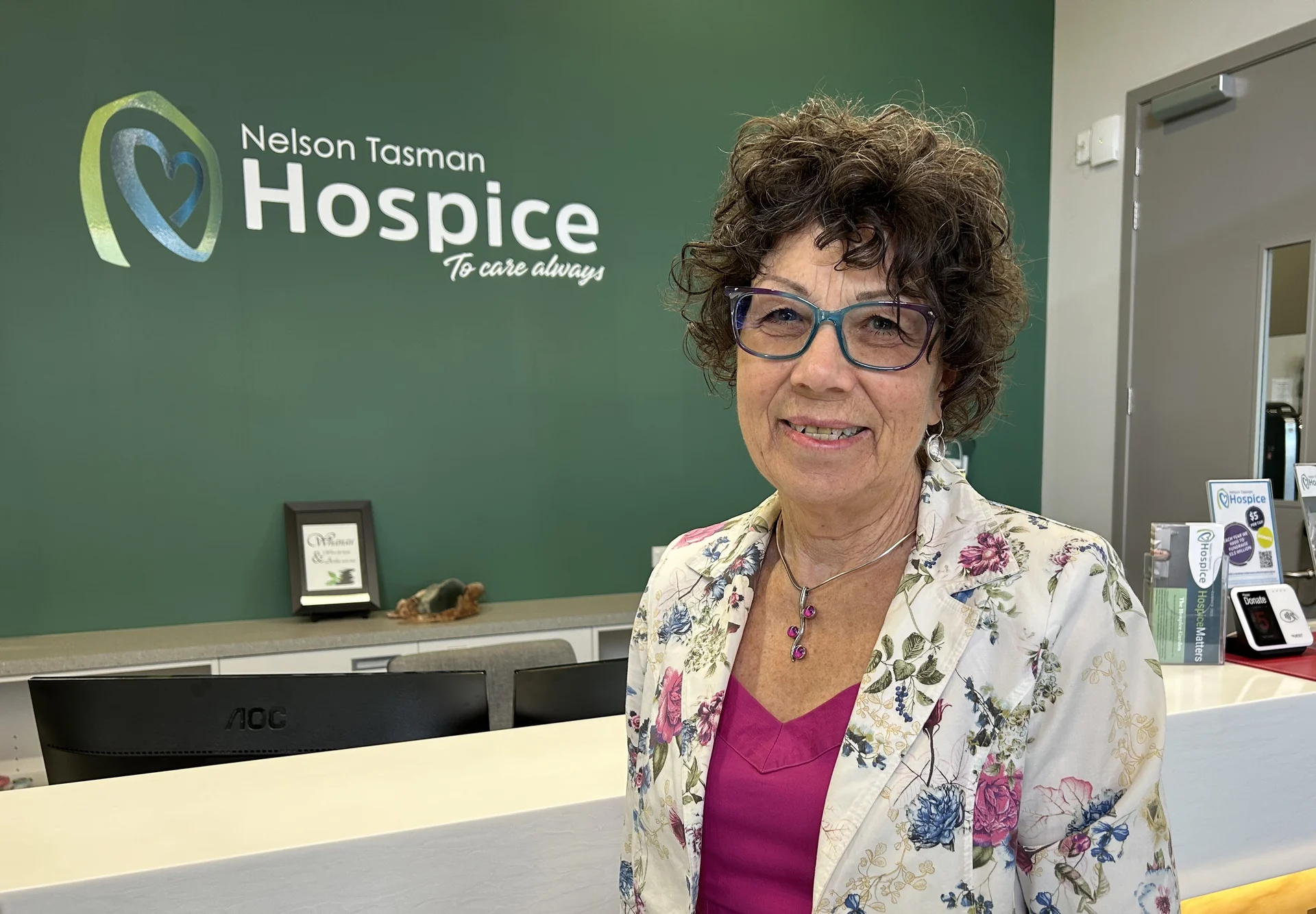
Mary Garner has supported Nelson Tasman Hospice volunteers since its establishment in 1987.
The 69-year-old farewelled her colleagues last Friday after nearly 40 years with the palliative care organisation, a role which she says got her out of bed every morning.
“Being in a job for a long time used to be a virtue but it’s not considered that anymore… it’s the volunteers and seeing the difference they make for patients is what’s got me out of bed every morning,” she says.
“Even now as I’m about to retire, it still gives me the greatest satisfaction to place a volunteer with a patient and family and see the difference that volunteer makes in that patient and family’s life.
“Whether that be family support, giving the caregiver a break, or story writing with the patient, that’s extremely satisfying, and I remain absolutely humbled when I look at the time that our volunteers give.”
Mary says she’d grown up and currently resides at her family apple orchard in Ruby Bay, and prior to 1987 she had worked at Whanganui District Health Board.
After gaining insight from her late mother’s involvement in training rural-based Hospice nurses, and reading Elisabeth Kübler-Ross book about terminal illness, it motivated her to move back home and join the freshly-established Nelson Tasman Hospice.
“When we started we had a couple of nurses and we had 17 patients, and we were in an old house on Waimea Rd, and it moved from one old house to another until four years ago we moved into the building we’re in now [on Suffolk Rd],” she says.
“The service has grown exponentially, both the volunteer and the hospice service over that time.
“I was a volunteer manager for 29 of [the 37] years, and by the time I transferred into a coordinating role, we had around 350 volunteers working for hospice.”
Mary, who was also awarded Queen’s Service Order in 2017 for her community service, says life-story writing with patients made a profound difference to their time spent in Hospice care.
“When someone’s approaching death, they can sometimes be comforted by being able to give those aspects the light of day and put them to bed again,” she says.
“It also allows people to reevaluate their life, and recognise what a good life they have, so that’s pretty satisfying to patients.”
Mary says her retirement plans included trips this year with her husband, Murray, to India and Africa, funeral celebrant and Justice of the Peace work, and continue hosting her hospice colleagues and local charities to pick apples from the remaining trees at her orchard.
