
The Snowden family, parents John and Mary and five children, arrived in Nelson on the ship George Fyfe in 1842.
One son, John, was two-years-old at the time. In adulthood John farmed at Hope and Brightwater, except for a brief period on the goldfields at Mahakipawa. He married Eliza Webby in 1867 and the couple had eight sons and three daughters.
John was well-known for his progressive farming methods and was claimed to be one of the first men in the Dominion to import English farming machinery. In December 1892 a fire on his property destroyed a large hop kiln and implement shed containing five tons of dressed flax and a quantity of expensive machinery.
A chaffcutter and one or two bags of chaff were all that were saved. Two of his sons were dressing flax and the engine driving the machinery was close to the buildings, and it was thought that sparks from the engine chimney fell on the upper floor of the hop kiln, which was covered with flax dust.
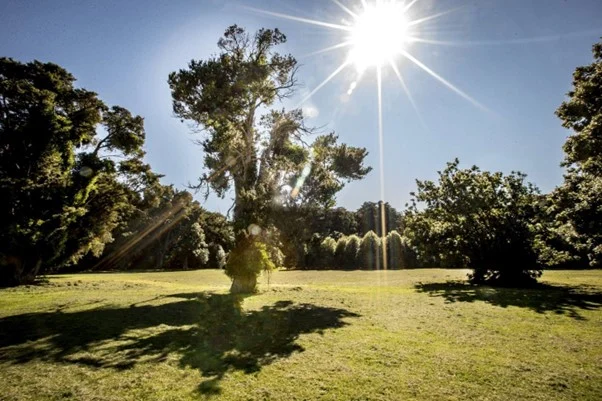
Much of the land John farmed was bushland, and one part he kept as an area for picnics, and it became known as Snowden’s Bush. Advertisements for the sale of the full property appeared in the newspaper around July of 1920 giving the package as 63 acres of level agricultural and dairying land with a house, hot and cold water and every modern convenience. It was stated the land could be sold with or without Snowden’s Bush, which was 14 acres.
The same month, at a Chamber of Commerce meeting, attendees were informed of the sale and conversations ensued that an effort should be made to purchase the property to be kept as a public reserve. Collection of donations (public subscriptions) were put on the table, but it was decided to first ask the Government if they were willing to give £ for £ for any money collected.
This was successful and the Minister of Lands agreed up to a value of £500 towards the purchase price of around £12OO. Another option put forward was that the land be purchased as both a war memorial and reserve as the bush would be better than a lot of monumental stonework. A remit was forwarded to the local bodies’ conference urging that the property be acquired.
A property description was:… “more like a park than a bush with the scrub having been removed and in its place a thick sward of grass. The majority of trees were totara, pleasing to the eye due to the thinning of the bush, and removal of undergrowth, giving the remaining trees sufficient room to attain a symmetrical shape. Next in abundance to the totara came titoki, noted for its wealth of shining black seeds wrapped in a covering of bright scarlet. More sparingly, were the matai, kahikatea, ngaio. Though the greater part of the area is covered with timber there is ample open space where games and sports can be indulged in. Clinging to the lower branches of many of the totaras are clustering bunches of mistletoe.”
The land was successfully purchased and late December the committee of Snowden’s Bush announced that the grounds were now open to the public, as a reserve. Toilets, fireplaces, hitching posts for horses and pumps for water were built for the convenience of those using the grounds and a caretaker was put in place during the holidays.
The first public picnic was on 27 December, 1920 when the scholars from the Congregational Sunday School. Today the bush is a Department of Conservation treasure.
