
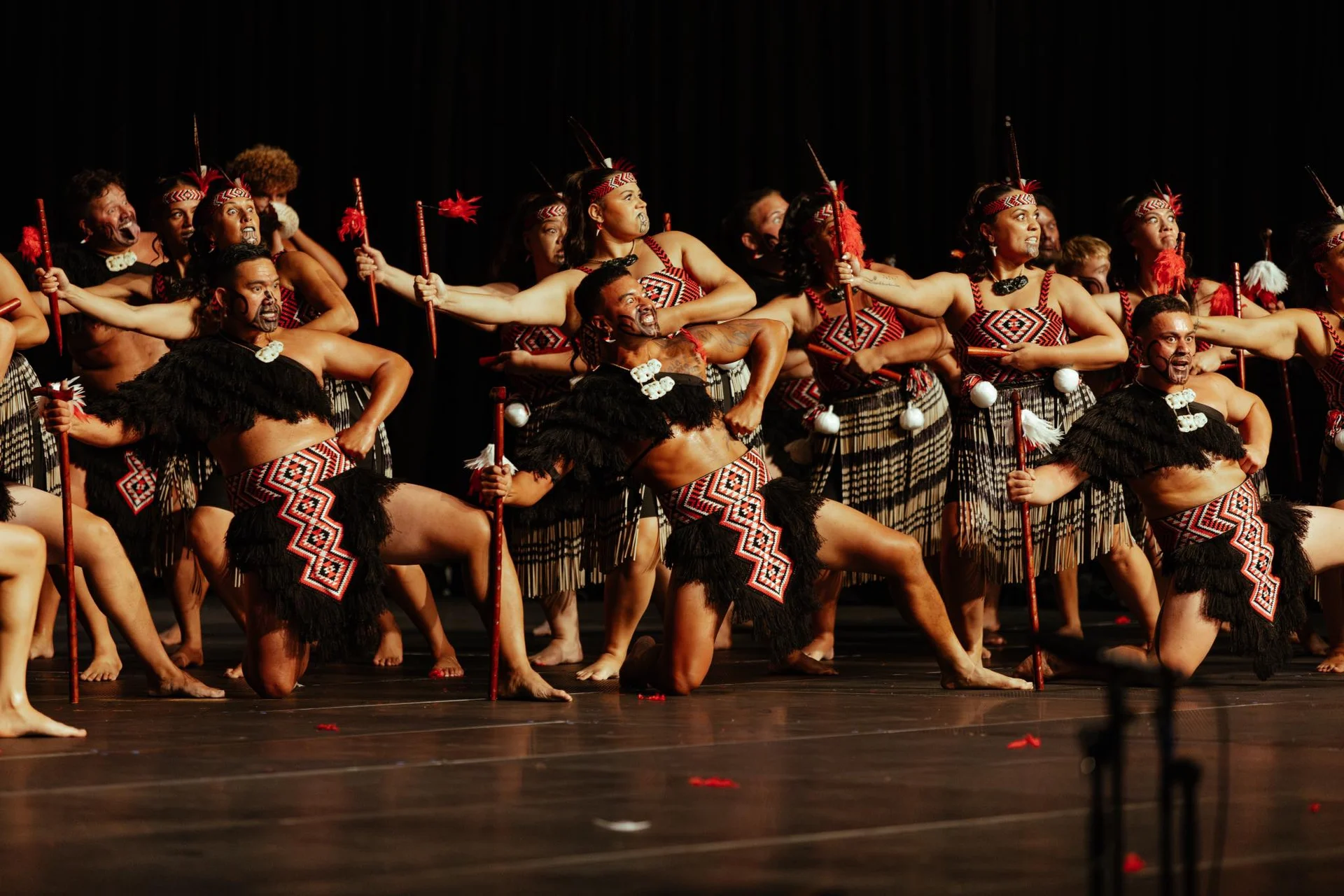
The power and the passion of kapa haka at the 1974 Commonwealth Games opening ceremony in Christchurch roused Nelson-based kapa haka group, Kia Ngāwari, to take its stance.
Priscilla Paul and her late husband, Joseph, were invited to form a South Island group for the international sporting event and their interest sparked to bring the cultural performance back home to Nelson and form a local kapa haka group.
Kia Ngāwari, which is currently based at Whakatū Marae, has now reached its half century.
Daughter Louisa Paul, who is the current group chair, says the group had performed at many national and regional kapa haka competitions and had even performed at the 150th anniversary of the signing of Te Tiriti o Waitangi (The Treaty of Waitangi) in 1990.
She says the leading performance to the group’s 50-year success was the community support and its generations of performers continuing the legacy.
“We have the kapa haka team and then the old school performers and their family, it’s like a community and so there’s a community behind Kia Ngāwari that makes it successful,” says.
“Most of the songs and everything performed are about the Ngāti Kōata whakapapa, and her people, places, taonga, and treasures, that’s the overarching theme of Kia Ngāwari.
“The national competitions are the epitome of kapa haka excellence, it has most recently performed at the kapa haka nationals in 2017, 2019, and 2023.”
Louisa says the importance of the kapa haka group in Nelson was also about the revitalisation of te reo Māori and tikanga (traditional Māori values).
She says the group’s 50 years was marked on 24 February with a celebratory dinner and performances at the Te Tau Ihu o Te Waka-a-Māui senior regional competition which was held at the Trafalgar Centre.
This included a performance by the Kia Ngāwari Amokura group which had up to nine of its original members.
An exhibition and further public performances to celebrate the group’s milestone was also planned to take place later in the year.
Louisa says the group’s future plans were to continue representing the rohe (tribal territory) on the local and national stage.
“We’ve loved how we’ve performed, and we’re proud to still be representing our people,” she says.
