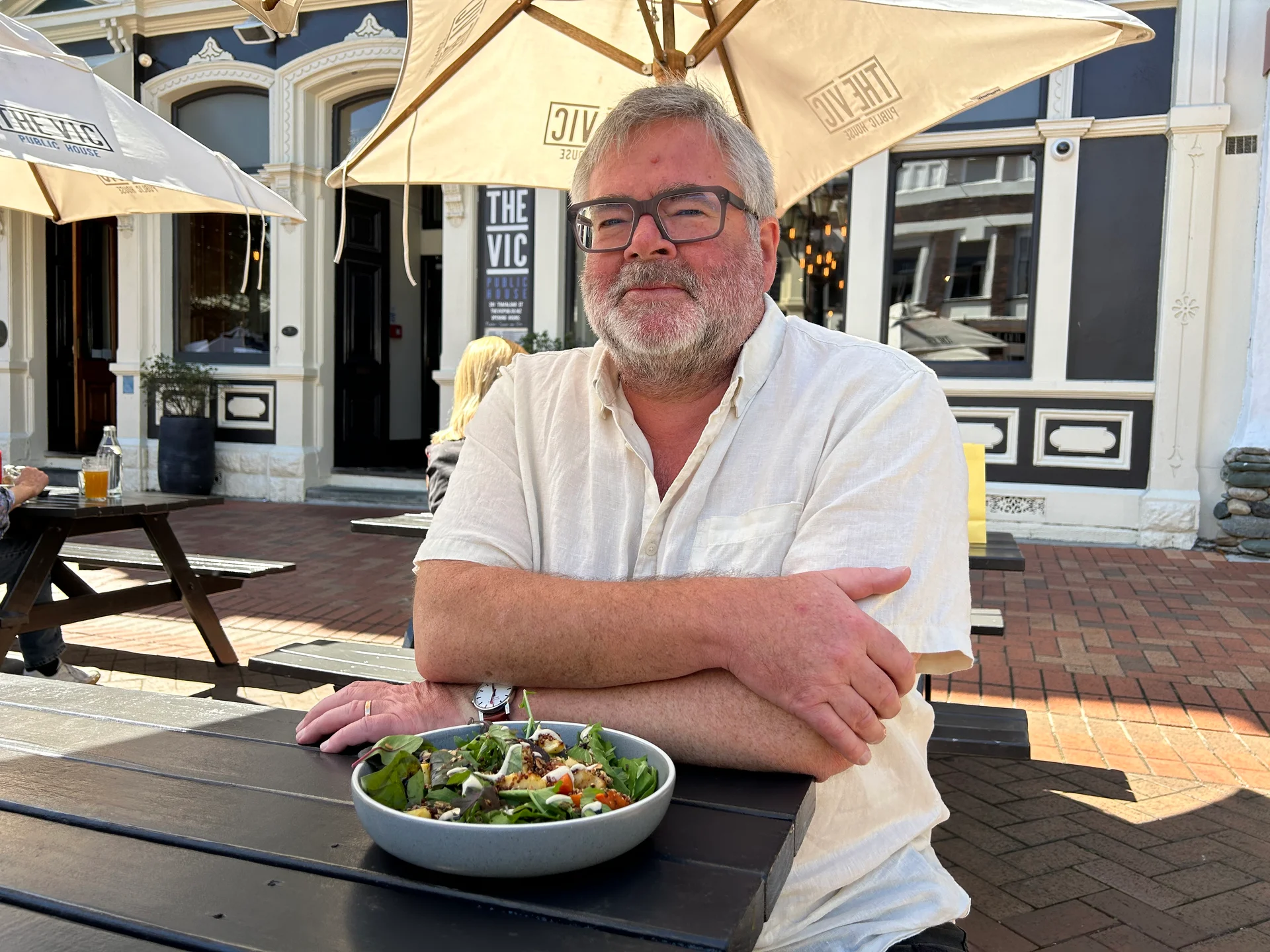
Once a month Nelson Weekly has a yarn and some lunch with an interesting Nelsonian doing something interesting. This week journalist Gordon Preece chats with Giles Burton, the director of the Nelson Fringe Festival, at The Vic Public House. The festival runs until 23 March and Giles shares his highlights so far.
Q: How many shows are there in this year’s Fringe Festival?
A: There are 48 different shows, we have about 100 performances.
Q: How has the response been so far?
A: We’ve had some really, really strong responses, people are loving the shows, but it’s a fringe so there’s a huge variety, but we’re really happy. We’re heading into the last weekend, which we think is a really strong lineup, a huge mixture of music and comedy and theatre.
Q: Have you managed to see any of the shows yet?
A: I think I’ve seen nine shows. I love having international actors because we see so little international stuff. To have a kind of top class... they travel around the world doing this all the time.
Q. What do you like most about your role as director of the festival?
A: I think it’s giving people the opportunity. We’re incredibly short of a small performance venue in Nelson. It means that it’s very difficult to create work into show work. And that’s kind of cyclic, because people are not seeing other people’s work, they’re also not creating their own, they’re certainly seeing art engenders other art. I think that’s a really important part of what I see in fringe and what I love about the fringe.
Q. What do you like most about the Fringe Festival as opposed to mainstream theatre?
A: The thing about fringe is there are kind of no rules. In some ways, there isn’t a difference, some fringe shows grow, and just about every comic you’d ever heard of will have started in fringe and done various small festivals like that. It’s a launching pad for some people. But sometimes it’s a kind of alternative, it’s an opportunity for people to do things who wouldn’t be invited to do things in the mainstream festivals. It’s quite interesting, because all these lines are getting a little bit blurred now.
Q. If you could pick one highlight of your career in the arts industry what would it be?
A: Well, I’m going to say one of the highlights is the opportunity it’s given me to go and see interesting things. Years ago, I worked just after the Civil War in Tbilisi, on the Georgia International Arts Festival. I mean, being in a culture that I’m not au fait with, and working there, but also the opportunity to see and work with artists from a completely different society. It was the arts that brought me to New Zealand.
Q. How do the workshops enhance the festival?
A: Yeah, it’s an interesting one. There are basically two different sorts of workshops. So we have a very practical one this year, we had Creative New Zealand come and talk about funding. Nobody’s idea of fun, but actually it’s incredibly useful. They’ve just changed their funding model so getting to meet the kind of advisors to that, and listening to them speak about how the funding model has changed. And then, the other workshops are more about people exploring new directions.
