
ROBYN PARKES
As Richmond grew, so to did the need for the establishment of new buildings, organisations and infrastructure towards satisfying the needs of the settlers.
One of these needs was an avenue to be able to sell stock.
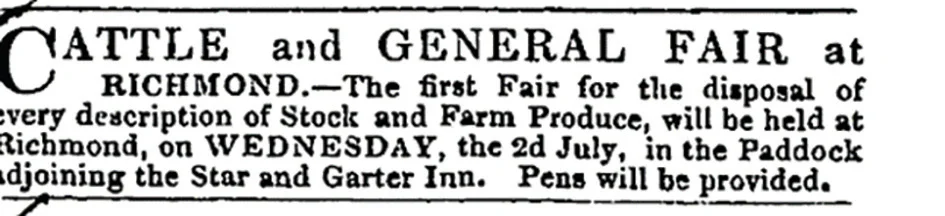
In response to this, a meeting was called for interested parties at the Star and Garter on the 10 May 1851.
Mr Saxton was voted as the chair and Mr Otterson, seconded by Mr Gibson, called that it was desirable that a fair for the sale of stock and farm produce should be established at Richmond with the most suitable days to hold a fair being the first Wednesday in the months of March, July, and November.
Once approved, it was proposed that the first fair be held on 2 July 1851.
Mr Nixon proposed that a subscription be entered into in order to defray the preliminary expenses and that Mr Otterson be requested to be the treasurer.
The meeting concluded with plans that a committee be formed to make all necessary arrangements for the ensuing year and that an association be formed to purchase a piece of ground on which it was intended the fair could be held.
The committee consisted of 26 men of standing in the community.
Five acres of land on the opposite side of the road to the Plough and Star and Garter Inns was purchased for the sum of £70.
The number of shares offered in the first instance were limited to 100 of £1 each, but 93 of these were taken up very quickly so it was agreed that shares would be extended to 250 so the capital of the company might be enough to put the ground in a proper state.
The first cattle fair was held in July 1851. Despite it not being the best season of the year, a good amount of people attended with many being buyers, but the show of cattle was limited.
The demand was for milch cows but the prices being asked were high which prevented a lot of business being done.
Good cows near calving were reaching up to £15 and those for slaughter up to £12.
Horses imported from Sydney were reaching around £20 for light saddle hacks and fair cart mares at £25 each.
In April 1852 it was confirmed that, due to demand, the fair would be held on a permanent footing and a year later was changed from three times a year to quarterly.
The November 1852 cattle fair saw the largest crowd yet with cattle reaching £13, young stock up to £4 and the first pair of stall-fed bullocks at the fair sold for £19 each.
The Nelson Agricultural Association in 1859, with nearly 100 members, made arrangements for a show of livestock to be held at the Cattle Fair ground after gaining permission from the committee.
A year later the Agricultural Association were given permission to build a hall on the grounds which was to be used for all purposes, public meetings, dinners, elections, concerts, and anything else that the community may need it for.
Cattle fairs came and went, but in 1889 the question of the need for the grounds was asked.
A resolution was put forward at an extraordinary meeting that the association be dissolved by mutual consent.
Mr Harkness expressed approval for the resolution to dispose of the property while others disagreed, but majority ruled.
Assets of the association such as posts, rails and gates were put up for auction and a piece of Richmond’s history disappeared.
