
In March 2004, the Environment Court passed down its decision that “fundamentally (the Southern Link) is the wrong place to put a state highway.” Kate Malcolm and Pam Henson from Nelsust look back on the decision that was made 20 years ago this month.
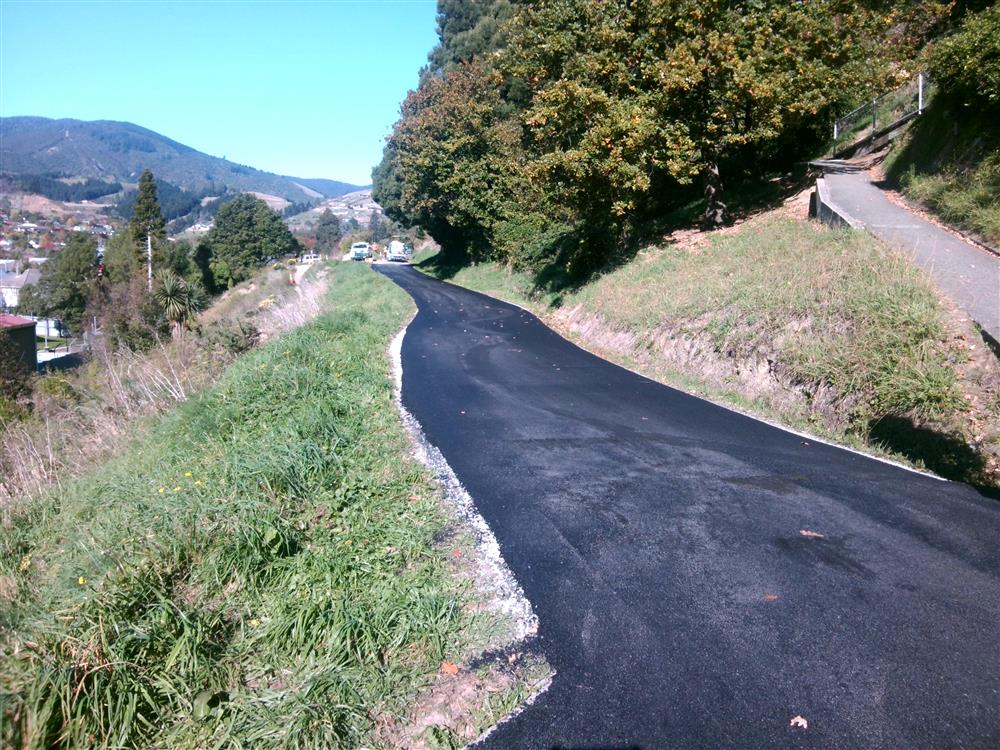
The proposed Southern Link, following the route of the former railway line known as the Railway Reserve, would have completed the renewal of State Highway 6 from the south to the north of Nelson.
In the 1980s, Queen Elizabeth II Drive was built to carry traffic from Atawahai to Trafalgar St. The Stoke bypass, Whakatu Drive, was completed in 2001. The Link would have taken heavy traffic off Rocks Rd and moved it inland. Rocks Rd and the inland route, Waimea Rd, were already busy and forecast to be operating at capacity by 2021.
Supporters of the new road rallied in the Southern Link Action group, chaired by Nick Smith, then MP for Nelson, and included the AA, the Nelson Residents’ Association, and the Nelson Chamber of Commerce. From 1997 some of these groups had worked together to push the Stoke bypass, and they thought the Link would follow.
When Nick Smith and then mayor Paul Matheson asked Transit NZ to go ahead with the road, Don Murray, Sandra Jacobs, and others formed Nelsust in 2000 to fight the proposal. In 2002 they challenged Nelson City Council’s support of the road on the grounds of health and safety, as well as road capacity.
At this point, NCC arranged for three independent commissioners to consider the proposal. The commission recommended not proceeding with the proposal because of air quality concerns. In March 2002 when Transit decided to go ahead anyway, the 400 residents who had opposed the proposal, under the name Nelson Transport Strategy Group, hastily formed an incorporated society (Nelsust). They joined the Ministry of Education and Jocelyn and Paul Bieleski to take the plan to the Environment Court.
Now they needed money. On behalf of the group, Sandra applied for help from the Environment Legal Assistance Fund. She still remembers her trepidation when the reply arrived in the mail – they had been successful.
Sandra tracked down leading authorities on all aspects of the case. These witnesses, and others called by the schools, gave detailed technical assessments of the effect of a main road through Victory, passing three schools and two pre-schools, with the pollutants trapped under an inversion layer in winter.
Don did his research around Nelson. He recalls videoing traffic on Waimea and Rocks Rds to assess vehicle occupancy.
The Environment Court accepted Nelsust’s appeal. Supporters of the Southern Link were gobsmacked when their proposal to build the highway was thrown out.
The Environment Court rejected the Southern Link proposal on several grounds: it would not improve safety, it would not improve efficiency more than possible alternatives such as clearways, it would not improve “social severance” on Rocks Rd or Waimea Rd, and it would materially affect the social cohesion and public health of the Victory community.
Supporters of the Southern Link did not accept the court’s reasoning and have been fighting rearguard actions ever since. The lingering threat even now keeps Nelsust on its toes, with Christopher Luxon recently announcing that it would be ‘back on the table’.
But in 2010 a new study showed that previous forecasts about increasing traffic which underpinned earlier proposals had been incorrect.
The population was not growing as expected and traffic increase was likely to be in two directions, not simply into Nelson in the morning and out again in the evening.
The matter rumbled on, with a succession of studies into roading south of Nelson. Waka Kotahi finally produced a Staged Future Access Plan. The basic principal was simply to get more people bussing, walking, or biking.
Nelsust heaved a sigh of relief. Meanwhile, the Railway Reserve, used by commuter cyclists every day, now has lighting to make it safer.
Perhaps the main message to take from this story is that thanks in this case to the Environment Court, small, committed community groups can change the course of history.
