
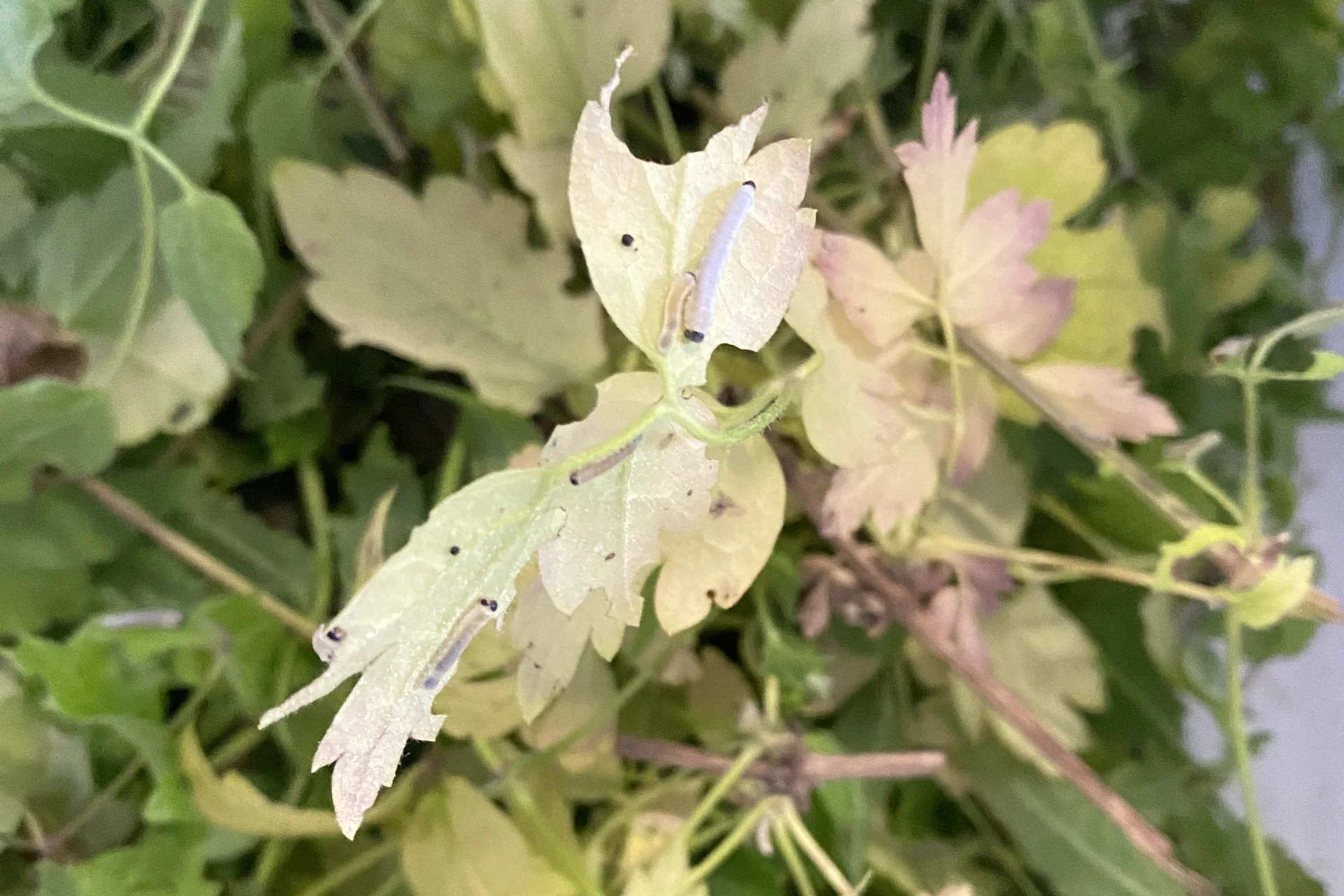
Old Man’s Beard is a vine with a whimsical name and a nasty nature.
The weed has spread prolifically through the Top of the South, with its dense canopy smothering native plants and tree species. But, help may now be at hand, thanks to a bio-control in the form of a tiny insect.
Tasman District Council, working in partnership with Manaaki Whenua-Landcare Research and the Ministry for Primary Industries, has released sawfly larvae to two sites in Tasman.
Conservation alliance Kotahitanga mō te Taiao (KMTT) explains that the sawfly damages the plants by chewing their way through the leaves, which ultimately impacts on the vine’s vitality and vigour.
Rigorous testing has shown that the sawfly and the microscopic Old Man’s Beard mite are very host-specific and will not harm any other plants, including other members of the clematis family.
“Testing of the biocontrol agents has taken many years and has been carried out in secure research laboratories,” the organisation reports.
The sites are listed as Trass Valley and “adjacent to the Motueka River”, and Lindsay Barber, who is a senior biosecurity officer for TDC, says that they can not be more specific than that at this stage, as they can not risk people collecting the insects to take back to their own properties. He says that this could lead to a genetic bottleneck if they drop to low numbers, which creates a lack of genetic diversity.
“That is why we released over 540 larvae at each site. One release costs $7,000 so it is important that we get a fit and healthy population of flies established.”
This is the second attempt to release sawflies to control Old Man’s Beard. The first, in 1996, was not successful due to the same “genetic bottleneck”, and the population failed to establish throughout the country.
Lindsay says that previously, the only way of controlling the pest was with pesticide, either with a foliar spray or by cutting the vines and pasting them at their bases.
“There is such an abundance of it in many places around Tasman that it is simply not practical to control it from a financial and resourcing perspective. Billions of seed is released from vines in the Motueka Valley each year and the seed bank in the ground is substantial,” he says. “Seeds stay viable for about 10 years.”
KMTT says that while bio-control offers some light in the darkness, “agents take a long time to establish so it will be a while before we see any results.”
Lindsay explains that sometimes predators such as wasps hunt down the agents, and their establishment just does not happen, or happens very slowly.
“Sawflies have been present in Amberley for some years now, so that bodes well. The larvae are also known to release a pheromone that detracts Vespula wasps from predating them.”
He says they hope for the best and will be checking the site for the next two years to monitor numbers.
Hudson Dodd, project manager for KMTT’s Restoring and Protecting Flora Project, says it is exciting to see councils investing in new science and technology to control the invasive weed.
“We need a landscape-scale approach to change the outcomes for our native ecosystems before it’s too late.”
