
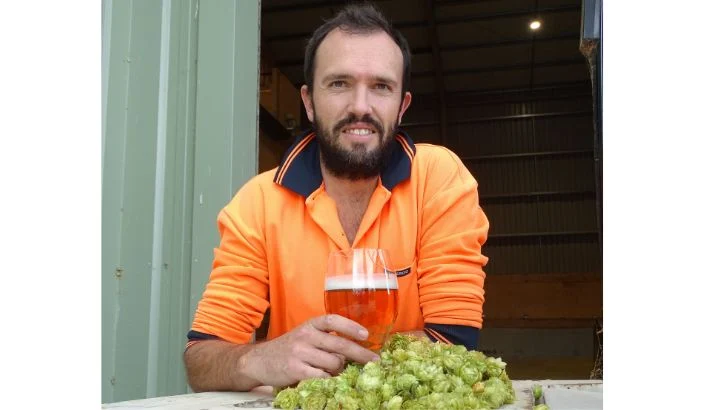
At Holmdale Hops near Wakefield, the vines have been stripped of the aromatic crop that is now destined for breweries around the world.
It is Cameron Ealam’s seventh season harvesting hops after the family converted the former dairy farm to the crop and this year they are riding through the trough of the economic cycle.
Because of the trough’s lower returns, Cameron says they harvested about 70 per cent of the crop this year. The higher-priced varieties were harvested, dried in the kiln and sent to New Zealand Hops in Appleby where about 80 brewers from around the world converged to choose the best hops for their brews.
“We’re right at the bottom of the cycle now and it’s come down quite fast. There’s heaps of factors – the Covid hangover because brewers were sitting on stock they wanted to use up and that’s flowed through to affect demand. The global surplus at the moment is significant.
“We’re also seeing a change in beer trends with less alcohol consumption in general and people moving back to traditional lagers, low-carb beer and pilseners which use less hops than higher-alcohol percentage beers which use more hops.
“Then there’s global inflation and less discretionary income for consumers. A lot of breweries are struggling worldwide in the current economic environment – no different to a lot of businesses.”
He expects there will be a contraction in the area growing hops in the next couple of years but says the market will bounce back.
“It tends to be a 12 to 14-year cycle and we’re right at the bottom of the trough and hopefully climbing back sooner than later.”
He says one of the advantages of New Zealand’s hops is the unique varieties it can offer brewers when there are some 300 varieties worldwide that they can buy.
“We’ve got some very good quality hops relative to the global crop. We just have to make sure we stay savvy.”
Though the market is down, Cameron says this year’s crop had a good-growing season, despite the impact of the drought at the tail-end of harvest.
“It was a short, sharp season with good maturity and quality and yields were variable by variety. But we got what we needed.”
