
BY ROBYN PARKES
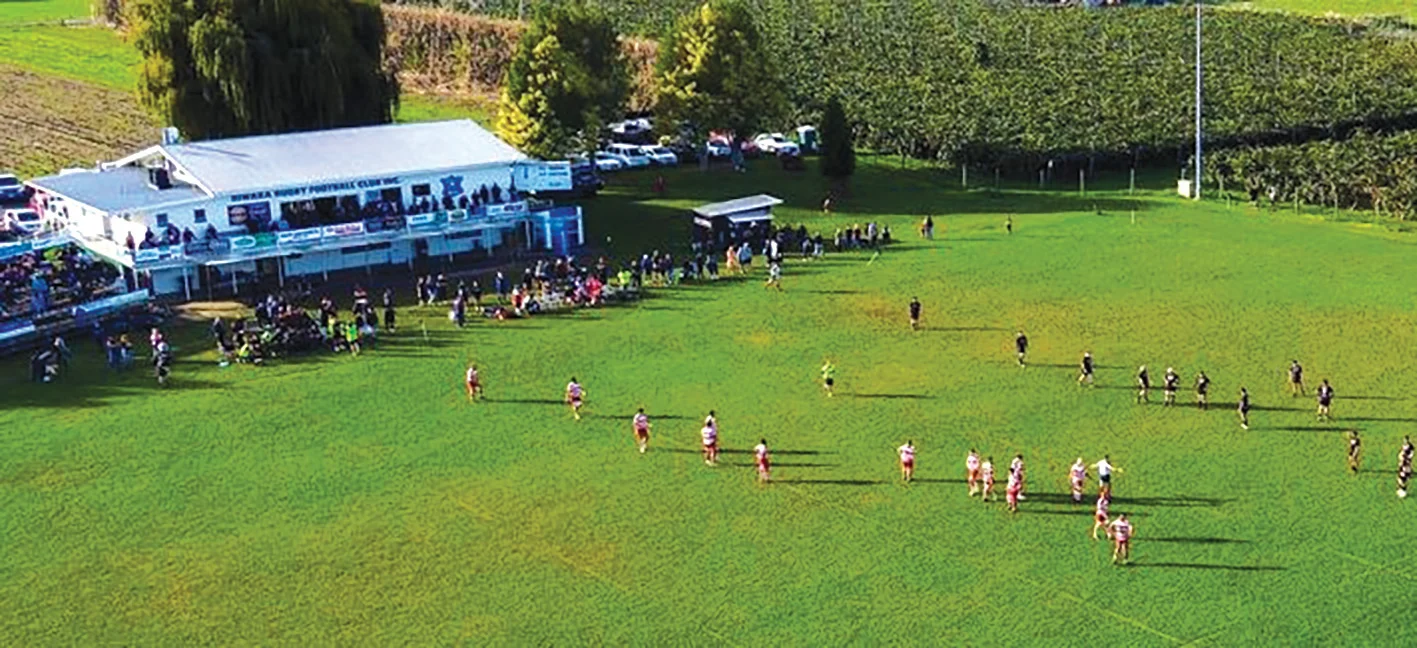
Seen as an epoch in the history or Riwaka, the official opening of the H. N. Cook Recreation Reserve, took place on the 30 September 1933 attracting a record attendance of around 1000 settlers and the general public.
Appreciation was given to Henry Nason Cook who had gifted the land, providing the district with a recreation reserve that would provide a place for sports and other events.
Chairman, T Chittenden, expressed how there had been two great needs in the district. One was a more up-to-date library building and the other a recreation ground.
The need of a playing ground in Riwaka suitable for athletic sports was a long felt want in the district.
The generosity of various residents made certain grounds available from time to time, but the progress of sport was handicapped by there being no area which could be devoted to sport and for the gathering of the residents on particular occasions. About April 1932, Henry saw in the situation an opportunity to help the people of Riwaka and donated land sufficient in extent to meet its needs for many years.
In carrying out this intention he asked three gentlemen, Messrs D. L. A. Drummond, W. A. A. Ryder, and N. J. Lewis, to act as Trustees of the grounds and carry out the provisions he desired made for its use.
A lease of about four acres for a term of 999 years was granted. Having control over the area, the first step for the Trustees was to call the public of the district and representatives of sports bodies, to discuss the development of the grounds. In May and June of 1932, the first work was undertaken. The area was levelled, fenced, and the erection of a substantial stop-bank along the river frontage began and grass was sown. Labour and materials were donated, as was over 400 days of voluntary work.
Further meetings saw the appointment of an Executive Committee drawn from all parts of the district who were to manage and further develop the area. The grounds were turned from what was merely a paddock into a place of beauty, available to everybody.
Plans for planting trees and shrubs, laying out gardens, formation of tennis courts, and preparation of picnic facilities were still to occur.
The terms of the gift were brief. Henry Cook was to be paid £5 per annum for as long as he was alive, after which a peppercorn rental of 6d per annum had been agreed upon.
The land was to be used for athletic games in general, and hockey, cricket and tennis in particular, with full powers to the Trustees to control the area in their discretion.
There was a provision that the Atua Ladies Hockey Club had a first preference for use of the ground in winter.
The grounds were named the “H N Cook Recreation Reserve” in recognition of the public spirit and generosity of the benefactor. After the ceremony, Henry planted two native trees.
In this connection he pointed out that in the days of the old Roman Empire it was considered that a man who planted a tree or built a house was fit to be accounted a worthy son of the Empire.
Miss Mary Cook, sister of the donor, cut the ribbon, declaring it open. Substantial gates were erected at the entrance of the reserve and had commemorative tablets placed on them.
