
BY ROBYN PARKES
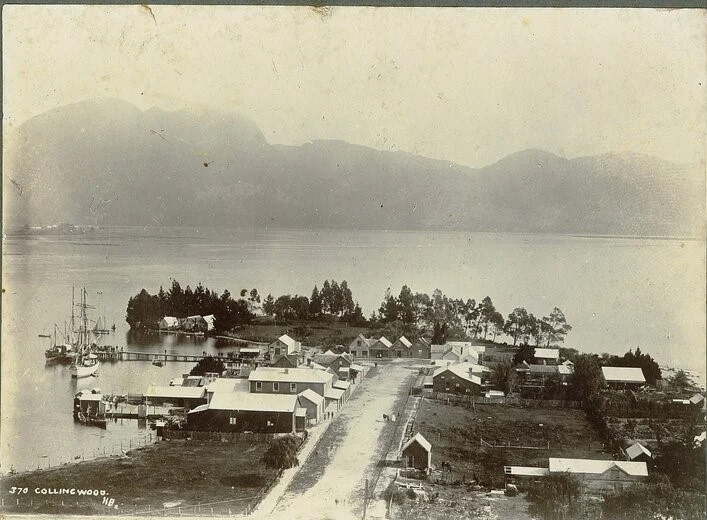
The 7th of November 1904 bought destruction and enormous losses on the small village of Collingwood as fire sweep through the main street.
The morning after the fire the town was left a mass of blackened and smouldering ruins with chimneys remaining, around which were piled sheets of twisted iron. The main street was scorched by the intense heat, and scattered were piles of furniture and goods salvaged from the houses and stores, but which, due to the rapid speed of the fire, was not able to be removed to somewhere safe and was burnt.
As the town looked to the cause of the fire and the level of destruction, the sequence of events became clearer.
Francis Stallard, the night before was in his bakehouse with assistant Albert Whitehouse from 10 o’clock to 12.45 making bread. They then went to have some supper and at about 12.55 on returning to the store saw that flames were breaking through the gable end of the store from above the oven, in between the chimneys.
Stallard tried to get into the storeroom but could not as the door leading to it was chained with a padlock. He gave the alarm and woke up the neighbours.
Mr Rait broke open the door of the room with a bar of iron, but the room was full of smoke, and they could not make out the source of the fire.
Very soon after, men, women, and children poured out into the cold blustery night, most in their night clothes, while the children were hurried from their beds, wrapped in bedclothes, and taken away to places of safety.
A very strong westerly wind was blowing the flames onto Rait’s general store immediately in front, which soon became ignited, and in a few minutes, it was apparent that the town was doomed.
The two adjoining houses, the large dwelling of Mr G. Allan, and Stallard’s boarding house, were soon ablaze. The fire spread, first igniting the Post Office, Cottier’s boot shop, and then Pinkerton’s hotel. By 2am, the sight was heartbreaking.
The high winds whipped the flames up and the fire and smoke was carried seaward, lighting up the countryside for long distances around. Numbers of men, women and children attempted to rescue what they could from the fire. Explosives stocked in the stores exploded frequently and piles of kerosene cases spewed out liquid fire. Loose corrugated iron and other loosened material, and other sorts of missiles, were blown in all directions.
The almost superhuman efforts of a large number of volunteers saved several buildings on the beach from the flames and sparks that were being carried by the wind.
Just before 3 o’clock heavy rain and blinding squalls began making the catastrophe even worse. Much of the rescued furniture, stock, and other items, although saved from the flames, were then destroyed by the rain. The total amount of insurance was said to be over £10,000, but with total losses estimated to total nearly £25,000.
