
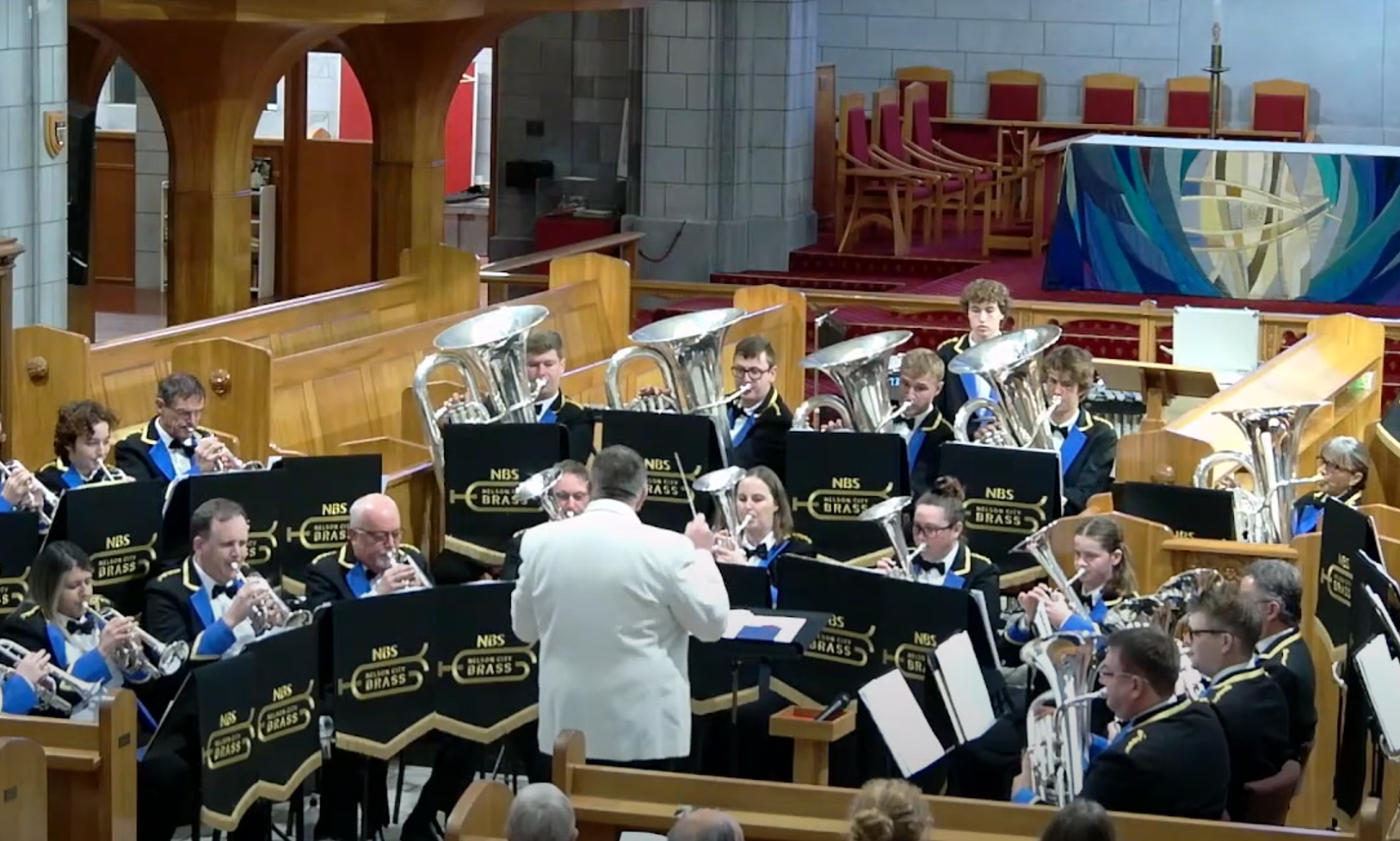
REVIEW: Lest We Forget, NBS Nelson City Brass Concert, Saturday 4 May 2024 at Nelson Cathedral. Music Director: Nigel E. Weeks (QSM).
Reviewed by Sally Hallmark
The Lest We Forget concert promised a programme which was a celebration of the ANZAC spirit, and it delivered this splendidly, taking the capacity audience on a journey of different reflections and emotions.
The concert opened in a traditional way with a rousing march, Senator, by George Allan, who wrote over seventy marches for Brass Band.
From the brisk pace of the march, the band went on to perform the Overture from Orphée aux Enfers (Orpheus in the Underworld), delighting the audience with the changes in mood and tempo reflecting the main themes of Offenbach’s first opera.
After a proclamatory fanfare opening, the band moved smoothly through a tender love song to the waltz finale and the high energy of what became the famous Can-can dance music.
The cornet solo passage was played beautifully by Brendan Agnew on the soprano cornet, and echoed by Kaye Mackenzie, Principal Cornet player and holder of the prestigious ‘Champion of Champions’ award.
The inimitable Mike Ford, winner of the New Zealand Open Tenor Horn solo championship fifteen times and the New Zealand Master’s solo title six times, played the horn solo for the ‘Finale’ from Mendelssohn’s Violin Concerto. This allowed him to display his amazing dexterity with the arpeggios of this demanding piece. The audience absolutely loved it!
It was then time to reflect on those lost in war during the band’s next piece, Nightfall in Camp by D.A. Pope, an ANZAC tribute incorporating the hymn tune Lead, Kindly Light with the Last Post.
Kaye Mackenzie’s moving performance of the Last Post on cornet ended with the sweetest note, perfectly played. By way of contrast, the next soloist, Principal Trombonist, Elliot Gray, who has joined the band from the UK, played a mellifluous arrangement of Stardust, picking out each note of love and longing.
From there, the band played a nostalgic medley of war songs of love and hope, entitled Keep Smiling Through, including songs from Vera Lynn, The Forces’ Sweetheart, such as The White Cliffs of Dover, Lili Marlene and We’ll Meet Again.
Two contrasting pieces completed Part I of the concert – firstly Pastorale by Goff Richards, with its melancholic, wistful melody emphasised by cornets soaring above the rest of the band. The second piece was the magnificent Dam Busters March, performed with éclat, a fitting end to the first part of the concert, and a great favourite with the audience!
Part II opened with Rimsky-Korsakov’s Procession of the Nobles, stately processional music with an impressive finale, then moved to Kay Mackenzie’s cornet solo of the well-loved hymn, How Great Thou Art. With an accompaniment from the band that grew and swelled, Kay moved from melody to descant in a fine rendition.
A particularly clever medley followed, New World Fantasy, arranged by Gordon Langford, mixing elements of American pieces like The Battle Hymn of the Republic and Swing Low Sweet Chariot, with snatches of the New World Symphony, distinguished by the clear, high notes of John McGough on Flugel Horn. The band impeccably managed the many changes in key and pace in the medley.
One of my favourite pieces in the concert was the band’s arrangement of the second ANZAC tribute, For the Fallen, by Karl Jenkins, the well-known Welsh composer. With a solemn, slow tempo, the Last Post was woven into a stirring anthem of thanksgiving that built through iterations of the theme by cornets and trombones to a powerful climax.
Yet another of my favourite pieces was Carrickfergus, a traditional Irish folk song of longing for home played masterfully as a Euphonium solo by Ross Gerritsen. Ross pointed out to the audience that 300,000 ANZACs that fought in World War 1 were Irish. The haunting mellow tones of the euphonium ended the song in a gentle fade out.
Part II of the concert moved rapidly towards its conclusion with a lively, fun version of the American Spiritual Oh When the Saints. The initial pace and mood was set by the trombones, then the band surprised everyone by standing to sing the chorus. The band continued to play the song with changes in tempo throughout as it built to an exuberant finale.
The penultimate piece was The Lost Chord composed by Arthur Sullivan in 1877, a reflective piece based on a poem by Adelaide Anne Proctor that considers the easing of pain and sorrow into peace. The band played this somewhat sombre piece with heartfelt emotion.
All good things must come to an end, and the grand finale of the concert was the fast-paced Galop from Rossini’s William Tell Overture. Fitting all the notes into the middle passage of the piece is taxing, but the band played with the accuracy and finesse that make them a recognised A grade national brass band.
The programme was a successful musical meld celebrating qualities from the ANZAC spirit: good humour, endurance, friendship and courage, and reflecting themes of love, loss and hope for peace.
