
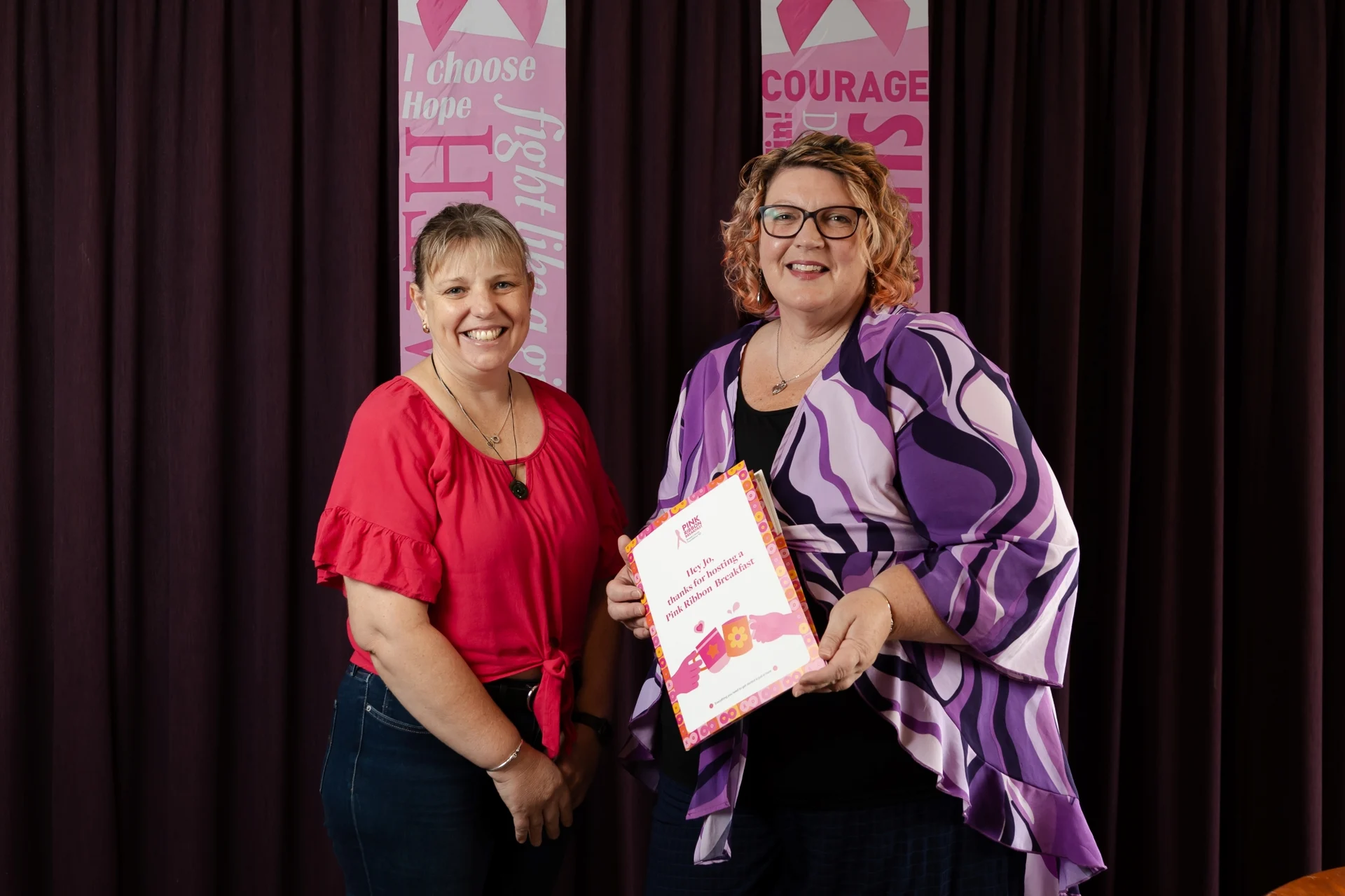
This month, Pink Ribbon breakfasts are being held all over the country as fundraisers for the Breast Cancer Foundation continue fighting the good fight. Britt Coker talks to three Nelson women who are doing some fighting of their own.
Not nothing
Nicky Kolk’s cancer showed up like a bad magic trick. Nothing to see here folks and then, ta-da! There it is. A routine December mammogram gave her the all-clear and then three months later she felt a two-centimetre lump in her breast. She was relaxed about it. Probably just a cyst. That’s what her doctor said too. Probably just a cyst, but we’ll take a biopsy just in case. That’s what the specialist said, too. Feels like a cyst, but just to be safe, etcetera. So, there is absolutely, definitely, nothing serious to see here, folks.
“So, I got this biopsy done. I ran into this lady from my work there. We’re basically yelling out to each other cause we've been separated in different rooms. ‘Oh yeah, everything's fine I've just got this lump on my breast.’ And she’s like, ‘oh God I’m really sorry,’ I'm like, ‘no, it’ll be OK, it'll be nothing,’ and it turns out it wasn't (nothing).”
Nicky’s diagnosis comes during lockdown. A time of uncertainty, in a time of uncertainty. The surrealness of masks and social distancing, meetings with doctors in carparks and empty post-op hospital wards. Nicky counts her blessings in that regard. No surgeries happening meant she could progress through the treatment stages quicker than she would have otherwise.
She was also fortunate to have her mother-in-law staying with her and her husband during lockdown. A mother-in-law who happened to be a nurse in a chemo clinic. Knowledge and know-how. Two things foreign to a typical cancer patient.
Caught early enough, Nicky had the choice whether to have a mastectomy or not. She chose not, opting for a Wide Local Excision to remove the cancer. There was still chemo and radiation as part of the process. “At the beginning I had to tell my dad and he was getting radiotherapy himself down in Christchurch, during lockdown, and I had to ring up and tell him, ‘Dad I've got cancer, we’re cancer buddies’. I don’t think he found it very funny, I thought it was funny.”
Less funny, a lot of other stuff. The tooth infections that necessitated removal. The nausea, the hair loss. The body’s immune system takes the hit, where once minor ailments would have lost the fight like bullets bouncing off a bracelet wrapped around the wrist of Wonder Woman.
“I remember I got my hair cut when I was younger, late teens, and I’ve got three older brothers and one of my brothers was teasing, ‘oh you look like a boy.’ So, I just keep going back to that, I'm just going to look like a boy, I don't want to have short hair, but when it started coming out I went to my hairdresser and she shaved it off, and it actually looked kind of cool.”
Her husband Tim struggled with the diagnosis and found counselling really helpful. “Men don't do that type of thing. I mean they do, but they don't talk about it, and he went to counselling and he got this counsellor who was amazing. It really benefited him just having someone else to talk to about it. I'm proud of him for doing that.”
“Having cancer means having difficult conversations. First, medical professionals with you, ‘I’m really sorry to say that…’ And then you, to your partner, family, closest circle, “I’ve got bad news”. And then again, to acquaintances, coworkers, and perhaps even people you don’t know very well because ‘I’ve got a lot on at the moment’ sounds a bit lame, and your reason not to do that thing isn’t lame.”
Tim runs his own business and found being fully transparent with clients about why he couldn’t always assist with urgent work was the best approach. People were understanding.
Friends set up a meal train where people contributed home-cooked meals for the freezer. Nicky found it a Godsend in difficult times. After her chemotherapy treatment and radiation stint in Christchurch, life has now returned to a version of normal, though she is 3.5 years into a five-year stretch of hormone therapy.
She encourages women experiencing cancer treatment to accept offers of help, even if it’s difficult. People ask because it’s something practical to do and there’s not much else they can do except be part of a meal train or do a little light cleaning for an exhausted patient.
“I do it now. I don't know if I did it before I had cancer. People don't offer unless they actually want to help you, so let them help you."
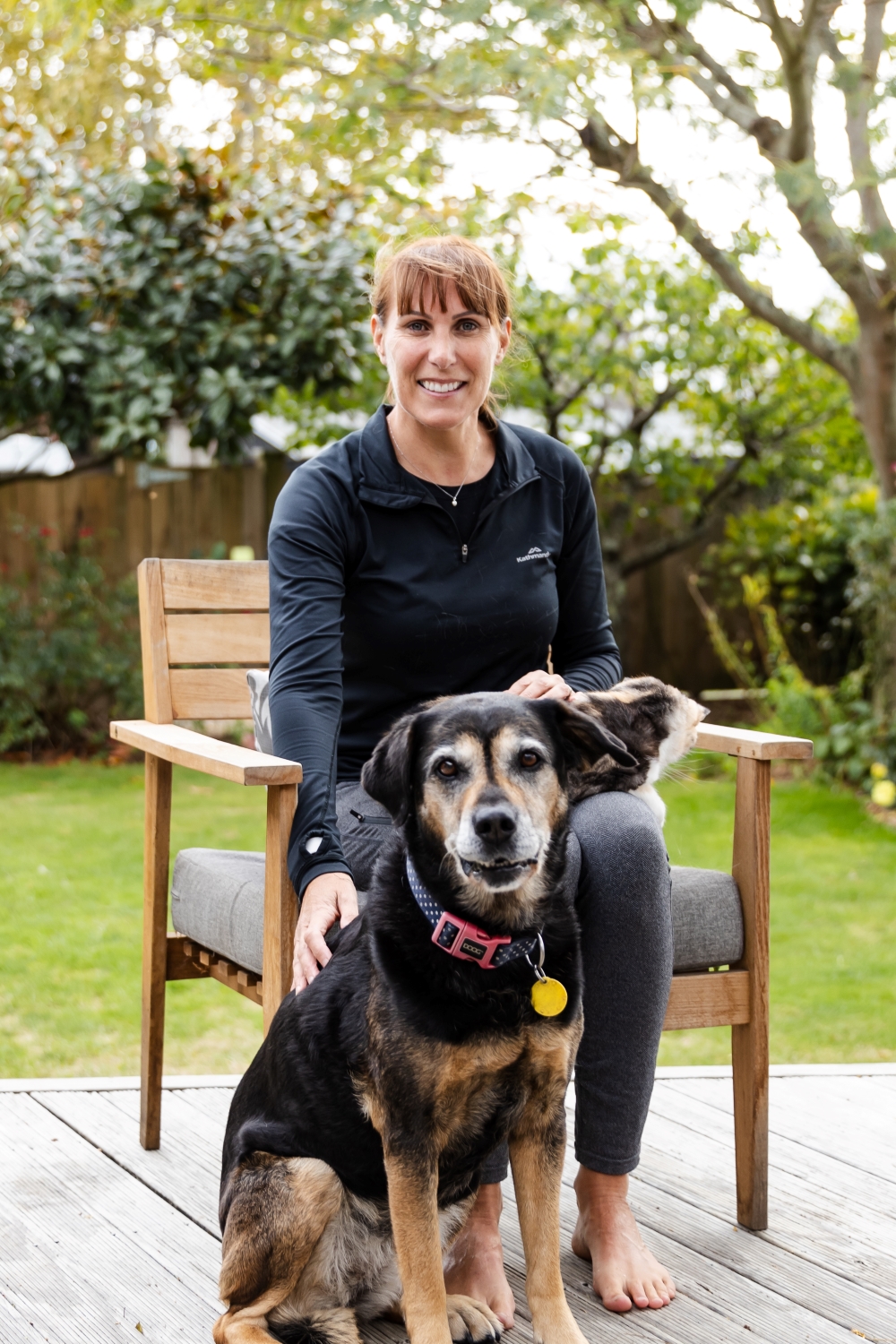
“Keep moving” is part of the recovery mantra these days. Light exercise only, and even if she’d wanted to, post-surgery basketball ball passes were well out of reach. Nicky is hugely grateful for the PINC & STEEL rehabilitation fitness classes that helped keep her sane in the months immediately following treatment.
Unsurprisingly, she’s still in hypervigilant mode. “I'm constantly doing checks on myself and if any of my friends say, ‘I've got this…’, I'm like, go get it checked out. Just don't waste time about it, just go get it checked out. If it's nothing, it's nothing.”
One last learning. “I was surprised how resilient I was, but what was really nice was my dad and I were somewhere together and I didn’t have any hair and he said, ‘My daughter’s being treated for breast cancer. My daughter’s real tough’. A few tears, now reflecting on that moment. Tough woman maybe, but tough journey too.
The Lone Ranger
At 45, Jo Watson knew all about breast checks. Her grandmother had passed away from breast cancer, so she’d been proactive for many years. Then in late February 2020, a month before the nationwide lockdown, she found a lump. At that time, along with her husband and five children, Jo called Southland home (they later returned to Nelson to be near family).
“I contacted my rural GP and got in to see him like, 10 days later, and he said, ‘yes, definitely a lump the size of about a fifty-cent coin,’ so it was a decent size. ‘I will refer you through to Invercargill hospital and you should hear from them within the next couple of weeks for an urgent mammogram.'”
Jo had Covid to deal with, and a child with complicated health issues. “I was actually more concerned about him catching Covid and ending up in hospital than I was about myself. So, I just kind of went into mum hyperdrive.”
This now turns into a story of bad timing, bad communication and system failure. Eye rolls and gritting your teeth alert. Jo received a letter from Invercargill Hospital saying she was going to be put into routine screening instead of an urgent check. “I was like, ‘OK, well if the hospital’s not worried about my lump, I won’t worry about my lump, and let’s focus on what’s happening here and now with the Covid situation.’
She had cause to call her GP about three months later, to explain the lump had grown rapidly. “But he wasn’t overly concerned. He actually gave me a course of antibiotics in case I had a breast infection which was kind of bizarre because I hadn’t breastfed a child for 10 years.”
Three more months passed and by now Jo couldn’t sleep at night or lift her left arm without incredible pain, so she contacted Invercargill Hospital. There was still a bit of toing and froing with the final result being a seven-month gap between her first GP appointment and the day she lay on the surgeon’s table with Stage 3C breast cancer. The 50-cent sized lump was now three breast tumours and cancer in the lymph nodes. Goodbye, left breast.
“It's just a horrific diagnosis going from this blasé, ‘oh, you know it's a lump, blah blah blah’, to Stage 3C. We are now hacking into you, removing a breast, cutting out underneath your armpit to remove a metastasised cancer and now we're going to throw you into brutal chemo because this is the best chance we've got for you.”
Best chance was a 13% chance of survival after five years. That was four years ago. “I did all of that for this 13% chance of remaining cancer-free and I would do it again in a heartbeat because I was 45 years old and hey, I'm four years down the track and although I'm living with some pretty chronic health conditions because of the treatment, I'm still here and that is what counts, and my children still have a mum.”
“Right at the beginning when they spelled out this treatment and spelled out my odds I was like, just give it to me. Keep giving me all the drugs. Just do what you need to do to keep me here for as long as possible.”
Jo’s on hormone therapy now, eliminating estrogen from her body because that’s the kind of thing her type of cancer loves to live on. She isn’t able to work at the moment and though her two eldest have left home, a life revolved around 11, 12 and 16-year-olds keeps her focused on others.
“I am a positive person and believe you me, I have my tears, but overall, it's like, this is another knockdown and you get back up and you keep going, and I think it's your mum hat, isn't it? I've got children, they need me, it's not their fault I've got cancer, let's just keep boxing on.”
“You kind of lose yourself in the piles of hospital appointments and the whole shemozzle is brutal, and then you just start coming out of it and the fog kind of lifts away, slowly but surely."
Last month, she said goodbye to her cancer-free right breast. It was through choice, not necessity, but circumstances made it easier. “I was quite a big breasted girl and the surgery that I had in 2020 left me incredibly disfigured. The nerve pain and the damage done to my chest meant that I couldn't wear prosthesis, so that means I had one very large breast and it’s been a big gap on the other side.
And that's how I've lived for the last, nearly four years, and been incredibly disfigured. That does one hell of a number on your mental health and on your self-esteem.” She now weighs 3 kilograms less, is no longer walking lopsided, or needing physio. Taking control.
“If I've got to live life as a breast cancer survivor, this is how I want my body going ahead. I've lost the huge Lone Ranger - it was my nickname for the breast. The Lone Ranger and the human parted ways and I have not shed a single tear. I feel strong, and I feel empowered, and I feel like I had a say in how I wanted my body to be.”
“I used to feel a lot of anger and I used to feel almost like a betrayal. I was severely let down and that's still relevant however, I've kind of switched that around now to it being a motivator for me to be quite vocal about what I'm very passionate about.”
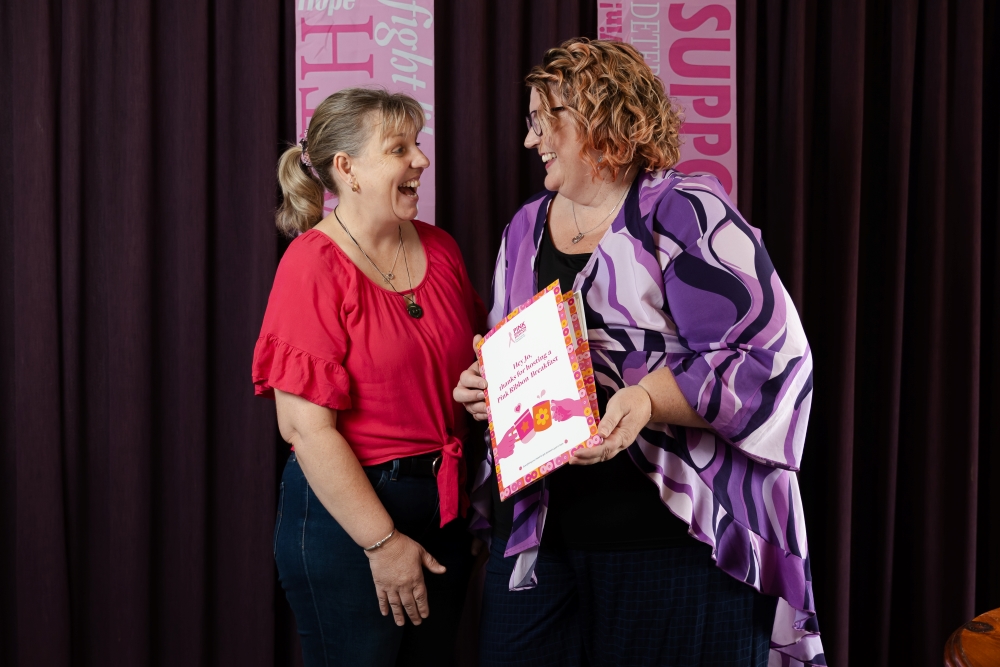
Unsurprisingly, Jo has become a strong advocate for women taking control of the situation when they feel medical services are not moving quickly enough. Together, she and her sister Debbie, are holding an afternoon High Tea as a Pink Ribbon fundraiser this month. For more information email teamwatson@live.com
“It brings me so much joy to be able to a share the message and to get a whole heap of women together and have some fun, raise some funds for a really good reason and once again, just loudly advocating for our health.”
A show stopper
Ingrid Tapper was a 40-year-old man when she felt a lump in her breast. That is to say, she was dressed as a man. By day, a mum and early childhood teacher, by night, an occasional cabaret singer and Drag King. A September 2022 post-show removal of tape from around her breasts was painful. As she gave them a rub to ease the soreness, she felt a lump and thought, ‘Oh, that’s different, I’d better keep an eye on that.’ Within several weeks, the lump had grown.
An examination by her doctor identified a lump in the other breast as well. She thought they were both cysts but referred Ingrid for a radiology appointment. “I knew the moment the ultrasound technician was at my armpit, and he was there for quite some time, and then he was on my left breast for quite some time, because this isn't my first go round with cancer, I've had cervical cancer as well. So I had a feeling, I knew what was happening and he spent hardly any time on my right breast and he goes, ‘Oh, that’s a cyst’, so that was great and then he immediately asked ‘can I do a biopsy’ [on the left breast] and I was like ‘well yes, when?’ ‘Right now, if we can’, and I thought ‘OK, this is really serious.’”
She had the results within three days. Despite having experienced cervical cancer ten years earlier, and despite feeling like it would come back one day, she still felt the expected emotions of a serious diagnosis. “I was definitely numb. I've got a very sort of black and white approach to things like that. I just went straight into problem-solving mode. OK, what step is next, what's after that, what's after that, and you kind of put your blinders on and just look forward, and that's really how I felt. I was like right, let's just get in and do this.”
Ingrid has Her2 Positive breast cancer. It’s an aggressive cancer, the type most likely to recur in other parts of the body. Twenty percent of people diagnosed with breast cancer are Her2 Positive. However, certain drugs are more effective at targeting this gene specifically.
“I was really lucky, with the cervical cancer I found it incredibly early, I only had surgery, so I didn't have to go through chemo… So it's kind of like a pinprick, is the cervical cancer, and like a bomb going off is the breast cancer.”
Ingrid and her partner Greg have two children aged 11 and 14. The couple were open with them, though they spared the kids the detail and kept things to more of a, ‘need to know’ basis. “We were honest with them. The fact is that this is what's going to happen. Take your cues from me. If I seem like I'm OK with this, then you're OK.”
An aggressive foe is met with aggressive treatment. Unfortunately, there was a frustrating delay due to Ingrid also requiring a biopsy and/or removal of ovarian cysts. But what was supposed to be a one-hour keyhole surgery turned into five hours, six surgeons and a gynecologist, all struggling to find her left ovary. In the end they removed her right one, but the left one to this day, is still in hiding.
“It was so funny, I caught up with the gynecologist a few months later and she was saying to her colleague, ‘Oh this is the one I was telling you about’. Great, now I'm a hospital story.”
The ovarian surgery required recuperation before Ingrid could begin her breast cancer treatment. Then finally - chemo, breast conservation surgery, surgery again, chemo again, radiation. The second set of chemo (14 rounds) was brutal on a tired body. She’s been on drugs, the course ended 24 April (as Nelson Magazine goes to print), and then what? She’s not sure. It depends on the phone call with Christchurch oncology, but regular checks and the marking of time will be par for the course. And in the quiet moments, reflection.
“There's a lot of mixed feelings because it's been an incredibly long journey. There's a lot more to it than I thought there was. Everything that could go wrong, did go wrong, and so I'm very apprehensive that even though they say it's the last one, I'm like, ‘oh is it though?”
“I tend to hold a lot of things in that I really shouldn't. I've definitely become a lot more open. The first time I did this, I didn't tell anyone about my cancer until after I was healed and this time I've been pretty honest with it. I've been using my Facebook page as a platform to let people have a peek behind the curtain, so to speak.”
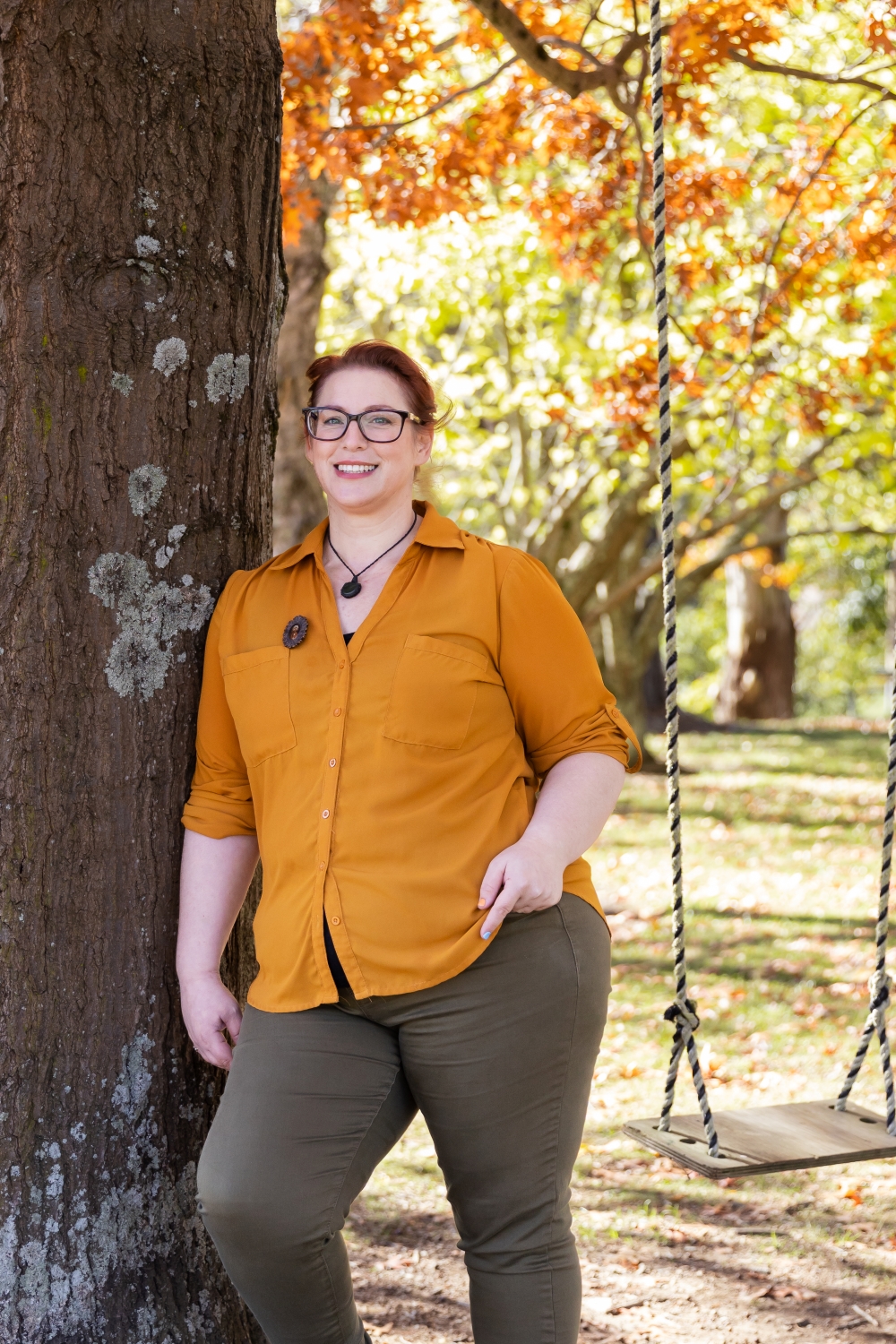
Ingrid, like Nicky and Jo, is good-humoured as she speaks to me, and I am struck by the positive attitudes of the trio. Their interviews are punctuated by laughter about the funny-odd moments. Ingrid thought it was hilariously ironic that she was dressed a man when she discovered her breast cancer (men do get breast cancer too, but probably don’t find it because they taped their breasts down).
“I definitely have my harder days and definitely just acknowledging that those are going to be there as well. My partner's been amazing as a carer, and I've got a really strong family connection. They've been amazing, my friends have been amazing, my work was amazing, and I think also I approach life with a really good sense of humour. I’ll joke about it because if you don't laugh about it, then you're just going to go crazy.”
Local support services are rated highly by all three women. From free counselling services courtesy of Nelson Cancer Society to the Look Good, Feel Good Programme and PINC & STEEL. Plus, there are the important fundraising events like Relay for Life, and Pink Ribbon Breakfasts where money raised in the region, stays in the region.
One in nine New Zealand women are diagnosed with breast cancer in their lifetime. Reflecting on the vast numbers of female friends, family and work colleagues you know, this may inspire you to support the sisterhood this month, by hosting or attending a Pink Ribbon breakfast (or high tea). And don’t forget to check your breasts today.
breastcancerfoundation.org.nz
cancernelson.org.nz
This article is featured in Nelson Magazine. Click here to read the magazine online.
